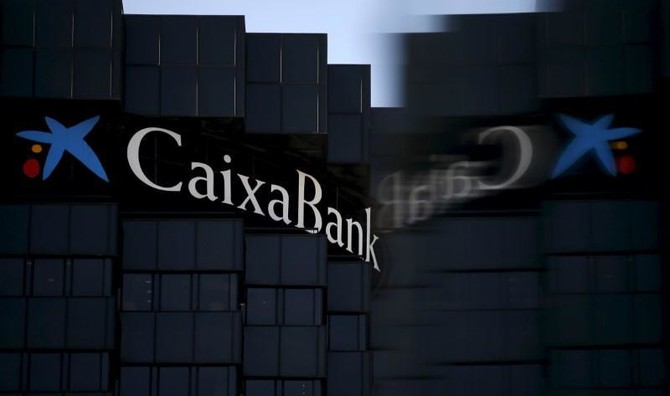
Catalan savers reassured that Spanish bank deposits are safe

The Catalonian referendum and its aftermath have plunged Spain into its worst constitutional crisis in decades. (Reuters)
Updated 04 October 2017
Follow

Catalan savers reassured that Spanish bank deposits are safe

MADRID: Spain’s Caixabank, Catalonia’s largest lender, and the country’s economy minister reassured bank customers that their deposits are secure from a growing crisis in the region.
“Catalan banks are Spanish banks and European banks are solid and their clients have nothing to fear,” Luis de Guindos, Spain’s Economy Minister said after mass protests during a banned independence vote in the northeastern region.
He made those comments after Caixabank told staff in a memorandum reviewed by Reuters that they should proactively communicate to our clients “our commitment to the defense of their interests”.
In the note, sent to staff late on Tuesday, the bank “reiterated that the sole objective of the entity is to protect at all times the interests of its customers, shareholders and employees, guaranteeing the integrity of deposits”.
A spokesman for the bank, which has its headquarters in Barcelona, declined to comment further.
The referendum and its aftermath have plunged Spain into its worst constitutional crisis in decades, and are a political test for Prime Minister Mariano Rajoy, a conservative who has taken a hard line stance on the issue.
Spain’s Banco Sabadell, the country’s fifth-largest bank with a large business in Catalonia, also attempted to calm jitters.
“(Sabadell) has the mechanisms and will take the necessary measures to continue operating normally inside the Euro zone, guaranteeing the interests of its shareholders, clients and employees, in whatever scenario,” Josep Oliu, its chairman, said on Tuesday.
Both banks have seen their share price fall in recent days amid the turmoil. On Wednesday, Sabadell’s stock price was down almost 4 percent, while Caixabank had slipped by slightly more.
Tens of thousands of Catalans demonstrated in the streets of the northeastern region against action by the police, who tried to disrupt Sunday’s vote by firing rubber bullets and charging into crowds with truncheons. The protests shut down road traffic, public transport and businesses.
Pro-independence parties who control the regional government staged Sunday’s referendum in defiance of the Constitutional Court, which had ruled that the vote violated Spain’s 1978 constitution which states the country is indivisible.
Catalonia, Spain’s richest region, has its own language and culture and a political movement for secession that has strengthened in recent years.
Those who participated in Sunday’s ballot voted overwhelmingly for independence, a result Catalan leader Carles Puigdemont said is valid and must be implemented.


Oman inflation at 1.6%, latest figures show

Updated 26 January 2026
Follow

Oman inflation at 1.6%, latest figures show

RIYADH: Oman’s consumer price index rose by 1.6 percent in December compared with the same month a year earlier, reflecting moderate inflationary pressures at year’s end.

Average inflation for the January–December 2025 period increased by 1 percent, according to official data.

Figures released by the National Center for Statistics and Information showed that miscellaneous personal goods and services recorded the sharpest price increase, rising by 10 percent year on year. 

This was followed by transport at 2.8 percent, restaurants and hotels at 2.6 percent, and furniture, household equipment and routine maintenance at 2.4 percent, as well as education at 2.2 percent. 

Food and non-alcoholic beverages prices increased by 1.1 percent, while clothing and footwear rose by 0.2 percent and health by 0.1 percent. In contrast, prices in the culture and recreation group declined by 0.1 percent. 

Housing, water, electricity, gas and other fuels, as well as tobacco and communications, remained unchanged over the period. 

Within the food and non-alcoholic beverages category, December prices compared with the same month of 2024 showed notable increases in fish and seafood at 6 percent and fruits at 4 percent. 

Sugar, jam, honey and confectionery rose by 3.5 percent, milk, cheese and eggs by 2.1 percent, and non-alcoholic beverages by 0.9 percent.

Meat prices increased by 0.8 percent, bread and cereals, oils and fats by 0.7 percent, and other unclassified food products by 0.4 percent, while vegetable prices fell by 5.8 percent. 

Regionally, Al Dhahirah governorate recorded the highest inflation rate at 2.5 percent by the end of December compared with a year earlier. 

Inflation also rose by 2.1 percent in Al Dakhiliyah, 1.7 percent in Muscat and Al Buraimi, and 1.5 percent in South Al Batinah. 

South Al Sharqiyah and Musandam each posted increases of 1.1 percent, while North Al Sharqiyah and North Al Batinah rose by 0.9 percent. Al Wusta and Dhofar recorded inflation of 0.8 percent. 

The report highlights the relative importance of expenditure groups within the consumer price index basket, underscoring why movements in certain categories have a greater impact on overall inflation.

Housing, water, electricity, gas and other fuels carry the largest weight at 31.7, followed by food and non-alcoholic beverages at 20.6 and transport at 14.5.

Together, these three groups account for more than two-thirds of the CPI basket, meaning price stability in housing and utilities can significantly moderate headline inflation even when sharper increases are recorded in smaller-weight categories such as miscellaneous goods and services. 

The analysis also notes that around 56,640 individual price quotations were collected from 3,907 sources across the Sultanate during the reference period. 

In addition, rental data were gathered from a dedicated sample of 1,509 rented housing units, providing a detailed and representative measure of housing costs, which remain the most heavily weighted component of the inflation basket.