KABUL: Afghan lawmakers on Monday demanded that the government force Tehran to stop using Afghan refugees living in Iran as mercenaries in Syria’s war.
The government “should seriously pursue this matter to compel Iran to not use Afghans as a tool and send them for war in other countries,” said Mohammad Asif Seddiqi, deputy head of the Senate.
MP Abdul Hafeez Mansoor told Arab News: “We’ve only condemned it and done nothing to stop it. The government needs to act,” and “should create jobs so people don’t flee and become tools for others.”
He said MPs are concerned that Iranian recruitment will worsen sectarian and tribal conflict in Afghanistan, and provoke militants groups such as the Taliban, Al-Qaeda and Daesh to attack Afghan Shiites in revenge.
Ajmal Hodmand, president of the Association for Afghanistan’s Lawmakers, said Iran’s recruitment of Afghan refugees, particularly teenagers, was against international conventions, but he also blamed the Afghan government for its inaction.
“Among the government’s responsibilities is to protect and defend its nationals at home and abroad, and to stop any country or organization from using its nationals, especially children, as soldiers,” he told the Arab News.
The government, he said, needs to engage in serious talks with Iran to stop its recruitment, and if Tehran does not, Kabul must raise the matter with international institutions such as the UN.
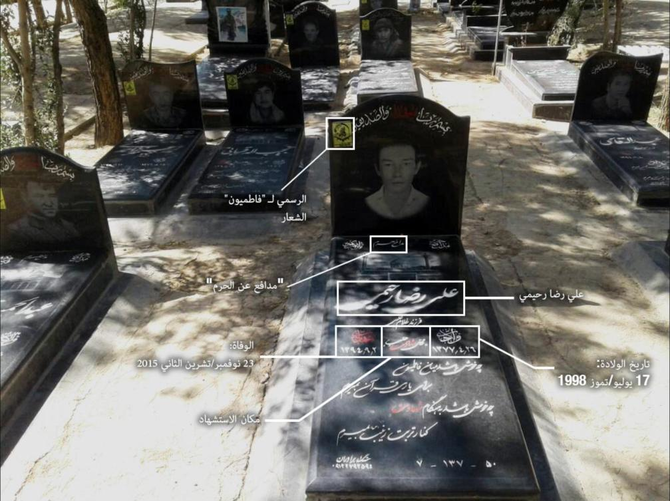
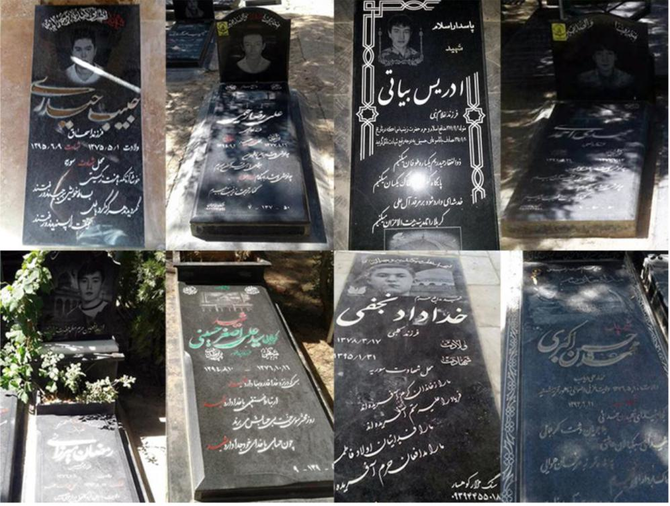
According to unofficial accounts, Iran has recruited thousands of Afghan refugees to fight for the Syrian regime, with incentives including citizenship, accommodation and money.
On Sunday, Human Rights Watch (HRW) accused Iran’s Islamic Revolutionary Guard Corps (IRGC) of recruiting Afghan children as young as 14. Under international law, recruiting children under the age of 15 for combat is a war crime.
“Iran should immediately end the recruitment of child soldiers and bring back any Afghan children it has sent to fight in Syria,” said Sarah Leah Whitson, Middle East director at HRW.
An estimated 1.7 million Afghans, nearly 40 percent of them without legal documents, live in Iran.
Arab News last month spoke with a former Afghan fighter who said Iran had sent him and hundreds of others to Syria.
Abdul Hameed, a Shiite from Bamiyan province, said he was wounded in the war and was offered residency in Iran, but chose to return home.
The spokesman at the presidential palace, and the adviser for the Ministry of Refugees and Repatriation, both refused to answer questions by Arab News about the issue.
But Ahmad Shekib Mustaghni, chief Foreign Ministry spokesman, told BBC Persian on Monday that the Afghan government “confirms that unfortunately some Afghan refugees… are encouraged (by host countries, including Iran) to take part in activities that are against international principles.”
Kabul had raised its concern with Tehran, but was told that the refugees are “voluntarily” going to fight, he said.


![]()
![]()
MPs: Afghan govt must force Iran to stop recruiting refugees for Syria war
MPs: Afghan govt must force Iran to stop recruiting refugees for Syria war


Latest updates


© 2026 SAUDI RESEARCH & PUBLISHING COMPANY, All Rights Reserved And subject to Terms of Use Agreement.