BANGKOK: It is a royal tradition that has proved bountiful through the ages and one that Thailand’s fruit carvers are determined to keep alive — even as young people peel away from the unique art form.
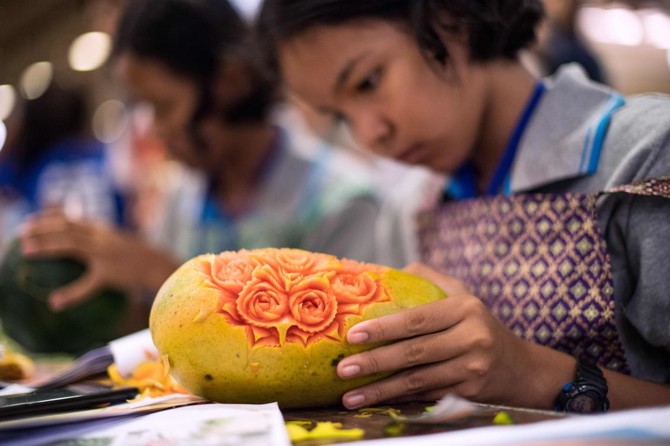
From beetroots carved into roses to fruity floats made from papayas and melons, the most important fruit carving competition in Thailand took place in Bangkok Friday.
But for competitor Piyanat Thiwato, carving is about more than just winning.
“Carving can improve our mind because it requires concentration and enhances our imagination, it’s a way to relax,” he said.
The tradition has been traced back to Thailand’s royal Sukhothai dynasty, in the 14th century.
“The art of food carving started hundreds years ago. Thailand is rich with arts and crafts. It’s like a very beautiful treasure that we have,” said Araya Arunanondchai, the event’s organizer.
“In the old days, it was done in the royal palaces for the royal family,” she added.
Dozens of Thai artists competed in the famous fruit and vegetable carving competition, which was organized in honor of Queen Sirikit, who turns 85 on August 12.
More than 20 teams carved anything from owls to elephants or intricate Thai designs onto fruits including taros, melons, and papaya.
Fruit carving is still popular as an offering in temples or as a decoration for weddings. Fine arts students can still choose to learn it at university, as they would take painting lessons. But the tradition is fading away.
“Not so many young people are interested in it or the ones who studied it in art schools cannot make a living out of it,” Manirat Svastiwat na Ayutthaya, food carving expert said.

Fruit carving, a meticulous art in Thailand
Ramadan recipes: Slow-cooked lamb shank with eggplant begendi
DUBAI: Mohamad Olleik, head chef at Dubai’s DIFC-located Alaya, shares a hearty lamb shank recipe, a dish he describes as “generous, comforting and deeply rooted in tradition.”
Ingredients
Lamb shank
Lamb shanks — 2 pieces
Onion — 1 large, roughly chopped
Carrot — 1 medium, roughly chopped
Celery — 1 stick, roughly chopped
Garlic — 4 cloves, crushed
Fresh thyme — 2 sprigs
Fresh rosemary — 1 sprig
Olive oil — 3 tablespoons
Salt and black pepper
Eggplant begendi
Large eggplants — 2
Butter — 50 grams
Plain flour — 2 tablespoons
Cooking cream — 250 milliliters
Nutmeg — a pinch
Salt and black pepper
To finish
Roma tomatoes — 2, halved
Green sweet peppers — 2, halved
Lamb cooking juices — ½ cup
Fresh chives — finely chopped
Olive oil
Method
Braise the lamb: Season the lamb shanks generously with salt and black pepper. Heat olive oil in a heavy pot and sear the lamb on all sides until deeply golden. Remove the lamb and add onion, carrot, celery, garlic, thyme and rosemary to the same pot. Saute until fragrant. Return the lamb to the pot and add enough water to come halfway up the shanks. Cover tightly and braise in a 170-degree Celsius oven for three hours, until the meat is tender and falling off the bone.
Prepare the eggplant begendi: Grill or roast the eggplants whole until the skin is charred and the flesh is soft. Peel, chop finely and drain excess liquid. In a saucepan, melt the butter and whisk in the flour. Cook gently for one to two minutes. Gradually add the cream, whisking until smooth. Stir in the eggplant, season with salt, pepper and nutmeg, and cook until silky and thick.
Grill the vegetables: Brush the tomatoes and peppers with olive oil and grill or pan-sear until lightly charred.
Finish the sauce: Strain the lamb cooking liquid and reduce it gently in a saucepan until slightly thickened and glossy. Adjust seasoning if needed.
To plate: Spoon the eggplant begendi onto the plate as a base. Place the lamb shank on top. Arrange the grilled vegetables alongside. Drizzle with the remaining lamb juice and finish with chopped chives and a touch of olive oil.


