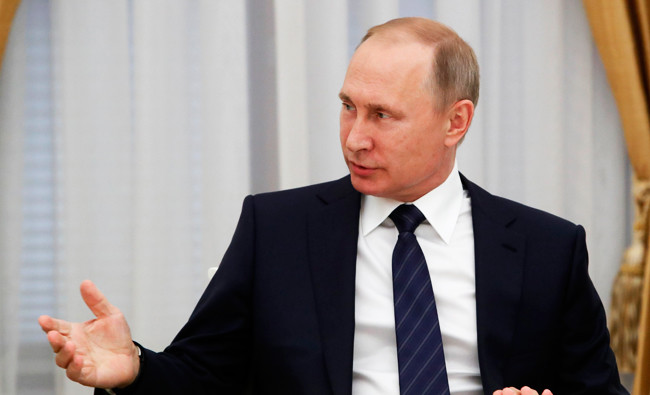
MOSCOW: Russian President Vladimir Putin has stressed the importance of diplomacy to end a dispute between Qatar and several other Arab states during a telephone call with Qatar Emir Sheikh Tamim bin Hamad Al-Thani, the Kremlin said on Saturday.
The Kremlin said in a statement the Russian and Qatari leaders also discussed cooperation between their countries in energy and investment.
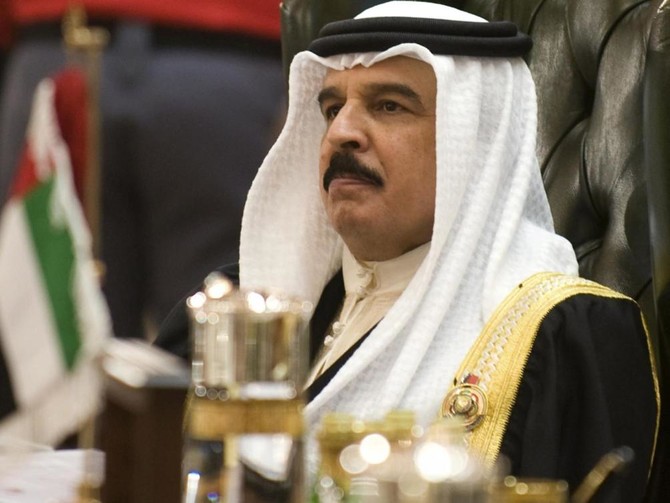
Earlier on Saturday, the Kremlin said Putin had spoken with Bahrain’s King Hamad bin Isa Al-Khalifa by telephone about the Qatar dispute.
The Kremlin, which announced the phone calls in two separate statements on its website on Saturday, did not say when they happened.
It clarified that they happened on the initiative of Qatar and Bahrain.
“Vladimir Putin stressed the importance of political-diplomatic efforts aimed at overcoming differences of opinion and the normalization of the difficult situation that exists,” said the statement on the talks between Putin and Qatar’s emir.
The Russian and Qatari leaders also discussed cooperation between their countries in energy and investment.
In his call with the Bahraini king, Putin stressed the need for direct dialogue between all governments involved in the dispute, which is exerting a negative influence on the Middle East, the Kremlin said.
The Kremlin said last month that a “stable and peaceful” situation in the Gulf was in Russia’s interest.
Moscow is trying to tread cautiously in the dispute since it wants good relations with both Qatar and Saudi Arabia.
Russia backs President Bashar Assad in the six-year-long Syria conflict and is close to Iran, which has fraught ties with Riyadh.
Moscow sold a stake in its state oil champion Rosneft to Qatar last year and has been coordinating oil output cuts with the Saudis as part of a global pact to lift oil prices.

Diplomacy key to ending row, Putin tells Qatar emir

UN peacekeepers say Israeli forces fired on them in southern Lebanon
- “Yesterday, peacekeepers in vehicles patrolling the Blue Line were fired upon by IDF soldiers in a Merkava tank,” UNIFIL said
- It said that both the peacekeepers and the Israeli tank were in Lebanese territory
BEIRUT: The United Nations Interim Force in Lebanon said Wednesday that Israeli forces fired on its peacekeepers a day earlier in the country’s south, urging Israel’s army to “cease aggressive behavior.”
It is the latest such incident reported by the peacekeepers in southern Lebanon, where UNIFIL acts as a buffer between Israel and Lebanon and has been working with Lebanon’s army to support a year-old truce between Israel and militant group Hezbollah.
“Yesterday, peacekeepers in vehicles patrolling the Blue Line were fired upon by IDF (Israeli army) soldiers in a Merkava tank,” a UNIFIL statement said, referring to the de facto border.
“One ten-round burst of machine-gun fire was fired above the convoy, and four further ten-round bursts were fired nearby,” the statement said.
It said that both the peacekeepers and the Israeli tank were in Lebanese territory at the time of the incident and that the Israeli military had been informed of the location and timing of the peacekeeping patrol in advance.
“Peacekeepers asked the IDF to stop firing through UNIFIL’s liaison channels... Fortunately, no one was injured,” it said.
Last month UNIFIL said Israeli soldiers shot at its troops in the south, while Israel’s military said it mistook blue helmets for “suspects” and fired warning shots.
In October, UNIFIL said one of its members was wounded by an Israeli grenade dropped near a UN position in the country’s south, the third incident of its kind in just over a month.
“Attacks on or near peacekeepers are serious violations of (UN) Security Council Resolution 1701,” UNIFIL said on Wednesday, referring to the 2006 resolution that formed the basis of the November 2024 truce.
“We call on the IDF to cease aggressive behavior and attacks on or near peacekeepers working to rebuild stability along the Blue Line,” the peacekeepers said.
Israel carries out regular attacks on Lebanon despite the truce, usually saying it is targeting sites and operatives belonging to Hezbollah, which it accuses of rearming.
It has also kept troops in five south Lebanon areas it deems strategic.
On Saturday, a UN Security Council delegation visiting Lebanon urged all parties to uphold the ceasefire.
It emphasized that the “safety of peacekeepers must be respected and that they must never be targeted,” after gunmen on mopeds attacked UNIFIL personnel last week.