Saudi stock market soars 5.5% after crown prince appointment, MSCI update

(AFP)
Updated 22 June 2017
Follow

Saudi stock market soars 5.5% after crown prince appointment, MSCI update

DUBAI: The Saudi stock market index on Wednesday jumped by 5.5 percent to an 18-month high, following news that King Salman has placed his 31-year-old son next in line to the throne.
 
The Tadawul index, the largest in the Middle East, was also boosted by news that some benefits for civil servants were being restored, as well as an announcement that the Tadawul had been added to a watchlist for an upgrade to “emerging market” status.
 
The Tadawul All-Share Index (TASI) stood at 7,334.87 at its close on Wednesday, with 159 stock prices having risen and only 12 falling.
 
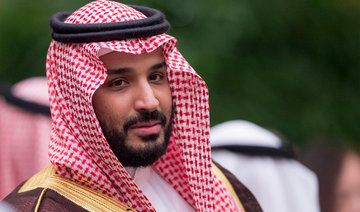
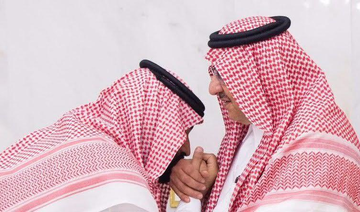
In a series of royal decrees issued Wednesday, it emerged that Prince Mohammed bin Salman had been appointed as the country’s crown prince, replacing Prince Mohammed bin Naif. 
 
Crown Prince Mohammed bin Salman, who also serves as defense minister and oversees a vast economic portfolio, had previously been second in line to the throne.
 
It was also announced that all allowances, bonuses and financial benefits would be restored for civil servants and military personnel.
 
In another move that boosted the market, it emerged earlier on Wednesday that global stock benchmark provider MSCI had added the Tadawul to a watchlist for potential inclusion as an “emerging market.” That is something closely followed by fund managers and could mean a lot more foreign investment coming into the Kingdom.
 
The MSCI upgrade could take effect as early as next year, financiers said, in a boost to the forthcoming sale of shares in Saudi Aramco, the flagship oil company that could be valued at $2 trillion.
 
Emerging market status would be regarded as giving the green light to international investors to buy stocks on the Riyadh exchange. It would also be regarded as a nod of approval for the Kingdom’s ambitious plans to diversify its economy away from oil dependency, known as the Vision 2030 plan.
 
Financial analysts welcomed the potential upgrade to emerging market status, saying it would increase Saudi Arabia's attractiveness to foreign investors.
 
Deutsche Bank estimated that some $43 billion of foreign funds would flow into the Kingdom under the new status. “The key beneficiaries will be large capitalized companies that currently have a low level of foreign ownership,” the bank said.
 
Capital Economics, the London consultancy, also welcomed the MSCI move as positive for the country, but warned that full inclusion needs to come quickly to get the maximum economic benefit.
 
Analyst Jason Tuvey said: “If it is delayed to September 2019, Saudi Arabia will have to rely on other sources of financing to fund its current account shortfall, including fresh dollar bond sales and/or a further drawdown of its FX reserves.”
 
George Elhedery, chief executive officer of HSBC in the Middle East, told Bloomberg the upgrade to the Kingdom’s stock markets was a positive development for the county’s financial status. “It puts Saudi Arabia in good stead to achieve its Vision 2030. Passive inflows into Saudi equities could draw approximately $9 billion. This has the potential to rise even further if active funds increase their allocations,” he said.
 
Passive investors are those that include a country’s stocks in their overall portfolios. Active investors pick individual stocks for inclusion.
 
The MSCI move follows a long process of modernization of the Kingdom’s investment infrastructure, opening it up to international investors and accelerating the process of share dealing and settlement. 
 
MSCI said: “Following the introduction of these major enhancements to the accessibility of the Saudi Arabian equity market, MSCI will be consulting with international institutional investors to gather informed feedback on their practical experience of accessing the Saudi equity markets and in particular on the effectiveness of the recently implemented enhancements.”
 
While many countries remain two to three years on the watch list prior to index inclusion, Saudi Arabia expects the process to happen sooner, according to Mohammed El-Kuwaiz, Saudi Arabia’s Capital Market Authority vice-chairman.
 
“Given the pace and the magnitude of capital-markets reforms that have been made in Saudi Arabia and the commitment that has indicated, the duration that we will be on the watch list will hopefully be shorter,” he said in a television interview.
 
Inclusion in MSCI’s developing-country indexes would “put Saudi Arabia in the top 10 emerging markets, even excluding Aramco,” according to Mohammed Al-Hajj, and equities analyst at investment bank EFG Hermes in Dubai.
 
He estimated that adding passive inflows alone would be equivalent to two-and-a-half to three current active holdings by foreigners in the Saudi market. “It would finally place Middle East, North Africa on the map as an important subset of emerging markets.”
 
Saudi Arabia allowed money managers outside the Gulf to own local shares directly only two years ago. Since then, authorities have relaxed the guidelines even more, yet total foreign ownership has stalled at about 5 percent.
 
As crude oil prices declined this year, the Tadawul index has dropped, lagging behind an average of its peers as measured by the MSCI Emerging Markets Index, which increased 17 percent through June 19.
 
The addition to the watch list should result in “substantially improved valuations, liquidity and foreign inflows to the country’s market,” according to Jaap Meijer and Michael Malkoun, analysts in Dubai at Arqaam Capital Ltd. They estimate Saudi Arabia would have a weighting of 2.2 percent in that emerging markets index, excluding Aramco.
 
The 173 stocks traded on the Tadawul have a value of SR1.65 trillion, according to the market’s website.
 
- With AP
How AI and financial literacy are redefining the Saudi workforce

Updated 26 December 2025
Follow

How AI and financial literacy are redefining the Saudi workforce

  • Preparing people capable of navigating money and machines with confidence

ALKHOBAR: Saudi Arabia’s workforce is entering a transformative phase where digital fluency meets financial empowerment. 

As Vision 2030 drives economic diversification, experts emphasize that the Kingdom’s most valuable asset is not just technology—but people capable of navigating both money and machines with confidence.

For Shereen Tawfiq, co-founder and CEO of Balinca, financial literacy is far from a soft skill. It is a cornerstone of national growth. Her company trains individuals and organizations through gamified simulations that teach financial logic, risk assessment, and strategic decision-making—skills she calls “the true language of empowerment.”

An AI-driven interface showing advanced data insights, highlighting the increasing demand for leaders who can navigate both technology and strategy. (creativecommons.org)

“Our projection builds on the untapped potential of Saudi women as entrepreneurs and investors,” she said. “If even 10–15 percent of women-led SMEs evolve into growth ventures over the next five years, this could inject $50–$70 billion into GDP through new job creation, capital flows, and innovation.”

Tawfiq, one of the first Saudi women to work in banking and later an adviser to the Ministry of Economy and Planning on private sector development, helped design early frameworks for the Kingdom’s venture-capital ecosystem—a transformation she describes as “a national case study in ambition.”

“Back in 2015, I proposed a 15-year roadmap to build the PE and VC market,” she recalled. “The minister told me, ‘you’re not ambitious enough, make it happen in five.’” Within years, Saudi Arabia had a thriving investment ecosystem supporting startups and non-oil growth.

Opinion

This section contains relevant reference points, placed in (Opinion field)

At Balinca, Tawfiq replaces theory with immersion. Participants make business decisions in interactive simulations and immediately see their financial impact.

“Balinca teaches finance by hacking the brain, not just feeding information,” she said. “Our simulations create what we call a ‘business gut feeling’—an intuitive grasp of finance that traditional training or even AI platforms can’t replicate.”

While AI can personalize lessons, she believes behavioral learning still requires human experience.

Saudi women take part in a financial skills workshop, reflecting the growing role of financial literacy in shaping the Kingdom’s emerging leadership landscape. (AN File)

“AI can democratize access,” she said, “but judgment, ethics, and financial reasoning still depend on people. We train learners to use AI as a co-pilot, not a crutch.”

Her work aligns with a broader national agenda. The Financial Sector Development Program and Al Tamayyuz Academy are part of Vision 2030’s effort to elevate financial acumen across industries. “In Saudi Arabia, financial literacy is a national project,” she said. “When every sector thinks like a business, the nation gains stability.”

Jonathan Holmes, managing director for Korn Ferry Middle East, sees Saudi Arabia’s digital transformation producing a new generation of leaders—agile, data-literate, and unafraid of disruption.

“What we’re seeing in the Saudi market is that AI is tied directly to the nation’s economic growth story,” Holmes told Arab News. “Unlike in many Western markets where AI is viewed as a threat, here it’s seen as a catalyst for progress.”

Saudi Arabia's Vision 2030 and the national AI strategy are producing “younger, more dynamic, and more tech-fluent” executives who lead with speed and adaptability. (SPA photo)

Holmes noted that Vision 2030 and the national AI strategy are producing “younger, more dynamic, and more tech-fluent” executives who lead with speed and adaptability. Korn Ferry’s CEO Tracker Report highlighted a notable rise in first-time CEO appointments in Saudi Arabia’s listed firms, signaling deliberate generational renewal.

Korn Ferry research identifies six traits for AI-ready leadership: sustaining vision, decisive action, scaling for impact, continuous learning, addressing fear, and pushing beyond early success.

“Leading in an AI-driven world is ultimately about leading people,” Holmes said. “The most effective leaders create clarity amid ambiguity and show that AI’s true power lies in partnership, not replacement.”

He believes Saudi Arabia’s young workforce is uniquely positioned to model that balance. “The organizations that succeed are those that anchor AI initiatives to business outcomes, invest in upskiling, and move quickly from pilots to enterprise-wide adoption,” he added.

DID YOU KNOW?

• Saudi women-led SMEs could add $50–$70 billion to GDP over five years if 10–15% evolve into growth ventures.

• AI in Saudi Arabia is seen as a catalyst for progress, unlike in many Western markets where it is often viewed as a threat.

• Saudi Arabia is adopting skills-based models, matching employees to projects rather than fixed roles, making flexibility the new currency of success.

The convergence of Tawfiq’s financial empowerment approach and Holmes’s AI leadership vision points to one central truth: the Kingdom’s greatest strategic advantage lies in human capital that can think analytically and act ethically.

“Financial literacy builds confidence and credibility,” Tawfiq said. “It transforms participants from operators into leaders.” Holmes echoes this sentiment: “Technical skills matter, but the ability to learn, unlearn, and scale impact is what defines true readiness.”

Saudi women in the transportation sector represent the expanding presence of female talent across high-impact industries under Vision 2030. (AN File)

As organizations adopt skills-based models that match employees to projects rather than fixed job titles, flexibility is becoming the new currency of success. Saudi Arabia’s workforce revolution is as much cultural as it is technological, proving that progress moves fastest when inclusion and innovation advance together.

Holmes sees this as the Kingdom’s defining opportunity. “Saudi Arabia can lead global workforce transformation by showing how technology and people thrive together,” he said.

Tawfiq applies the same principle to finance. “Financial confidence grows from dialogue,” she said. “The more women talk about money, valuations, and investment, the more they’ll see themselves as decision-makers shaping the economy.”

Together, their visions outline a future where leaders are inclusive, data-literate, and AI-confident—a model that may soon define the global standard for workforce transformation under Vision 2030.