DEIR SHARQI, Syria: Airstrikes on two hospitals in opposition-held northwestern Syria on Thursday left 10 people dead including two babies in incubators, a monitor said.
They were among 19 people killed as a result of strikes across opposition-held Idlib province on Thursday, the Syrian Observatory for Human Rights said.
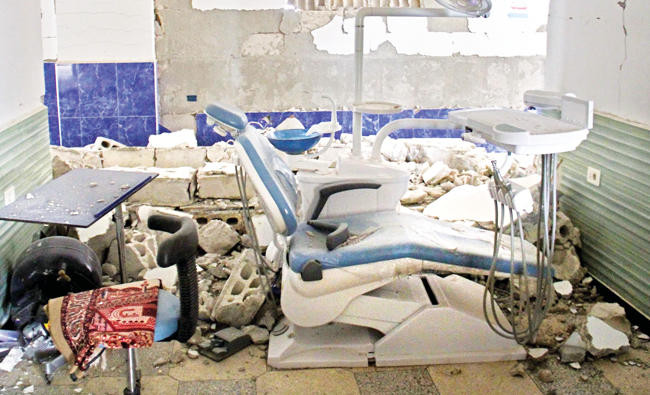
An AFP correspondent in the village of Deir Sharqi, where one of the hospitals was hit, saw extensive damage and wards buried in rubble.
It was the third time in less than a week that medical facilities in the province, controlled by opposition fighters, had been hit in airstrikes.
“Apparently Russian aircraft ... carried out four successive raids at dawn on a hospital on the outskirts” of Deir Sharqi, it said.
“Six civilians in the emergency department were killed, including two babies in incubators, after the destruction of the facility’s oxygen generator” which was keeping them alive, Observatory chief Rami Abdel Rahman told AFP.
The AFP correspondent saw at least one destroyed incubator, rooms and corridors filled with rubble, and dusty or damaged beds and equipment.
In one room, a wall had collapsed on a medicine shelf and in another, medical supplies were strewn across the room.
Later in the day, four medical staff from a dispensary in Maarzita, in southern Idlib province, were also killed in what were likely Russian strikes, the Observatory said.
A further nine people including five children were killed in strikes on various other areas of Idlib province on Thursday, it said.
Another hospital was hit Tuesday in northwestern Idlib, putting it out of service, Abdel Rahman said.
Meanwhile, Nikki Haley, US ambassador to the UN, pushed the UN Security Council to focus “all eyes and all pressure” on Russia to try and end the Syrian conflict and pressed for council action even if it faces a veto by Moscow.
“They are the ones who could stop this if they wanted to,” Haley said of Russia, an ally of Syrian President Bashar Assad, during his country’s six-year-long civil war. “We need to put pressure on Russia.”
Addressing a Security Council meeting on aid access in Syria, Haley said: “I will continue to press the Security Council to act, to do something, regardless of if the Russians continue to veto it because it is our voice that needs to be heard.”
Haley added: “Russia continues to cover for the Syrian regime, Russia continues to allow them to keep humanitarian aid from the people that need it, Russia continues to cover for a leader who uses chemical weapons against his own people.”
Separately, the Kremlin strongly criticized Israeli airstrikes on targets inside Syria, saying Israel and other countries should avoid any action that heightened tension in the region.
Israel struck an arms supply hub operated by the Lebanese group Hezbollah near Damascus airport, Syrian opposition and regional intelligence sources said, targeting weapons sent from Iran via commercial and military cargo planes.
“We consider that all countries should avoid any actions that lead to higher tensions in such a troubled region and call for Syrian sovereignty to be respected,” Kremlin spokesman Dmitry Peskov told reporters, when asked about the attack.


![]()
10 dead as airstrikes hit Syria hospitals
10 dead as airstrikes hit Syria hospitals


Latest updates


© 2026 SAUDI RESEARCH & PUBLISHING COMPANY, All Rights Reserved And subject to Terms of Use Agreement.