

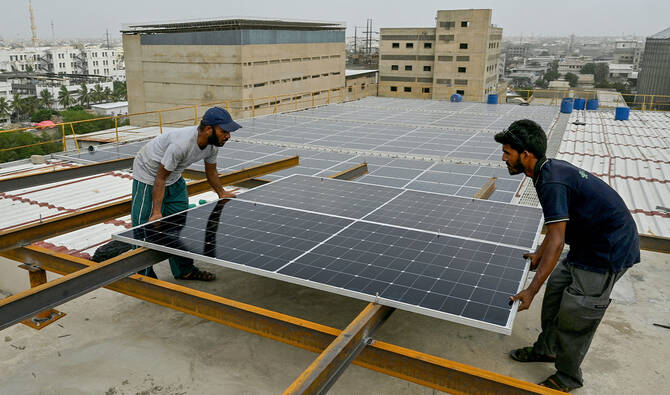

ISLAMABAD: Pakistan’s power minister on Thursday defended controversial changes to rooftop solar net-metering rules, arguing that generous returns for a small number of users were unfairly burdening millions of other electricity consumers, as Prime Minister Shehbaz Sharif ordered a review a day earlier.
The dispute centers on changes to the net-metering regime, under which households and businesses with rooftop solar panels can sell excess electricity to the national grid. The National Electric Power Regulatory Authority's (NEPRA) new compensation rules require consumers to pay full tariffs for electricity drawn from the grid while receiving a lower, market-linked rate for excess power they export.
Critics have called the revisions “anti-solar” and warned they would undermine renewable energy adoption and hurt household finances.
Power Minister Sardar Owais Ahmed Khan Leghari told the National Assembly that only 6,000-7,000 megawatts of Pakistan’s estimated 22,000 megawatts of installed solar capacity fall under net-metering, covering around 466,000 consumers out of 35.5 million nationwide electricity users.
“If a net-metering consumer earns a 50% return on his investment because of the savings he gets as a meter user, while IPPs [independent power producers] get 17% and bank deposits earn 8%, isn’t a 50% return a good rate,” he asked.
“I generate electricity at Rs. 5 and send it to the grid at Rs. 27,” he continued. “The average price at which we buy electricity from the rest of the grid is Rs. 8.31. Is buying at Rs. 27 justified?”
Leghari said under the revised framework, returns for net-meter users would fall to around 37%, adding that even at that level, rooftop solar power generation remains financially attractive.
He said the changes were aimed at ensuring “fair pricing” and reducing cross-subsidies borne by the broader consumer base.
“Besides them, there are 35.5 million other consumers who do not even use net-metering,” he said, adding that if electricity costs for the wider public fell by up to Rs. 1.50 per unit, the adjustment would be justified.
Leghari's statement follows the prime minister's instructions to file a review in response to the new NEPRA rules, as he directed his administration to protect existing consumer contracts while ensuring the policy does not shift the financial burden onto non-solar electricity users.


