PARIS: French presidential candidate Emmanuel Macron's political campaign was targeted by a group of Russian hackers last month, according to a report by a cybersecurity research group.
The Pawn Storm group, which has been linked to several high-profile attacks in the West, used "phishing" techniques to try to steal personal data from Macron and members of his En Marche! campaign, Japan-based Trend Micro said.
Pawn Storm, also known as APT28, is also believed to be behind the attacks last summer on the US Democratic National Committee, thought to be aimed at undermining Hillary Clinton's presidential bid.
It is widely suspected of having links to Russia's security services, and Moscow has been seen as a keen backer of Macron's rival in the presidential race Marine Le Pen, who met President Vladimir Putin in a surprise visit to Moscow ahead of the vote.
But on Monday, Russia denied any involvement in the French election.
"Which groups? Where do they come from? Why Russia?" Kremlin spokesman Dmitry Peskov said.
"It resembles the accusations made by Washington which to this day remain hollow, and they do no honour to the people making them."
French far-right veteran Jean-Marie Le Pen said his daughter Marine should have campaigned more aggressively for Sunday's first round, following the example of US President Donald Trump.
With 7.5 million votes, Marine Le Pen beat the National Front party's previous election record on Sunday but failed to pip pro-EU Macron to the first place.
The intervention by her father follows her announcement on Monday that she plans to step back from day-to-day management of the far-right party he founded ahead of the runoff and marks the latest tussle between the two of them over its future direction.
"I think her campaign was too laid-back. If I'd been in her place I would have had a Trump-like campaign, a more open one, very aggressive against those responsible for the decadence of our country, whether left or right," 88-year-old Jean-Marie Le Pen told RTL radio.
The two have been at odds since Marine Le Pen launched moves to clean the National Front's image of xenophobic associations in the run-up to the campaign for the 2017 presidency.
Jean-Marie Le Pen shocked the world in 2002 by qualifying for the second round of the presidential election and then went on to lose in a landslide to conservative Jacques Chirac.
He was frequently accused of making xenophobic and anti-Semitic statements and Le Pen expelled him from the party in 2015, though as the party's founder he remains a well-known figure and represents a body of opinion in the party.
In another sign of his influence, the National Front has borrowed about €6 million from a political fundraising association he heads.
Marine Le Pen's decision to take a leave of absence from the day-to-day management of the party appeared to be an attempt to portray herself as being above the narrow world of National Front politics and broaden her appeal to the wider electorate ahead of the crucial runoff vote.
Her program calls for sharp curbs on immigration and on the rights of immigrants living in France, as well as the expulsion of foreigners under suspicion of having militant Islamist links.
But she is seeking all the same to distance herself from the toxic legacy of her father and the xenophobic and anti-semitic undertones of his previous campaigns.
Under France's Fifth Republic, the president is the head of state, very much like a monarch in other countries, a role described by founder Charles De Gaulle as being above party politics — something Le Pen may have had in mind in her Monday night statement.
She may also be seeking to play Macron at his own game, as the 39-year old centrist has refused to join mainstream parties, and consistently described his "En Marche!" (Onwards!) party structure as a "movement" transcending the left-right divide.


![]()
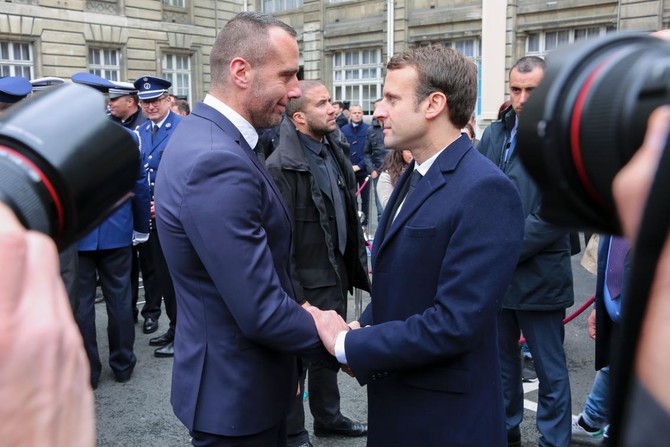
Russian hackers 'targeted Macron campaign'
Russian hackers 'targeted Macron campaign'
Latest updates


© 2026 SAUDI RESEARCH & PUBLISHING COMPANY, All Rights Reserved And subject to Terms of Use Agreement.