


ISLAMABAD: Pakistan on Thursday joined seven Muslim countries in condemning attacks by Israeli settlers on two mosques in the occupied West Bank, urging the international community to hold perpetrators accountable and warning that continued violence threatened prospects for peace in the region.
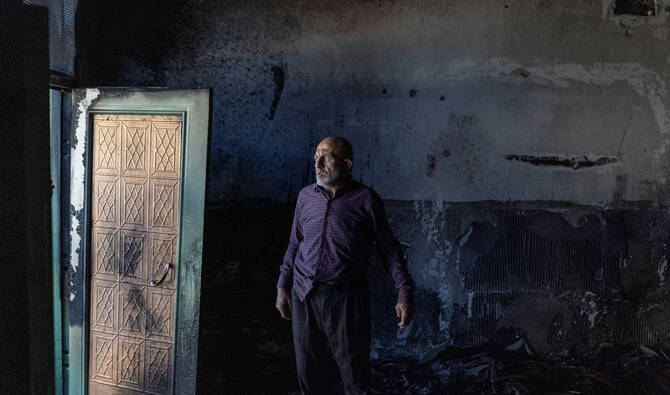
The joint statement, issued by the foreign ministers of Saudi Arabia, Jordan, the United Arab Emirates, Qatar, Indonesia, Pakistan, Egypt and Türkiye, followed attacks this week on the Grand Mosque in Jiljilya and Al-Farouq Mosque in Mazra’a Al-Nubani, two Palestinian villages north of Ramallah.
The condemnation comes amid growing concern over violence in the West Bank, which has seen a surge in settler attacks and Palestinian casualties since the outbreak of the Gaza war. While international attention has largely focused on Gaza, where Israel’s military campaign has caused widespread devastation, Palestinian officials have warned of a parallel escalation in the occupied West Bank.
“The Ministers affirm their absolute rejection of these deplorable attacks by Israeli settlers, as well as the continued illegal Israeli measures in the Occupied Palestinian Territory, which fuel instability, violence and extremism and undermine international efforts to achieve peace,” the statement said. “They hold Israel, the occupying Power, responsible for these attacks.”
According to Palestinian officials and local residents, settlers entered the villages before dawn on Wednesday, set fire to parts of the mosques and spray-painted Hebrew graffiti on walls. No casualties were reported, though the buildings sustained damage.
The eight countries also condemned Israel’s “illegal practices” in the occupied Palestinian territories, urging the international community “to uphold its legal and moral responsibilities and compel Israel to halt its dangerous escalation, end its illegal practices, halt settler violence, hold the perpetrators of these crimes accountable, and ensure that they do not enjoy impunity.”
The ministers reaffirmed support for Palestinian self-determination and renewed calls for a sovereign Palestinian state, while endorsing efforts aimed at achieving a comprehensive peace based on international law, relevant United Nations resolutions and the Arab Peace Initiative.


