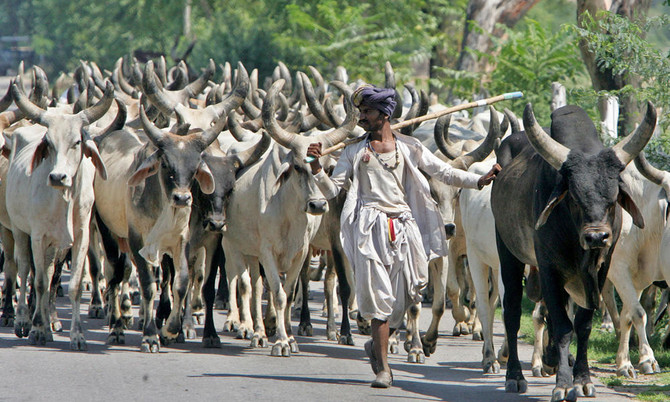
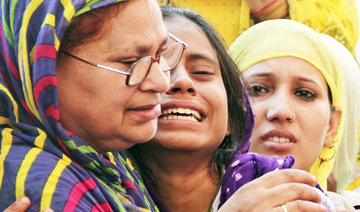
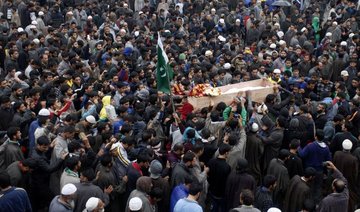
NEW DELHI: A Muslim man has died after he was attacked by hundreds of Hindu vigilantes while transporting cows in India, police said Wednesday, amid rising tensions over the slaughter of the sacred animal.
Pehlu Khan, 55, died in hospital late Monday, two days after a mob attacked his cattle truck on a highway in Alwar in the western state of Rajasthan.
Cows are considered sacred in Hindu-majority India, and their slaughter is illegal in many states.
In parts of northern and western India, squads of vigilantes roam highways inspecting livestock trucks for any trace of the animal.
Alwar police chief Rahul Prakash said at least six others were injured in the attack, but had now been discharged from the hospital.
Police are still trying to identify the attackers and have filed a murder case, he said, adding that a postmortem would determine the cause of Khan’s death.
“We are yet to receive the postmortem report but he had multiple rib fractures,” he told AFP.
Prakash said the victim and his associates were returning to their home state of Haryana when the mob intercepted their vehicle.
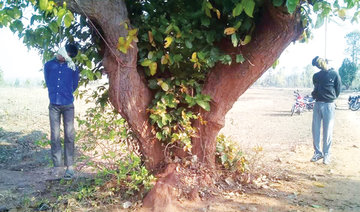
At least 10 Muslim men have been killed in similar incidents across the country by Hindu mobs on suspicion of eating beef or smuggling cows in the last two years.
In 2015 a Muslim man was lynched by his neighbors over rumors that he had slaughtered a cow. Police later said the meat was mutton.
Critics say the vigilantes were emboldened by the election in 2014 of Prime Minister Narendra Modi’s Hindu nationalist Bharatiya Janata Party.
Last year Modi criticized the cow-protection vigilantes and urged a crackdown against groups using religion as a cover for committing crimes.
But last month, he appointed a right-wing Hindu priest to head the country’s most populous state Uttar Pradesh, which is also home to much of the country’s meat industry.
Shortly after he was sworn in, police began shutting butcher shops, grinding much of the industry to a halt.

Muslim man dies after attack by cow vigilantes in India
India displays ancient Buddhist jewels taken during British colonial rule
- Piprahwa gems are believed to have been buried with bodily relics of the Buddha
- Precious stones are ‘living presence’ of the Buddha himself, expert says
NEW DELHI: Sacred ancient gems linked to the Buddha’s remains went on display at an exhibit in New Delhi on Saturday, almost 130 years since they were taken abroad during British colonial rule.
The Piprahwa gems, named after the town in what is now the northern Indian state of Uttar Pradesh, were removed by British colonial engineer William Claxton Peppe during excavations of a nearby religious site in 1898.
The collection of more than 300 carved gems is believed to be more than 2,000 years old and was found with the bodily relics of the Buddha in northern India, near the border with Nepal.
“India is not only the custodian of Lord Buddha’s sacred relics but also the living carrier of his tradition,” Indian Prime Minister Narendra Modi said during the opening of the exhibit.
“These sacred relics of Lord Buddha are India’s heritage. After a century-long wait, they have returned to the country.”
In May, the precious stones made international headlines after Peppe’s descendants, who kept a portion of the gems, put the items up for sale and consigned them for auction by Sotheby’s in Hong Kong, with bidding starting at roughly $1.3 million.
After the auction sparked an international outcry from Buddhist leaders, academics, and devotees, the Indian government intervened, threatening legal action and demanding the return of the jewels.
The gems were repatriated to India in July through a public-private partnership between the Indian government and Godrej Industries Group, a Mumbai-based Indian conglomerate, which reportedly acquired the jewels.
The New Delhi exhibit marked the first time the entire collection was displayed to the Indian public since they were excavated by the British in the late 19th century.
“After the excavation, a portion had been kept by the excavator William Claxton Peppe, and it became his family heirloom. And, of course, it traveled out of India, and a portion remained at the Indian Museum,” Lily Pandey, a joint secretary at the Indian Ministry of Culture, told Arab News on the sidelines of the event.
Pandey said that a series of “very fortunate events” led to the exhibition and the showing of all the gems together.
The Piprahwa relics are considered central in the archaeological study of early Buddhism and are “among the earliest and most historically significant relic deposits directly connected” to the Buddha, the Indian government said in a release.
Savita Kumari, an associate professor at the Indian Institute of Heritage, said the exhibit gave Indians an opportunity to connect with the Buddha.
“Buddha is actually present in these relics,” she told Arab News.
“It’s the living presence of Buddha himself. So, it is very important emotionally and spiritually for the people of the country to have it with us.”