

Pakistan rejects India’s ‘irresponsible assertions’ after FM Jaishankar’s ‘bad neighbors’ remarks

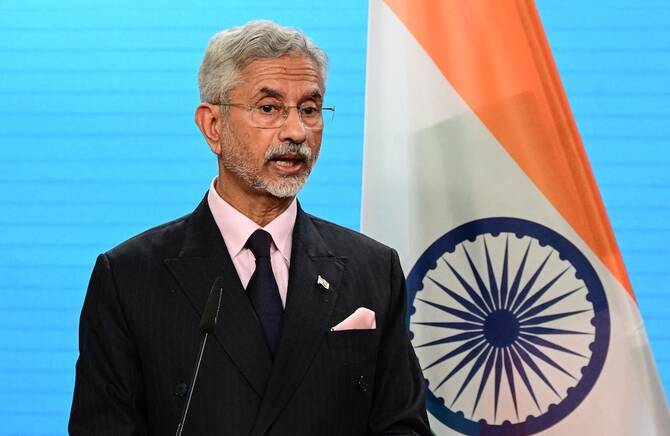
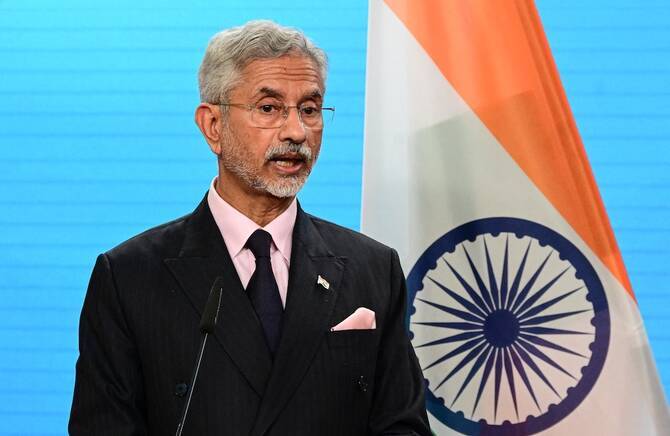
India’s Minister of External Affairs Subrahmanyam Jaishankar speaks during a press conference in Berlin on May 23, 2025. (AFP file photo)
Short Url
Updated 03 January 2026
Follow

Pakistan rejects India’s ‘irresponsible assertions’ after FM Jaishankar’s ‘bad neighbors’ remarks

  • Indian FM Jaishankar accused Pakistan of fomenting militancy, backed New Delhi’s decision to put Indus Waters Treaty in abeyance
  • Islamabad calls the remarks an attempt to deflect attention from India’s ‘troubling record as a neighbor,’ vows to safeguard rights

ISLAMABAD: Pakistan on Saturday rejected “irresponsible assertions” made by Indian External Affairs Minister S. Jaishankar after his remarks about “bad neighbors” and the 1960 Indus Waters Treaty (IWT) between the two countries.

Jaishankar mentioned about “bad neighbors” at an event in Madras on Friday and said that New Delhi had a right to defend itself. “When you have bad neighbors... if you look to the one to the West, if a country decides that they will deliberately, persistently, unrepentantly continue with terrorism, we have a right to defend our people,” he was quoted as saying by The Hindu newspaper.

The remarks came months after New Delhi blamed Pakistan for a militant attack in Indian-administered Kashmir and conducted missile strikes inside Pakistan. Islamabad, which denied involvement in the Kashmir attack, responded to the strikes, leading to a four-day military conflict that saw the use of armed drones, fighter jets and artillery between the neighbors in May.

In a statement, Pakistani foreign office spokesman Tahir Andrabi said Islamabad firmly rejects the irresponsible assertions made by the Indian external affairs minister, describing the remarks as an attempt to deflect attention from India’s own “troubling record as a neighbor that promotes terrorism and contributes to regional instability.”

“India’s documented involvement in promoting terrorist activities in the region, particularly in Pakistan, is well known. The case of Commander Kulbhushan Jadhav remains a stark example of organized, state-sponsored terrorism directed against Pakistan,” he said.

“Equally concerning are recurring instances of extraterritorial killings, sabotage through proxies, and covert support to terrorist networks.”

Jadhav, an Indian navy officer who Islamabad said had been working with Indian spy agency, RAW, when Pakistani agencies arrested him in Balochistan in 2016. He was later sentenced to death by a Pakistani military court for alleged espionage. India disputes the conviction and has challenged it at the International Court of Justice.

Pakistan and India routinely accuse each other of supporting militant groups waging attacks against the other. The two countries have fought multiple wars, including two of them over the disputed region of Kashmir, since their independence from British rule in 1947. Both rule the region in part but claim it in full.

Jaishankar also spoke on Friday about the IWT that divides control of the Indus basin rivers between the neighbors and ensures water for 80 percent of Pakistani farms. India announced in April, following the Kashmir attack, that it was putting the 1960 World Bank-mediated treaty in abeyance.

“Many years ago, we agreed to a water-sharing arrangement — the belief was it was gesture of goodwill — because of good neighborliness we were doing it … but if you have decades of terrorism, there is no good neighborliness and you don’t get the benefit of good neighborliness,” Jaishankar was quoted as saying.

Pakistan foreign office spokesman Andrabi said the IWT is an international agreement concluded in good faith and at a considerable cost.

“Any unilateral violation of the Treaty by India would undermine regional stability and call into question its credibility as a state that claims to respect international legal obligations,” he said.

“Pakistan will take all necessary measures to safeguard its legitimate rights under the Treaty.”


Pakistan to showcase BYD, Samsung, Google assembly push at ITCN Asia expo

Updated 15 January 2026
Follow

Pakistan to showcase BYD, Samsung, Google assembly push at ITCN Asia expo

  • STZA pavilion backed by SIFC highlights shift from tech services to manufacturing
  • Electric vehicles, electronics and data centers featured at Lahore exhibition

KARACHI: Pakistan will showcase electric vehicle and electronics assembly by global brands including BYD, Samsung and Google at ITCN Asia 2026, its largest tech expo, as the government seeks to signal a shift from technology consumption toward local manufacturing under its investment-led growth strategy.

The display will take place through a flagship national pavilion led by the Special Technology Zones Authority (STZA) at the three-day ITCN Asia exhibition beginning Jan. 17 at the Lahore Expo Center, with facilitation from the Special Investment Facilitation Council (SIFC), according to a statement issued on Thursday by the cabinet division. 

The move comes as Pakistan pushes to deepen industrial capacity and attract long-term foreign investment amid pressure to boost exports and reduce reliance on external financing. While Pakistan has traditionally positioned itself as a provider of IT services and outsourcing, officials have increasingly emphasized localized production in sectors such as electric vehicles, electronics, cloud infrastructure and data centers.

According to the statement, the STZA pavilion will be organized around three themes: “Manufactured in Pakistan,” “Powered by Pakistan,” and “Pakistan as a Tech Destination,” highlighting the country’s effort to integrate technology with manufacturing and physical infrastructure.

“Manufactured in Pakistan [is] a clear demonstration of Pakistan’s shift from technology consumption to localized production, featuring global brands manufacturing and assembling within STZA-notified zones for domestic and international Markets,” the press release by STZA said. 

“Exhibits include BYD Electric Vehicles, Google Chromebook Assembly through NRTC, and Samsung Electronics through Sapphire Group, underscoring Pakistan’s growing role in global manufacturing value chains.”

The digital infrastructure segment will showcase investments in data centers and computing capacity, with participation from firms including Multinet, a Pakistani telecom and data services provider, and Sky47, a local data center and cloud infrastructure operator, focusing on cloud services, connectivity and enterprise-grade digital platforms.

A third segment will highlight investment-ready technology zones, including Tech7 STZ and Winston STZ, privately developed Special Technology Zones that are building large-scale facilities such as offices, data centers and industrial space to support technology firms seeking to expand domestically and internationally.

STZA said it has notified 32 Special Technology Zones nationwide since its inception, hosting more than 250 technology enterprises and around 27,000 professionals across sectors including artificial intelligence, fintech, cloud computing, agritech, business process outsourcing and high-tech manufacturing such as drones, electronics and electric vehicles.

Under existing policy, technology firms operating within notified zones are eligible for income tax, customs duty and foreign exchange incentives until June 30, 2035, the statement said.

ITCN Asia is one of Pakistan’s largest annual technology exhibitions, drawing local and foreign investors, industry leaders and policymakers, and is being used this year to project Pakistan’s readiness for technology-driven manufacturing and infrastructure development.