BRUSSELS: NATO plans to spend 3 billion euros ($3.24 billion) to upgrade its satellite and computer technology over the next three years as the Western military alliance adapts to new threats, a senior official said.
Seeking to deter hackers, and other threats including Iranian missiles, the investments underscore NATO’s recognition that conflicts are increasingly fought on computer networks as well as in the air, on land and at sea.
A senior official at the NATO Communications and Information Agency said the plans include a 1.7-billion-euro investment in satellite communications to better support troops and ships deployed across the alliance, as well as aiding the use of Unmanned Aerial Vehicles (UAVs) or drones.
It was not immediately clear if NATO allies would fund a new military communications satellite to be launched into space or if an increase in broadband capacity could be gained from existing US and other allied satellites.
Non-NATO member Japan launched its first military communications satellite in January.
The proposals, for which some funding must still be approved by NATO governments, also envisage spending about 800 million euros on the computer systems that help command air and missile defenses, said the official, who declined to be named.
Seventy-one million euros will go to improving the protection of NATO’s 32 main locations from cyberattacks.
NATO says it has seen a five-fold increase in suspicious events on its networks in the past three years, while Russian group APT28 is blamed by Western intelligence for the hacking of the US Democratic Party during last year’s US election.
NATO officials have told Reuters they suspect Russia sponsors attacks against their networks before major summits.
Another 180 million euros are to be spent to provide more secure mobile communications for alliance soldiers in the field.
NATO will present its needs in detail at a conference in Ottawa in April and then begin launching the bidding process.
It is likely to attract major Western defense contracts including Airbus Group, Raytheon and Lockheed Martin Corp, the official said, in part because “there cannot be content that does not come from NATO nations.”
NATO rules prohibit Russian or Chinese suppliers unless there is a specific need that allied companies cannot provide.

NATO to spend 3 billion euros on satellite, cyber defenses
Sending soldiers to Minneapolis for immigration crackdown would be unconstitutional, mayor says
- The rarely-used 19th century law would allow him to send military troops into Minnesota, where protesters have been confronting federal immigration agents for weeks
MINNEAPOLIS: The mayor of Minneapolis said Sunday that sending active duty soldiers into Minnesota to help with an immigration crackdown is a ridiculous and unconstitutional idea as he urged protesters to remain peaceful so the president won’t see a need to send in the US military.
Daily protests have been ongoing throughout January since the Department of Homeland Security ramped up immigration enforcement in the Twin Cities of Minneapolis and St. Paul by bringing in more than 2,000 federal officers.
In a diverse neighborhood where Immigration and Customs Enforcement officers have been frequently seen, US postal workers marched through on Sunday, chanting: “Protect our routes. Get ICE out.”
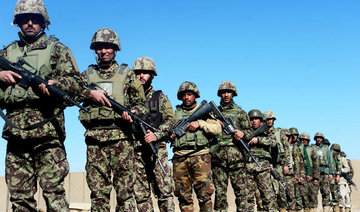
The Pentagon has ordered about 1,500 active-duty soldiers based in Alaska who specialize in operating in arctic conditions to be ready in case of a possible deployment to Minnesota, two defense officials said Sunday.
The officials, who spoke on condition of anonymity to discuss sensitive military plans, said two infantry battalions of the Army’s 11th Airborne Division have been given prepare-to-deploy orders.
One defense official said the troops are standing by to deploy to Minnesota should President Donald Trump invoke the Insurrection Act.
The rarely-used 19th century law would allow him to send military troops into Minnesota, where protesters have been confronting federal immigration agents for weeks. He has since backed off the threat, at least for now.
“It’s ridiculous, but we will not be intimidated by the actions of this federal government,” Minneapolis Mayor Jacob Frey told CNN’s State of the Union on Sunday. “It is not fair, it’s not just, and it’s completely unconstitutional.”
Thousands of Minneapolis citizens are exercising their First Amendment rights and the protests have been peaceful, Frey said.
“We are not going to take the bait. We will not counter Donald Trump’s chaos with our own brand of chaos here,” Frey said.
Gov. Tim Walz has mobilized the Minnesota National Guard, although no units have been deployed to the streets.
Peter Noble joined dozens of other US Post Office workers Sunday on their only day off from their mail routes to march against the immigration crackdown. They passed by the place where an immigration officer shot and killed Renee Good, a US citizen and mother of three, during a Jan. 7 confrontation.
“I’ve seen them driving recklessly around the streets while I am on my route, putting lives in danger,” Noble said.
Letter carrier Susan Becker said she came out to march on the coldest day since the crackdown started because it’s important to keep telling the federal government she thinks what it is doing is wrong. She said people on her route have reported ICE breaking into apartment buildings and tackling people in the parking lot of shopping centers.
“These people are by and large citizens and immigrants. But they’re citizens, and they deserve to be here; they’ve earned their place and they are good people,” Becker said.
A Republican US House member called for Walz to tone down his comments about fighting the federal government and instead start to help law enforcement.
Many of the officers in Minnesota are neighbors just doing the jobs they were sent to do, House Majority Whip Tom Emmer told WCCO-AM in Minneapolis.
“These are not mean spirited people. But right now, they feel like they’re under attack. They don’t know where the next attack is going to come from and who it is. So people need to keep in mind this starts at the top,” Emmer said.
Across social media, videos have been posted of federal officers spraying protesters with pepper spray, knocking down doors and forcibly taking people into custody. On Friday, a federal judge ruled that immigration officers can’t detain or tear gas peaceful protesters who aren’t obstructing authorities, including when they’re observing the officers during the Minnesota crackdown.