- Millions of Syrians are returning, but shattered homes, scarce jobs and weak services are testing hopes of a fresh start
- Returnees say rebuilding lives requires far more than crossing the border as Syria struggles with reconstruction needs
When Jihan Hamad Al-Khalaf and her extended family decided to leave Turkiye and return to Syria, there was little debate among them.
Five of the seven related families had been away since 2013, while the other two left in 2018. Some of their children had only faint memories of Syria, while others had never seen it.
Yet after the fall of Bashar Assad’s regime in December 2024, Al-Khalaf said their decision was “immediate and collective.”
“Conditions and pressures in Turkiye helped accelerate the decision,” the Syrian journalist and humanitarian activist told Arab News. “But the main reason was that the country had been liberated and the war was over.”
The children, raised on their parents’ memories of Syria, were among the most enthusiastic.
“When they heard us saying that Syria had been liberated, they immediately began asking: ‘When are we going back? When will the car come to take us?’” Al-Khalaf said.
The first family returned in January 2025. By the end of March, all seven were back. But they could not rebuild their old lives together.
With too few habitable homes and limited work, the families divided themselves between Damascus, Deraa, and rural Deir Ezzor.
Two families — around 20 people — shared a single house, while others settled according to surviving property, relatives, and job prospects.
Their story is part of one of the largest recent return movements in the world.
UNHCR, the UN refugee agency, estimated that about 1.82 million Syrians had returned from abroad between Dec. 8, 2024, and Oct. 1, 2026.
Lebanon accounted for the largest number of returns in that estimate, at about 733,000, followed by Turkiye with about 713,000.
About 299,000 had returned from Jordan. The estimates include registered and unregistered Syrians, as well as people in transit.
Returns from Lebanon accelerated amid renewed hostilities and worsening economic conditions.
A separate UNHCR crisis tally recorded about 1.08 million Syrian arrivals from Lebanon by Sept. 30, following the regional escalation that began in late February. About 226,000 reported intending to return permanently, and the agency cautions that some returns may be temporary.
Many Syrians, however, are arriving in communities barely equipped to receive them.
The International Rescue Committee’s July report, “Home, But Not Whole,” surveyed 425 returnees across seven governorates.
Some 91 percent of respondents said essential services were missing in their communities, 71 percent were living in damaged housing, and only 18 percent said they had received adequate support during the return process.
For Al-Khalaf’s family, the gap between the emotional idea of return and its reality on the ground became apparent almost immediately.
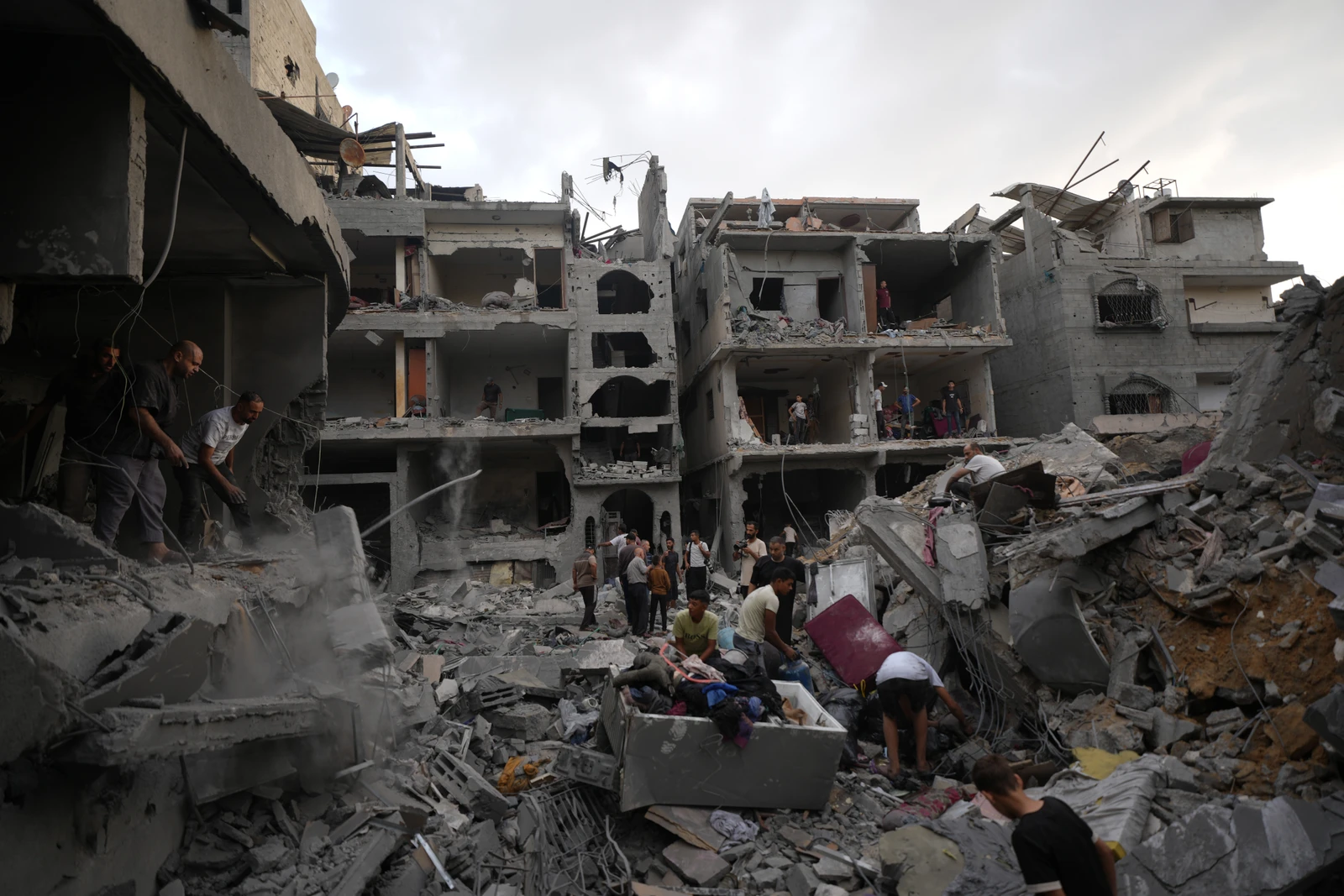
One family home in Damascus had been stripped to little more than its walls, roof and floor. Another home had been struck by a projectile and used as a dumping ground for rubble and trash.
“No organization, government agency, or anyone else helped us with the repairs,” Al-Khalaf said.
During the first winter, two families lived together in one room. As relatives found work, they slowly installed windows, doors, and electricity.
“Every month, we would put in one door or one window, or do some of the electrical work,” she said. Clearing rubble and waste from one house alone cost about 1 million Syrian pounds.
The families had also spent much of their money simply getting to Syria.
Al-Khalaf said the first family paid around $600 to reach Deraa. Some of the returnees sold their possessions in Turkiye to finance the journey.
Available assistance often covers only a fraction of the need. Between January and August, UNHCR said 31,083 refugee-returnee households received return and reintegration cash assistance.
Eligible households can receive a one-time $600 reintegration grant, while basic relief items reached 337,089 people, including returnees and other vulnerable households.
Over the same period, UNHCR repaired 1,000 damaged homes and provided shelter cash assistance to 1,595 households.
UNHCR’s regional Syria situation response, requiring $1.264 billion, was 34 percent funded as of Sept. 30. Funding shortfalls had forced six community centers in Syria to close in April and May.
The World Bank estimated that rebuilding damaged physical assets will cost around $216 billion, nearly 10 times the country’s 2024 gross domestic product.
For returning families, those figures translate into daily struggles over water, electricity, transportation, healthcare, and food.
In Damascus, Al-Khalaf’s family initially paid 40,000 Syrian pounds for 10 barrels of non-potable water, and about 10,000 pounds for each 25-liter container of drinking water. Municipal supplies eventually improved, but the family still buys drinking water.
Conditions were worse in rural Deir Ezzor, where damaged purification facilities meant that available water was often unsafe.
“The children were constantly getting sick, especially in the beginning, because they weren’t used to the water,” Al-Khalaf said.
More than 10 million people across Syria lack access to safe water, according to UNICEF’s August 2026 appeal. The IRC’s July report said some areas received only two to four hours of electricity per day.
The difficulties, civil society workers say, do not end when water or electricity begin flowing or roofs or walls are repaired.
Nadia Okasha, director of the Tastakel Center in Damascus, said the needs of returnees evolve as families move through different stages of rebuilding.
The women-led nonprofit center focuses on civil peace, trust-building, and social cohesion rather than on distribution of humanitarian aid, but often directs returnees toward organizations and public bodies that can provide legal, humanitarian, or administrative services.
“At first, inquiries concentrate on return procedures, documents, and access to basic services,” Okasha told Arab News. “Later, interest begins to shift toward more sustainable issues such as employment, education, and reintegration into society.”
Many returnees understand that life will be difficult, Okasha said, but they often underestimate the time, effort, and patience required to reintegrate after years abroad and extensive changes inside the country.
Some children born abroad or in displacement camps possess foreign records or temporary protection papers but lack documents recognized by Syrian institutions.
Others were born during periods when civil registries were inaccessible, destroyed, or controlled by competing authorities.
For Al-Khalaf’s orphaned nephew, the absence of paperwork could jeopardize his education. The boy’s father was killed before formally registering his marriage or obtaining a “family booklet.” More than a decade later, Syrian records still list the father as alive.
Although the boy has Turkish temporary protection papers and his grandfather was granted legal guardianship by a Turkish court, those documents have not been accepted as sufficient in Syria.
The family must now register the father’s death, prove the marriage, and establish the child’s parentage — processes requiring hundreds of dollars in legal fees which the family cannot afford.
The local school allowed Al-Khalaf’s nephew to enroll provisionally after relatives signed pledges promising to produce his papers. But without them, the family fears he may be denied recognized certificates or progression through the education system.
“Every time we go to one authority, they tell us we have to go to another,” she said.
Children educated entirely in Turkish face an additional language barrier. Some of Al-Khalaf’s younger relatives required private tutors to catch up with Arabic-speaking classmates.
Economic survival remains perhaps the greatest test.
Some of Al-Khalaf’s relatives returned to jobs in public institutions, but others remained without work or income for more than a year.
Relatives in rural Deir Ezzor began cultivating land beside their house, while even government employees in Damascus struggled with irregular salaries and high living costs.
Al-Khalaf, who previously worked for Deraa’s education authority, has neither been reinstated nor found suitable work elsewhere. She depends heavily on monthly remittances from siblings in Europe.
“Without them, we would not be able to buy what we need or cover our expenses,” she said.
About 2.04 million internally displaced Syrians had also returned to their areas of origin since December 2024, according to UNHCR’s Oct. 1 figures — an even greater number than those arriving from abroad — adding another dimension to the challenge.
Their problems often overlap with those of refugees returning from abroad, particularly in terms of housing, services, and livelihoods. But they can also face disputes over land and property, unresolved grievances, and the loss of social and economic ties built during displacement.
Suleiman Jafer fled Afrin in March 2018. Before returning home in April 2026, he spent nearly six years in displacement camps in the Shahba area of northern Aleppo.
The first thing he did after arriving, he told Arab News, was kiss the soil.
But Afrin had changed so extensively that he nearly lost his way to his own house. When he entered, it was empty.
“They did not leave me even a spoon or a fork,” Jafer said. “The doors were stolen — even the toilet, sinks, and bathroom fixtures were stolen.”
Jafer said that repairing his village home cost about $10,000, while work on his house in Afrin city cost another $5,000. His car was missing, and a plot planted with olive trees, grapevines and almond trees had been cleared.
Nevertheless, he described the current security situation as generally good and said he had not personally been harassed since returning. His greater concern is the destruction of Afrin’s agricultural economy.
Many of Afrin’s families depended on olives and fruit. Jafer said damaged trees and orchards would need at least two years to recover.
Wathiq Al-Hallaq, director of the Social Policies Directorate at Syria’s Ministry of Social Affairs and Labor, said the challenge facing institutions was multifaceted.
“The matter is not primarily related to the scale or pace of return as much as it is related to the fragility of policies, the absence of databases, and outdated working mechanisms,” he told Arab News.
Syria’s system of social services and protection programs needs to be redesigned in its structure, procedures, and objectives, he said, if it is to respond to returnees’ needs.
The ministry is working to launch a national social protection program and has established a technical unit focused on returnees and internally displaced people, he said.
The IRC has warned that donors and authorities must invest in water networks, roads, electricity, schools, healthcare, and livelihoods for returnees and established residents alike.
Otherwise, shortages and unequal aid distribution may generate competition and undermine already fragile trust.
Okasha said rebuilding social cohesion was inseparable from rebuilding homes and infrastructure.
“Reintegration is not limited to meeting material needs,” she said. “It also requires a cohesive society in which everyone feels that they belong and are able to participate in building their future.”
For Al-Khalaf, the question of whether Syria is ready for its people to return cannot be answered through statistics alone. When refugees in Turkiye ask her about conditions in Syria, she tells them that what they see will depend partly on what they expect.
“If you put on rose-tinted glasses, you will see that returning is suitable and everything is good,” she said. “But if you wear black-and-white glasses, you will see everything in black and white.”
Those expecting the same income, services and standard of living they had abroad are likely to struggle, she said. People with a job, trade, capital or relatives supporting them from overseas are in a far stronger position to endure the first months.
Despite unemployment, damaged homes, and continuing dependence on remittances, Al-Khalaf said her family had never considered going back to Turkiye.
“We are trying to arrange our lives here and adapt according to the income we have,” she said. “This is our country. This is our real place.”