- Israeli airstrikes have lessened but continue to affect residents
- Reconstruction efforts under the ceasefire plan have not started
GAZA: One year after a US-brokered ceasefire was announced in the Gaza Strip, residents still living in displacement camps under near-daily Israeli airstrikes say the truce has not brought the promised peace.
Israel has reduced the intensity of its attacks but has kept up its strikes and now controls about 70 percent of Gaza, while the reconstruction of the devastated Palestinian territory called for under the ceasefire plan has still not materialized.
“Nothing has changed for the better; everything has gotten worse, they lie to us, it is all lies,” Fatima Awkal, a displaced woman in Gaza City, told AFP.
“Martyrs are still falling, people are still being injured, the shelling continues, and we cannot even find a moment’s peace from the constant buzzing of the drones overhead.”
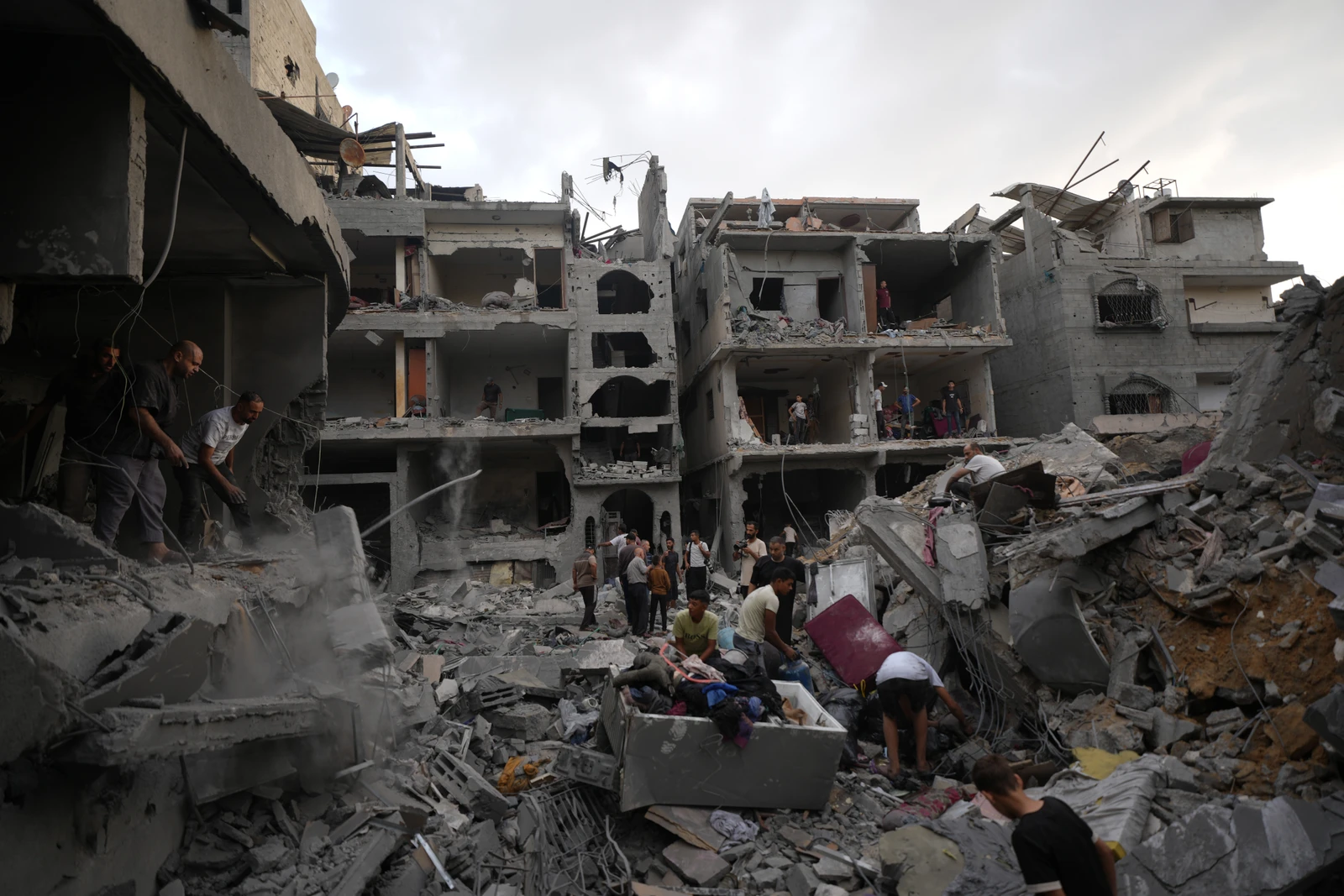
On the streets of Gaza City, rows of white tents line passageways that have been cleared of rubble from destroyed homes, while in the distance blown-out windows gape from the facades of buildings that remain standing.
Ahmed Jonaid, another displaced Palestinian in Gaza City, said he had hoped to return home after the ceasefire.
“We thought we would experience some happiness and return to our homes. Instead, we see ourselves suffering in refugee camps, sleeping on makeshift mats,” the 51-year-old said as he carried two jerricans of water back to his tent.
Almost all of Gaza’s more than two million residents were displaced at least once during the war that broke out with Hamas’ unprecedented attack on Israel on October 7, 2023.
With 82 percent of all standing structures in Gaza either damaged or destroyed as of mid-2026 per the UN, many residents still live in tents or makeshift shelters, where overcrowding and a lack of hygiene has led to outbreaks of disease.
Ahmed Shawan, a doctor at a hospital in the southern city of Khan Yunis, said that he had yet to see the ceasefire take effect on the ground.
“It has been a full year since the ceasefire was declared, yet it exists only on paper,” he said.
The second phase of the agreement was supposed to include a political transition away from rule by Islamist movement Hamas, with technocrat Ali Shaath appointed head of a new National Committee for the Administration of Gaza (NCAG).
But Hamas effectively remains in charge of security, and Shaath has taken a low profile.
Five countries including Morocco have agreed to join the International Stabilization Force (ISF) tasked with preparing for the post-war period, but troops have yet to start operating in Gaza.
Israel controls all entry points into the territory and continues to allow in only a limited amount of aid, which keeps the price of basic goods too high for ordinary Gazans like Ismail Hamouda.
The 47-year-old father, who was displaced from Jabaliya in the north to Gaza City, ticked off the things residents still lack — potable water, food, financial assistance.
“Here in the displacement camps, we thought that after a year of ceasefire things would improve and get better,” he said. “Unfortunately, the situation is worsening gradually... (and) we are still displaced.”