- Governors call for reconstruction and return of millions displaced by war
- Assad family ruled Syria for more than five decades before its ouster in December 2024
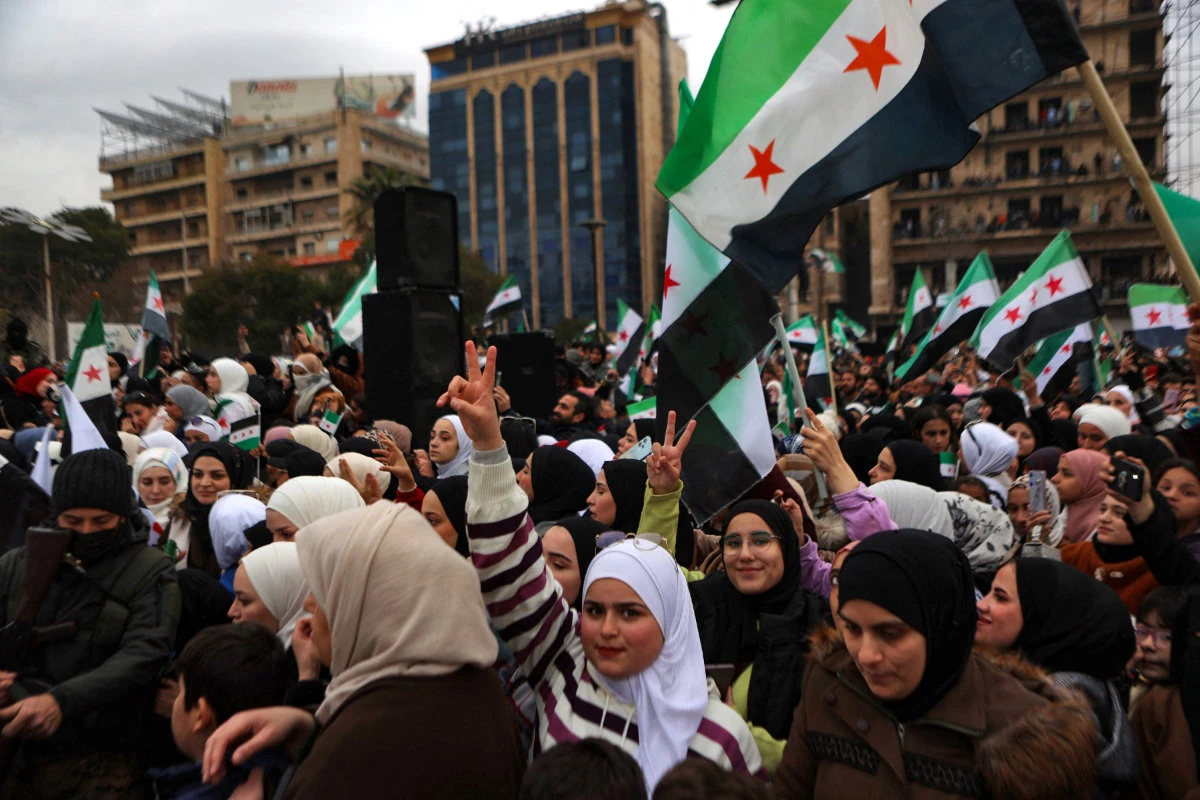
DAMASCUS: Syrian governors on Friday marked the second anniversary of the launch of the Deterrence of Aggression Battle, paying tribute to those who took part in the military campaign that culminated in the ouster of Bashar Assad's regime.
The governors of Damascus Countryside, Tartous and Hama stressed the importance of preserving the gains of liberation, pursuing reforms and reconstruction, and creating conditions for displaced Syrians to return to their homes.
In a post on X, Damascus Countryside Governor Amer Al-Sheikh said the anniversary recalled the sacrifices of those who helped bring about a historic turning point in Syria's history.
4
He said honoring those sacrifices meant safeguarding the country's unity, preserving the gains of liberation, promoting reform and continuing efforts to build a state that fulfills the aspirations of its people.
Al-Sheikh described the anniversary as a defining moment after years of patience, preparation and collective efforts that paved the way for Syria's liberation and restored hope to its people.
Tartous Governor Ahmad Al-Shami also recalled the night the military campaign began, describing it as a turning point that changed the course of Syria's history and ended years of oppression.
Call for reconstruction, return of displaced
Hama Governor Abdul Rahman Al-Suhyan said the launch of the battle opened a new chapter of hope for Syrians, noting that the people of Hama had made significant sacrifices in the struggle for freedom and dignity.
He said the sacrifices of those killed, along with the suffering of wounded people, detainees and displaced families, would remain part of the nation's collective memory.
Al-Suhyan stressed the need to repair the damage caused by years of conflict, rebuild affected communities and provide the conditions necessary for displaced people to return safely to their cities and villages.
End of more than five decades of Assad family rule
The Assad family ruled Syria for more than five decades, beginning with Hafez Al-Assad's seizure of power in a 1970 military coup. His son Bashar succeeded him in 2000, continuing a system characterized by centralized authority, extensive security controls and the suppression of political opposition.
Hafez's rule was marked by a powerful security apparatus and the concentration of political and economic power among loyalists. One of its bloodiest episodes was the 1982 military crackdown in Hama, which killed thousands of people.
Bashar initially raised hopes of political and economic reform after taking office, but his government soon suppressed calls for greater freedoms and maintained tight control over political life.
The uprising against his rule began in March 2011, when peaceful protests inspired by the Arab Spring spread across Syria. A government crackdown escalated the demonstrations into an armed conflict that drew in regional and international powers, including Iran, Russia, Turkiye and the United States.
The nearly 14-year war killed an estimated 500,000 people and displaced approximately 13 million Syrians, both inside the country and abroad. It devastated cities, destroyed infrastructure and left millions dependent on humanitarian assistance.
The conflict ended with a dramatic opposition offensive — the Deterrence of Aggression Battle — launched on Nov. 27, 2024, in Qabtan Al-Jabal in western Aleppo countryside. Forces led by Hayat Tahrir Al-Sham advanced rapidly from northwestern Syria, capturing Aleppo, Hama and Homs before entering Damascus on Dec. 8. Assad fled the country, bringing an end to more than 50 years of rule by his family.