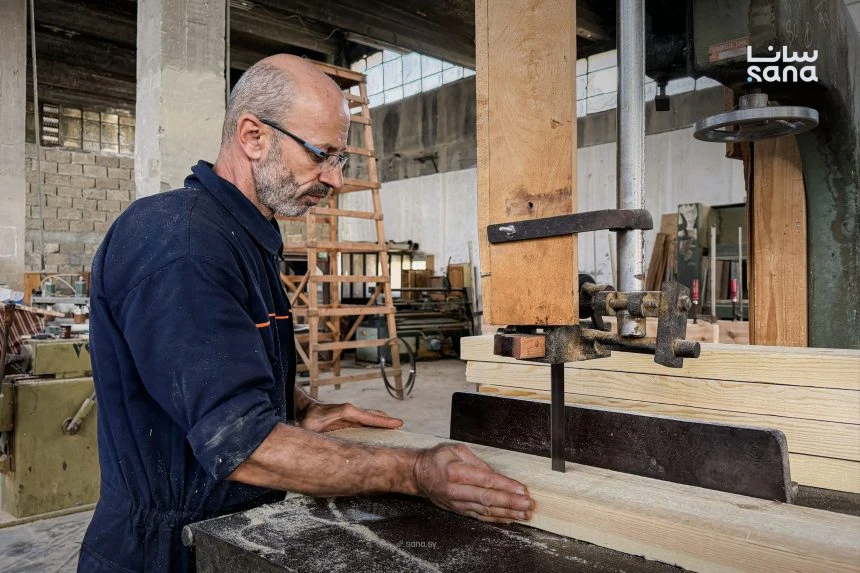
- Two metal and wood construction plants in Latakia have resumed operations
- Both plants aim to boost local manufacturing, create jobs, and reduce dependence on external suppliers
LATAKIA: Two metal and wood construction plants affiliated with the Syrian Construction and Building Corporation in Latakia have resumed production after local teams repaired and rehabilitated their machinery.
The plants can now fulfill contract work and supply construction projects in both the public and private sectors.
Fater Ahmad, head of the corporation’s Industrial Division, said that the metal construction plant had signed a contract with General Electricity to manufacture 1,000 tonnes of medium- and low-voltage electricity towers for overhead networks operating at 20 kilovolts.
The plant is also producing approximately 206 tonnes of metal structures for a project to rehabilitate areas affected by fires in Al-Basit and other locations. Products include doors, windows, railings, hangars, and other metal structures.
Anwar Mariyeh, the plant’s director, stated that the facility employs about 45 workers and has a monthly production capacity of 30 tonnes of light metal products and 50 to 70 tonnes of heavy products.
Its output includes electricity towers, tractor trailers, fuel tanks with capacities from 25,000 to 100,000 liters, water tanks, university seating, and auditorium seats.
Mariyeh said the plant is ready to meet public and private sector orders, with the corporation’s Supply Branch providing raw materials. The wood construction plant has also resumed production after repairing damaged or stolen machinery.
It currently employs 15 local workers and has completed a contract for the Technical Services Directorate.
The plant continues to provide woodwork for the Engineering Expansion Project and the rehabilitation of the Administrative Development building, including doors, window frames, windows, seating, and office furniture.
Hamid Baghdad, head of the Finishing Department, said the facility manufactures and maintains wooden products using domestically sourced timber and is ready to fulfill orders to required specifications.
The reopening of both plants supports the corporation’s plan to restore production facilities, stimulate domestic manufacturing, create jobs, reduce reliance on external suppliers, and strengthen local industrial capabilities.