- Israeli opposition leader received the backing of 67 lawmakers in the 120-seat parliament after Arab-led parties announced support.
- The move weakens the position of Benjamin Netanyahu to stay on as prime minister.
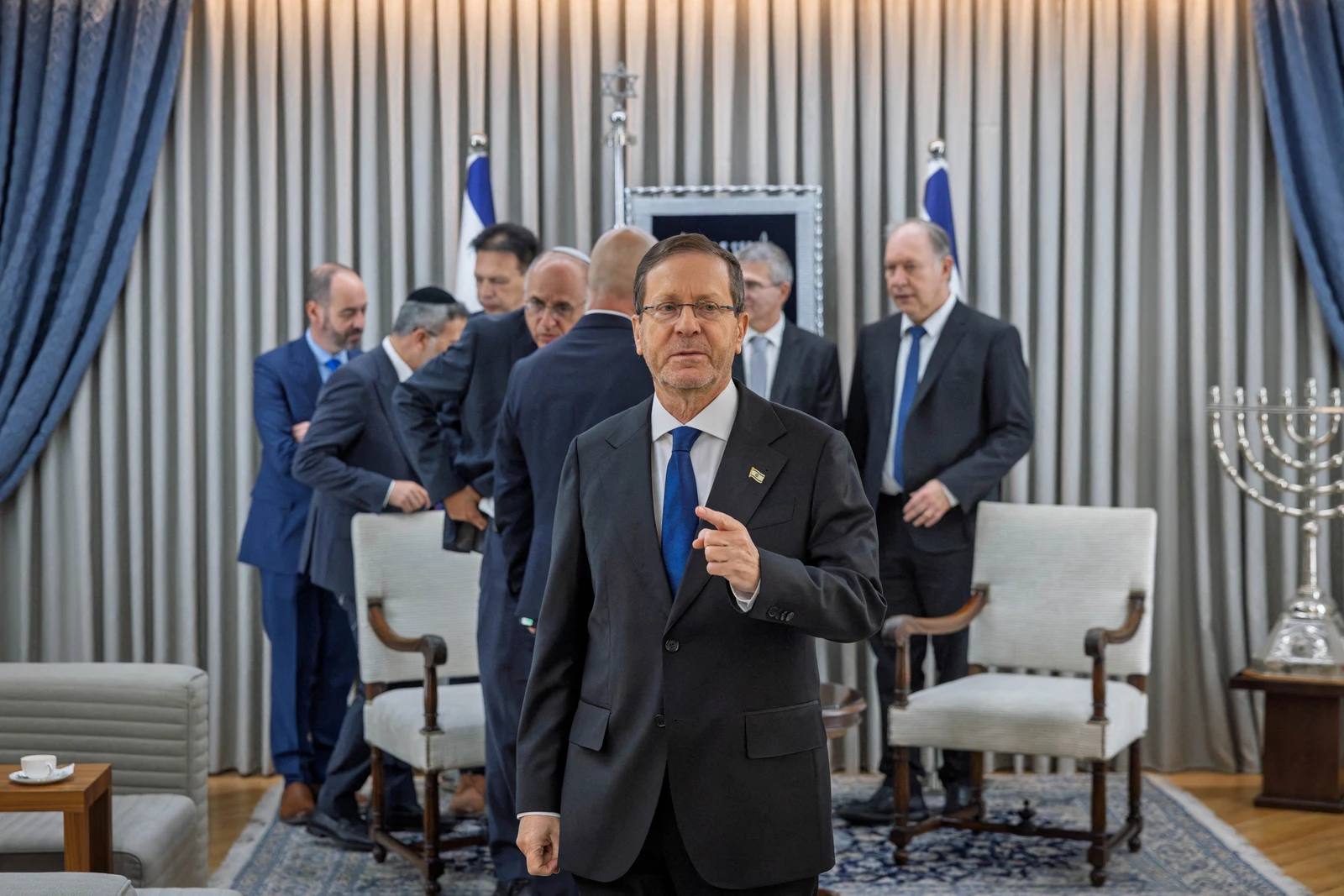
DUBAI: Israeli President Isaac Herzog said he will announce on Sunday whom he will task with trying to form a new government, following post-election talks with all party leaders.
“I intend to task a member of Knesset (parliament) with forming the government this coming Sunday,” Herzog said in a video message, noting that 46 parliament members recommended Prime Minister Benjamin Netanyahu, while 67 backed his opponent Gadi Eisenkot. Seven lawmakers abstained.
Israel’s largest Arab party grouping, the Joint List, on Thursday gave its backing to Eisenkot and said it would recommend him for the formation of a new government after last week’s election.
The Joint List, which won 11 seats in last week’s parliamentary election, announced that it would recommend Eisenkot to President Isaac Herzog, joining the eight-seat United Arab List, also known as Ra’am, which backed him earlier in the day.
Arab-majority lists won an unprecedented 19 parliamentary seats in the election out of 120, making them potential kingmakers in Israel’s next government.
The endorsements give the former military chief, who leads the centrist Yashar party, the support of factions holding a majority of seats in Israel’s 120-member Knesset.
The alliance said the decision was intended to strengthen efforts to replace Benjamin Netanyahu and respond to public demands to prevent his government from returning to power, despite concerns over the opposition’s failure to adequately challenge policies affecting Arab citizens.
The announcement came as Herzog continued consultations with newly elected parliamentary factions to determine who should be tasked with forming the next government following the inconclusive Oct. 27 election.
The president began the consultation process on Wednesday night and told party leaders that “not every commitment and promise can be fulfilled” if they wanted to avoid a new election.
Three factions aligned with Netanyahu’s religious-nationalist base recommended that he be given a chance to form a coalition, while a fourth, led by a former Netanyahu ally, backed Eisenkot.
Eight more parties, including the two Arab-led factions, are scheduled to meet with the president on Thursday, with Eisenkot’s Yashar party and Netanyahu’s Likud going last.
Israel’s elections last week saw no clear winner as the blocs of neither Netanyahu nor Eisenkot secured a parliamentary majority.
Netanyahu’s right-wing Likud party and its far-right and ultra-Orthodox Jewish allies won 53 seats in the 120-seat Knesset, while Eisenkot’s centrist Yashar party and three other Jewish opposition parties in his bloc won 48.
The largest Arab-Israeli bloc on Wednesday denounced “political persecution,” after one of its lawmakers was accused of accepting foreign money before last week’s elections, where the community turned out in record numbers.
Netanyahu doubled down on the accusations of foreign interference in the Oct. 27 vote.
“There are serious suspicions that foreign states have spent considerable sums to influence the outcome of the elections in Israel,” he said in a video, speaking in front of an Israeli flag and the slogan “Prime Minister’s Office.”