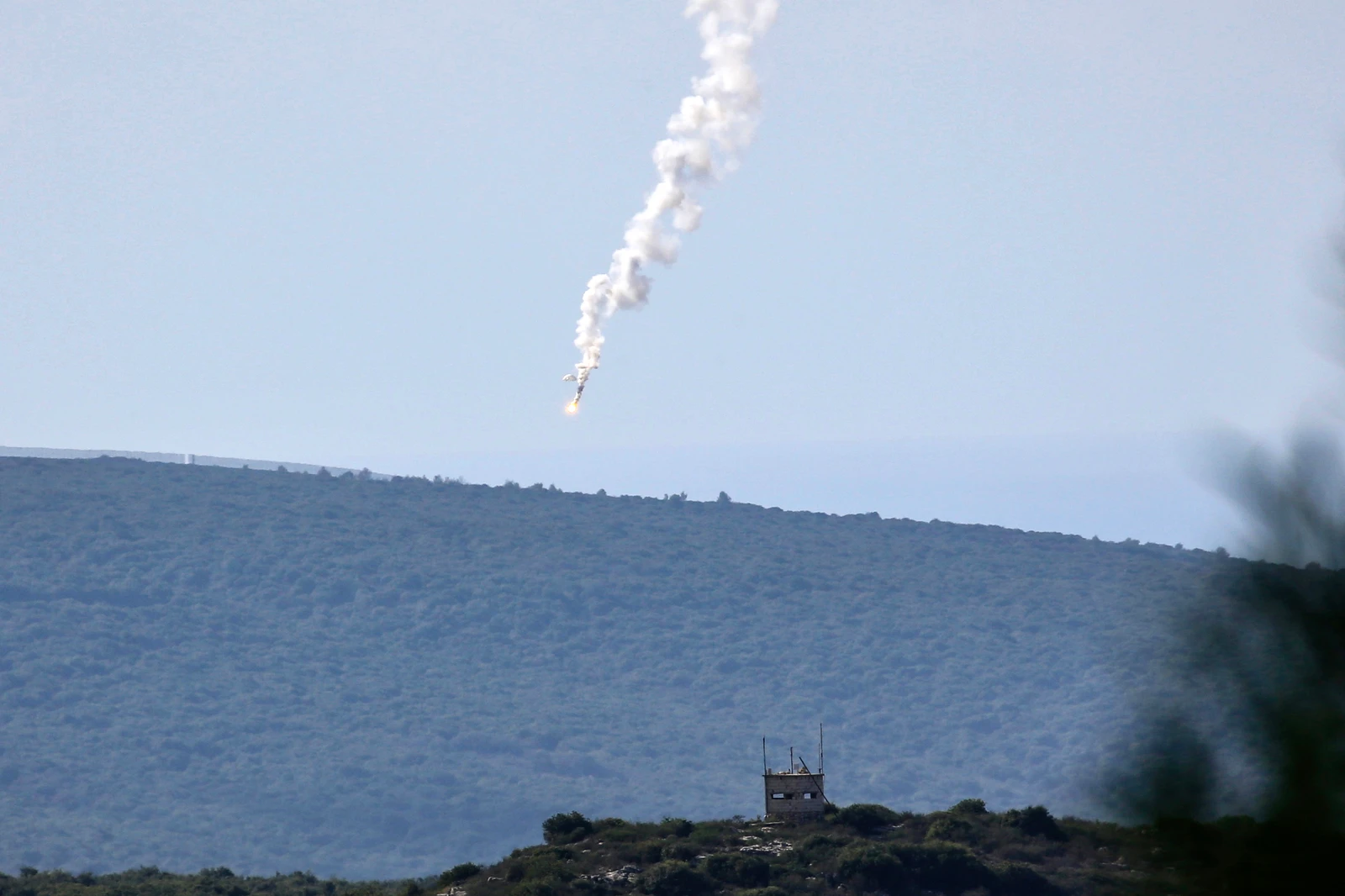
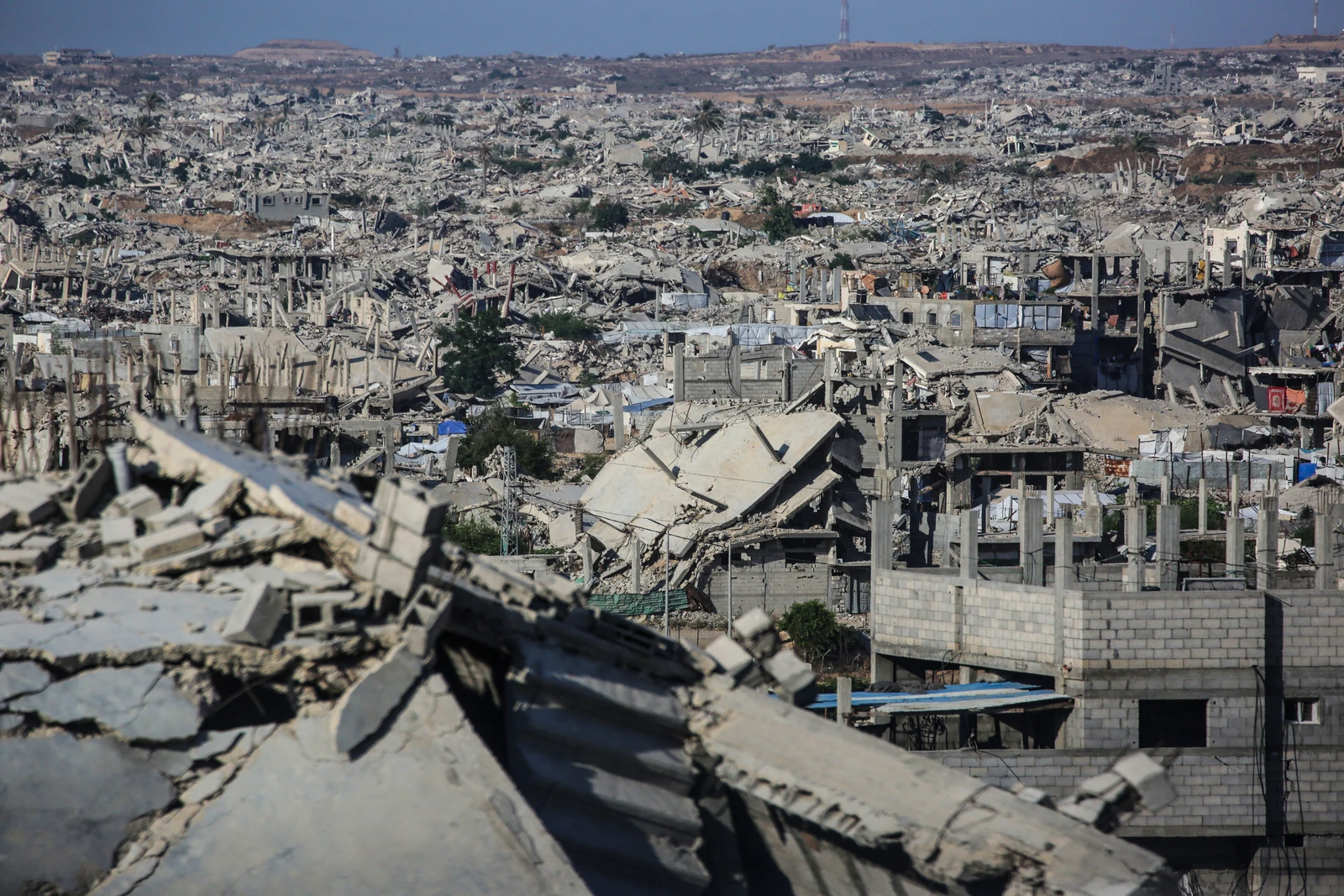
- Families returning to southern Lebanon find scorched olive groves, damaged homes and wrecked infrastructure
- Settler attacks and restrictions on land access threaten livelihoods of Palestinian farmers in occupied West Bank
Families returning to southern Lebanon after being displaced by fighting between Hezbollah and the Israeli military have found olive trees uprooted and fields scorched. For communities that have worked the land for generations, the damage threatens both their livelihoods and a way of life.
Palestinians in the occupied West Bank and Gaza face similar losses. Damage attributed to Israeli forces includes the destruction of olive groves and the loss of access to water and farmland. As the resources they depend on become harder to reach or disappear altogether, families find it harder to stay on their land.
Together, these cases raise a broader question about the environmental toll of Israel’s military operations and how it shapes who can stay, who is forced to leave and who can return.
For Abbas Ali, who returned to his hometown of Nabatiyeh in southern Lebanon after the latest Israel-Hezbollah ceasefire, the devastation was deeply personal. His childhood home was badly damaged, its windows shattered, stonework smashed and water tank destroyed.
“When we finally managed to return home, the sight of our village was enough to bring tears to our eyes,” he told Arab News.
“Within our culture, we don’t look at a landscape as just a physical place. They represent generations of memories, history and a way of life that we are trying to protect.”
Hawraa Ibrahim also returned to find piles of rubble where greenery once stood. Although the olive trees in her village had survived, those in neighboring communities were less fortunate.”
“In areas where Israeli forces entered, they uprooted the trees with bulldozers, tearing them from the land. Some trees were even taken away, leaving behind nothing but destruction,” she told Arab News.
Humanitarian organizations have long raised concerns about the environmental impact of Israeli military operations in southern Lebanon, particularly the use of white phosphorus munitions and the destruction of agricultural land.
Ghiwa Nakat, executive director of Greenpeace Middle East and North Africa, said the operations were “damaging the environmental foundations of life.”
She told Arab News: “They’re ruining the air people breathe, the water they depend on, the soil and ecosystems that sustains those communities.”
The Israeli military maintains that its campaign in Lebanon is directed at Hezbollah, which began firing across the border following the Hamas-led attack on southern Israel on Oct. 7, 2023, triggering multiple bouts of conflict.
It says vegetation clearance and the creation of buffer areas are necessary to prevent armed groups from using natural cover to launch attacks.
Israel also says it takes precautions to minimize environmental damage and does not deliberately target vegetation to displace civilians.
However, researchers and rights organizations have questioned the scale and methods of the destruction.
Human Rights Watch and Amnesty International have documented Israeli use of white phosphorus in or near residential areas, raising concerns about civilian safety and environmental damage.
White phosphorus ignites upon contact with oxygen, producing intense heat and smoke. It can cause severe chemical burns and ignite vegetation, potentially spreading fires across forests and farmland.
The Israeli military says the munitions are used for purposes such as creating smoke screens or marking targets, rather than deliberately starting fires, and that its procedures generally restrict their use in densely populated areas.
Ahmad Baydoun, a doctoral researcher at TU Delft studying the spatial and environmental impacts of warfare, has documented 282 white phosphorus strikes in southern Lebanon and one in northern Israel between October 2023 and May 2026.
His research identified 120 strikes in residential areas, 40 in agricultural areas and 93 in forests or open terrain. He argued that almost half violated international law.
“It’s not illegal to use white phosphorus, but it becomes illegal once you use it over civilians,” he said.
The legality of its use depends on the circumstances, including the presence of civilians and compliance with international humanitarian law governing distinction, proportionality and precautions in attack.
Baydoun also found that just 15 of the 282 strikes in Lebanon fell outside a proposed Israeli buffer zone, extending up to 10 kilometers into the south.
He argued that the pattern suggested the strikes had effectively traced the boundaries of the security zone before it was formally announced.
“They really wanted to remove literally any single tree that’s still standing on the border, for clearance, for visibility purposes, not to allow anyone to hide under any tree,” he said.
Lebanese officials and environmental researchers argue that the extent of fires, bulldozing and herbicide spraying points to a deliberate effort to strip vegetation and establish a depopulated buffer zone.
Israel disputes allegations of deliberate environmental destruction, maintaining that its operations are intended to weaken Hezbollah and prevent cross-border attacks.
Whatever the intent, the consequences for communities dependent on agriculture have been severe.
Olive cultivation and oil production have sustained generations of families in southern Lebanon, providing income and a connection to their ancestral homes. Damage to farmland has also undermined confidence in local produce.
“In areas where white phosphorus was dropped, some people have become afraid to buy olive oil produced there,” said Ibrahim. “They worry that the soil may have been polluted or contaminated and that the olive oil might no longer be safe to consume.”
The destruction also threatens Lebanon’s cultural heritage.
“There are the pine trees … the cedar tree, which is represented on our national flag. These trees are deeply connected to our heritage and identity,” said Ali. “I believe white phosphorus was used deliberately to damage the land and destroy everything growing on it.”
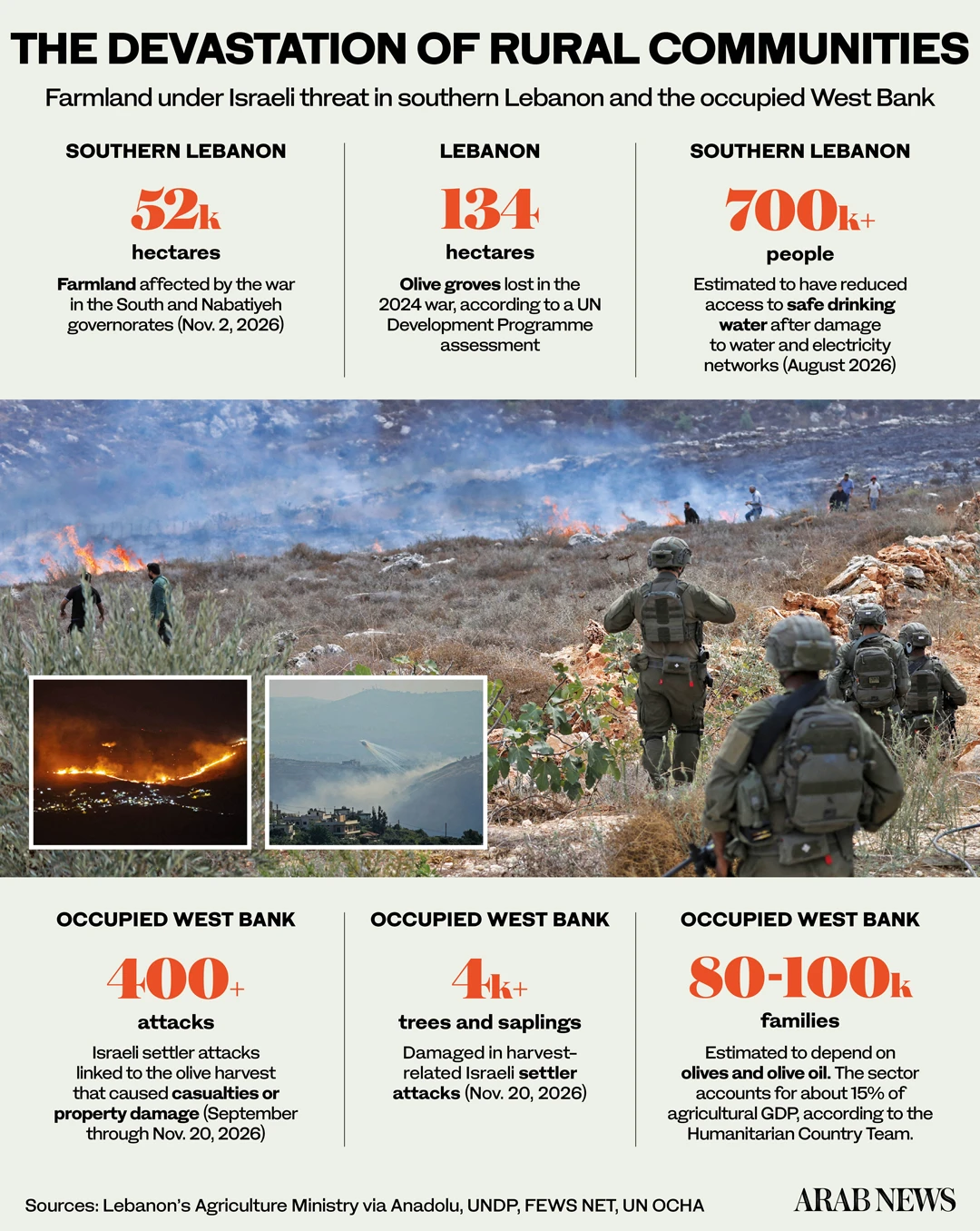
Damage to essential infrastructure has compounded the crisis. A UN report published in August estimated that more than 700,000 people in southern Lebanon faced reduced access to safe drinking water because of damage to water and electricity networks.
Earlier this year, Lebanon’s agriculture and environment ministries reported that Israeli light aircraft had sprayed glyphosate, a herbicide, over parts of the south. Laboratory tests reportedly detected concentrations in some samples 20 to 30 times higher than those associated with normal use.
“This caused very serious damage and burning of vegetation,” said Nakat. “It also damages soil fertility and it has potential risk on the water and the food chain.”
Together, the destruction of farmland, vegetation and infrastructure threatens to make recovery increasingly difficult, even if hostilities subside.
In the occupied West Bank, agricultural destruction has taken a different form, with Palestinian farmers facing attacks by Israeli settlers, restrictions on access to their land and the uprooting of olive trees.
According to the UN, 272 olive harvest-related settler attacks were documented between Sept. 1 and Oct. 19, 2026.
The Israeli military says some tree removals are necessary to eliminate cover that could be used by attackers targeting roads and nearby communities.
Palestinian residents and rights organizations dispute whether such measures justify the destruction of privately owned olive groves.
Hussein Hureini, a Palestinian journalist in the West Bank, said this year’s harvest had been particularly dangerous.
“When Palestinian farmers go, the settlers come and throw stones, shoot them,” he said. “The Israeli army, also, they come and cover the settlers, to protect the settlers and kick the farmers out and no one can collect olives.”
Hureini said settlers had cut down trees in Masafer Yatta and villages north and east of Ramallah. Reuters separately reported that Israeli military bulldozers had plowed through rows of olive trees in a village near Ramallah.
“The olive trees, we call it petrol here in Palestine. Green petrol,” he said, emphasizing their economic importance.
He described one farmer who previously produced around 400 bottles of olive oil but has been unable to access his land since the escalation of violence following Oct. 7, 2023.
Hureini believes the attacks and restrictions are intended to drive Palestinians from their villages.
Nakat expressed similar concerns about the broader consequences of environmental destruction.
“I truly believe this is part of a system plan to uproot the people and displace the people from their region.”
Even if the fighting ends, she warned, the loss of the resources and environmental conditions needed for recovery could prevent displaced communities from rebuilding their lives.
For those who have returned to southern Lebanon, the uncertainty remains.
Although Ibrahim is back in Nabatiyeh, many of her relatives are still displaced.
“Even though those areas are not occupied, that doesn’t mean they’re safe,” she said. “You never truly feel safe, even in your own home.”
She also worries about the long-term health consequences of wartime contamination, particularly for her children, although the extent of any future health effects remains uncertain.
“We’ve seen the consequences of war before, and I fear history will repeat itself,” she said.
Ali fears the devastation witnessed in Gaza could eventually be repeated in southern Lebanon. Yet despite the destruction of his home and surrounding landscape, he remains determined to stay.
“The war may have changed our lives but it hasn’t taken away our love for our land or our determination to return to it.”