- Israel’s foothold gives it leverage, leaving Damascus to seek withdrawal under continued military pressure
- Limited security deal may be possible, analysts say, but Israel’s deepening presence complicates broader withdrawal agreement
LONDON: Israeli forces are reportedly positioned about 27 km from Damascus, and analysts say they may not need to advance any farther to constrain Syria’s government. Their foothold in the south, reinforced by repeated incursions and the threat of airstrikes, already gives Israel leverage over its neighbor’s security decisions.
For President Ahmad Al-Sharaa’s transitional government, that creates a difficult balancing act: negotiating an Israeli withdrawal without provoking a wider conflict or undermining its credibility at home.
Al-Sharaa’s government has repeatedly expressed its commitment to talks that could lead to a security agreement. Yet even as it pursues US-backed diplomacy, Israel appears to be preparing for a prolonged military presence, observers say.
“Israel appears to be turning what it first called a temporary deployment into a lasting line in southern Syria, and it is more likely to extend that line in small steps than in a single large advance,” Nanar Hawach, a Syria researcher and senior analyst, told Arab News.
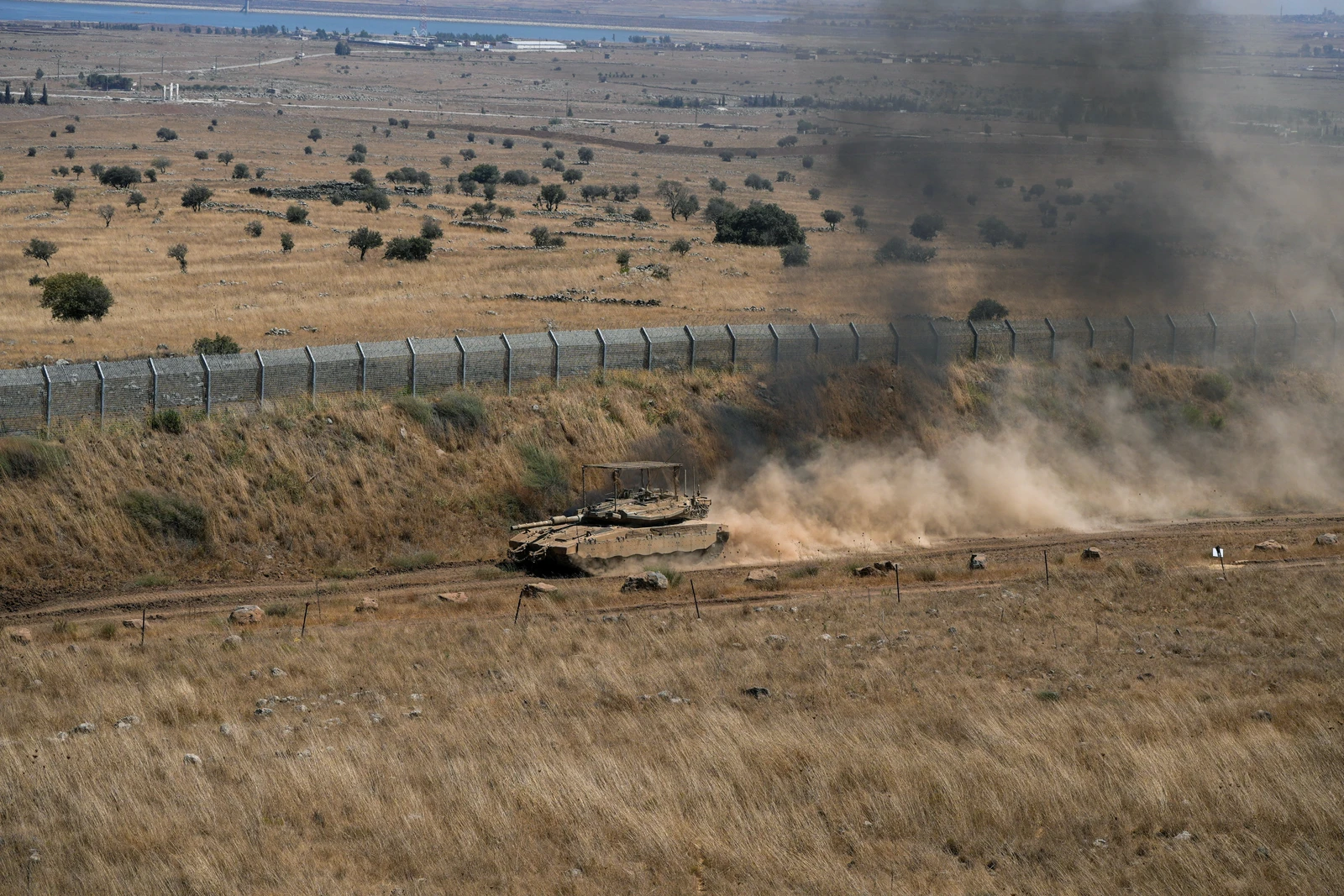
According to the Syria-focused research organization ETANA, Israel directly occupies about 400 sq. km, including the strategic summit of Mount Hermon and parts of Quneitra and rural Damascus. At its deepest point, that footprint extends about 12 km into Syrian territory.
The significance of that presence goes beyond the ground Israeli forces hold. Hawach said Israel’s ability to strike anywhere in Syria already limits where the Syrian army can deploy in the south.
“Pushing closer to Damascus would add little to Israel’s leverage and would make any compromise with Israel harder for Al-Sharaa’s government to justify to Syrians,” Hawach added.
Israel moved into the UN-patrolled demilitarized zone after the fall of longtime President Bashar Assad in December 2024, declaring the 1974 disengagement agreement void and saying its troops were needed to protect against cross-border attacks.
Since then, its presence has become increasingly established. In November 2025, the UN Disengagement Observer Force said Israel had set up 10 bases in the area. Israeli troops have used those positions to conduct near-daily incursions into Daraa and Quneitra provinces.
Israel cites border security and the protection of Syria’s Druze community amid sectarian violence in Sweida. It has also demanded the demilitarization of southern Syria.
The Syrian government has called on Israeli forces to withdraw.
Those competing demands leave little room for compromise, while uncertainty over Israel’s longer-term intentions further complicates negotiations.
Joshua Landis, director of the Center for Middle East Studies at the University of Oklahoma, said: “Israeli policy in Syria is not settled.”
Landis told Arab News: “(Benjamin) Netanyahu chose domination over a peace deal.”
Landis said “rightward trajectory of Israeli politics over the last decades” and the “growing strength of the settlers within the military” made further consolidation and gradual expansion toward Jabal Al-Druze more likely.
Jabal Al-Druze, also known as Jabal Al-Arab, is a volcanic mountain range in southern Syria, just east of Sweida, and the heartland of the Syrian Druze.
“Today, taking Syrian land around the Golan is like stealing candy from a child,” Landis said. “It is irresistible.”
For residents of southern Syria, the consequences extend beyond negotiations over borders and military deployments.
The UN Human Rights Office documented about 280 Israeli military incursions in September alone, involving raids, detentions and restrictions on civilian movement.
Separately, a UN commission of inquiry on Sept. 8 identified 49 Syrians, including two children, who had been detained by Israeli forces on Syrian territory and were believed to have been transferred to Israel.
Reported killings in October have added to tensions. Israeli forces killed a young man near the Al-Hamidiyah military base in rural Quneitra on Oct. 4. Two days later, they opened fire on two other young men, wounding one.
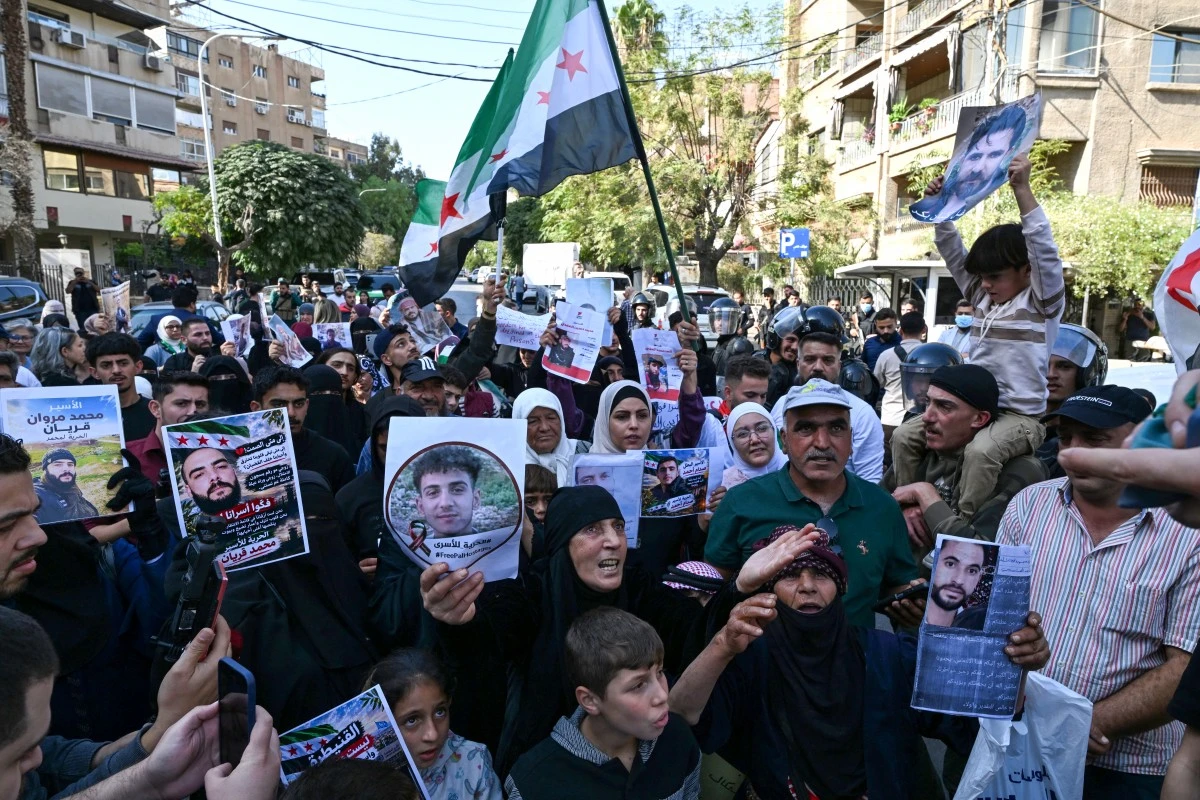
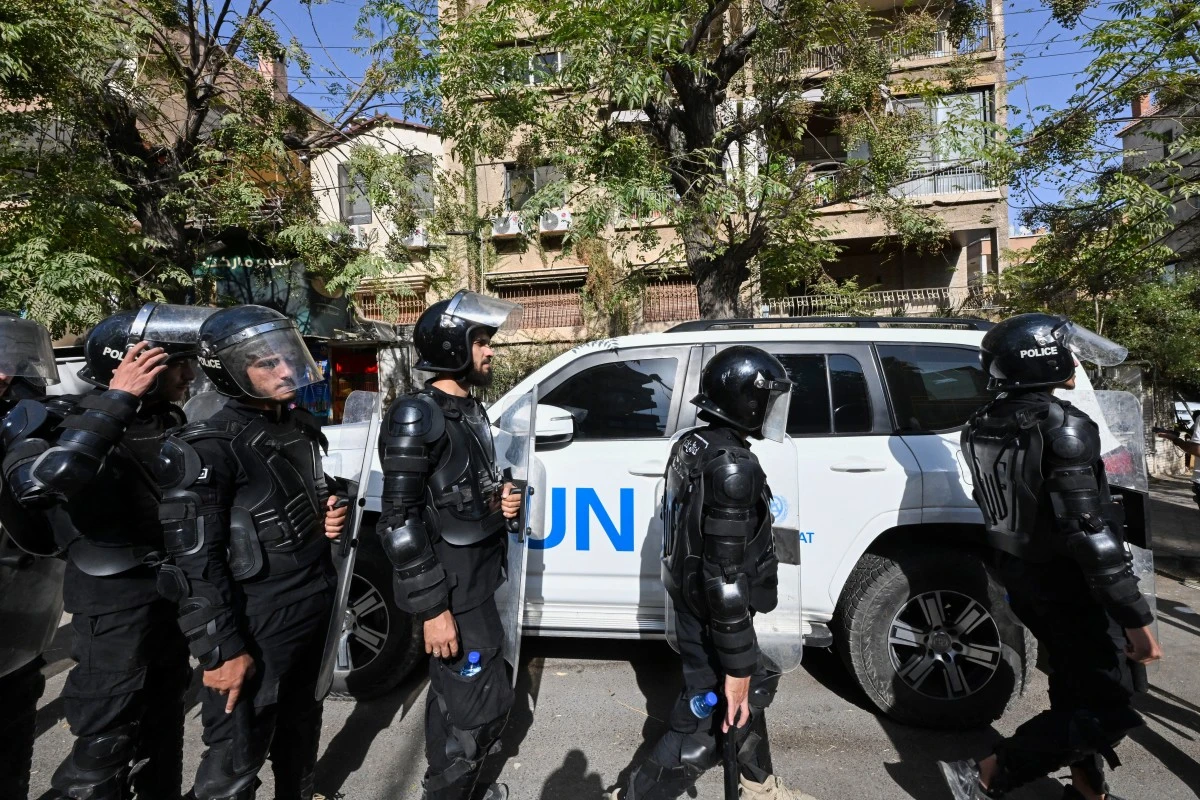
On Oct. 22, Israeli forces killed a man with a disability during an incursion into Jamlah, in western Daraa province, Syrian media reported. The killing of the man with Down syndrome sparked anti-Israel protests across Daraa, Quneitra, Damascus, Homs, Idlib and along the Syrian coast.
Amnesty International accused Israel of unlawfully destroying civilian property and continuing deadly military attacks in Syria, urging governments to press it to comply with international humanitarian law.
“In Syria, Israel has also carried out unlawful destruction of civilian property and continues to carry out deadly military attacks,” said Erika Guevara Rosas, Amnesty’s senior director for research, policy, advocacy and campaigns.
She said decades of impunity for Israeli actions had encouraged further violations, extending beyond the occupied Palestinian territory to Lebanon and Syria.
The incursions also put pressure on a Syrian leadership trying to pursue diplomacy without appearing powerless to defend its territory.
Landis said Israel did not need to occupy Damascus to unsettle Syrian politics. “It simply needs to continue its incursions into southern towns, creating small provocations which incite Syrian anger,” he said, citing recent demonstrations that followed the killing of the man with Down syndrome.
“Through 100 provocations it has succeeded in getting war-weary Syrians to demonstrate and make hyperbolic threats against Israel, which Israel will quote back to the world to say, ‘I told you so’,” he added.
He described the dilemma as the “Israel trap” — a choice between military retaliation that risks a devastating response and restraint that steadily erodes domestic credibility. “Fight back and get crushed; do nothing and suffer 100 cuts,” he said.
“Israel has no interest in making peace, claiming that Arabs are constitutionally anti-Israel, that Al-Sharaa is a wolf in sheep’s clothing, and that he presents Israel with an ‘existential’ threat, that hackneyed phrase,” Landis continued.
He argued that Al-Sharaa could face some of the same criticism once directed at Assad over his failure to recover the Golan Heights or defend Palestinians: accusations that a government claiming to uphold Syrian sovereignty could not deliver on that promise.
External pressure, he said, was unlikely to alter Israel’s calculations without a change in Washington.
“President Donald Trump has not objected to Israel’s expansion,” Landis said, adding that Trump had instead reinforced his support for Israeli Prime Minister Benjamin Netanyahu and his right-wing government.
European objections have begun to emerge, Landis said, but Israel remains focused primarily on the US.
That leaves Damascus negotiating under continuing military pressure, with the prospect of a limited agreement more plausible than a comprehensive settlement.
Hawach said a “narrow deal to avoid clashes looks achievable.” A broader agreement covering withdrawal and demilitarization, however, “is likely to wait for Israel’s next government and could stall again over the Israeli demand for a role in Sweida.”