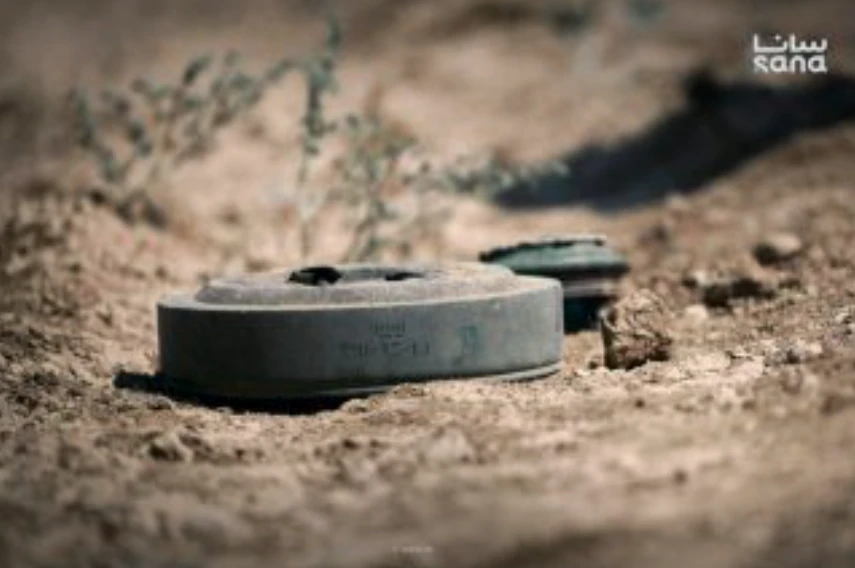
- A 13-year-old boy was killed in Daraa, Syria, by an unexploded cluster munition on Monday
- Recently, four children were killed in a blast from remnants of war in Umm Khuzaym village, Idlib
DARAA: A 13-year-old boy was killed Monday when an unexploded cluster munition detonated in southern Syria’s Daraa province, the latest in a series of deadly incidents involving landmines and explosive remnants of war.
Bakr Ali Farhan, from the town of Asem in the Lajat area of Daraa countryside, died from injuries sustained in the explosion, according to Adnan Hussein Al-Mohammad, director of Izraa Hospital.
Al-Mohammad said the boy was brought to the hospital following the blast but later died from his injuries.
The incident came a day after an explosion involving remnants of war killed four children aged between eight and 15 in Umm Khuzaym village, near Khan Sheikhoun in southern Idlib province.
Landmines, unexploded cluster munitions and other explosive remnants of Syria’s years-long war continue to threaten civilians, particularly children and people working on farmland or grazing livestock.
Between Oct. 24 and 30, six explosions across Hasakah, Hama, Daraa and Quneitra provinces killed seven people, including three children, and injured 11 others.
Among the victims was a six-year-old child killed by an unexploded cluster munition in Latamneh, northern Hama, where three other children were injured while playing in a residential garden.
Another child was killed and two others seriously injured in a landmine explosion near grain silos in western Hasakah.
Syrian military engineering teams have located and dealt with more than 315,000 mines and unexploded munitions nationwide, according the Defense Ministry figures.
Clearance operations have focused on residential areas, agricultural land, roads and essential facilities, particularly in communities where displaced families are returning.
According to UN humanitarian figures, explosive remnants of war killed 130 people and injured 322 others in Syria between March and June 2026.
Despite ongoing clearance operations, unexploded ordnance remains a major threat to civilian safety, agricultural activity and the rehabilitation of areas affected by the conflict.