- Evidence of Iranian military and financial support raises questions about extent of Houthi autonomy
- Understanding the balance of power within the alliance is key to assessing its goals and sustainability
CAIRO: In an extraordinary letter to the UN Security Council in February 2025, Iran’s ambassador to the UN denied what the rest of the world knew to be true.
Amir Saeid Iravani was responding to a statement by Dorothy Shea, the US charge d’affaires to the UN, during a debate on the situation in the Middle East.
The Houthis, Shea said, had launched “numerous attacks on civilian infrastructure, fired at US Navy warships dozens of times since 2023 and attacked commercial vessels indiscriminately,” and they had done so “with materiel and financial support from Iran.”
Every member of the Security Council, she added, “should press Iran’s leaders to stop arming, funding and training the Houthis, without which they would not be able to launch attacks that disrupt navigational rights and freedoms and put innocent civilians in harm’s way.”
In his same-day response, Iravani dismissed the charges as “baseless accusations,” part of an “orchestrated campaign” which “seeks to demonize Iran, distort realities by reversing the roles of aggressor and victim and fuel the US-driven Iranophobic narrative by falsely portraying Iran as a threat to international peace and security.”
In fact, the evidence of Iranian support for the Houthis — extending well beyond ideological sympathy to encompass the supply of weapons, military training, technical expertise, financial assistance and intelligence cooperation — is overwhelming.
In its final report, published in February 2024, the Security Council-appointed independent Panel of Experts on Yemen concluded that the Houthis had received technical assistance, training, weapons and financial support from the Islamic Republic of Iran on a scale that was “unprecedented.”
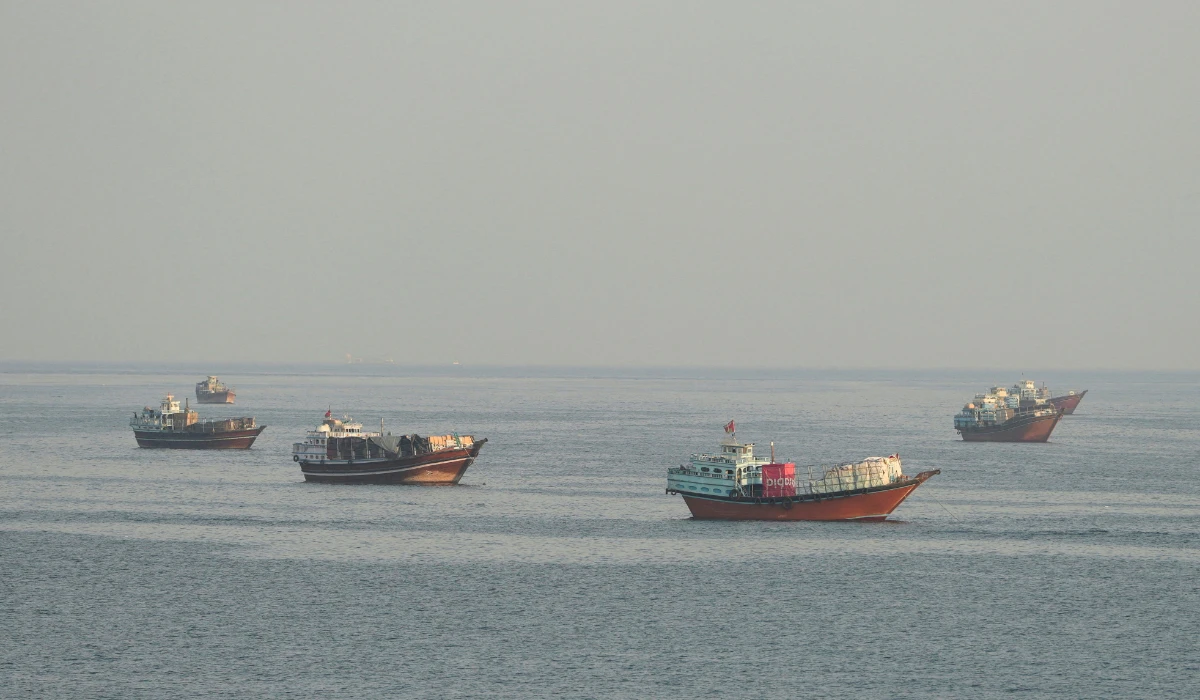
The panel’s findings echoed those published that same month by the US Defense Intelligence Agency. In a report titled “Iran: Enabling Houthi Attacks Across the Middle East,” the DIA identified numerous similarities between Iranian and Houthi missile and drone systems, and highlighted how Iran shipped weapons to Yemen by sea.
Since 2014, it concluded, Iran’s Islamic Revolutionary Guard Corps’ extraterritorial Quds Force had “provided the Houthis (with) a growing arsenal of sophisticated weapons and training that they used to attack commercial shipping in the Red Sea and civilian and port and energy infrastructure across the region.”
Between 2015 and 2023, the US and its partner navies had intercepted “at least 18 Iranian smuggling vessels, seizing ballistic missile components, UAVs, antitank guided missiles, and thousands of assault rifles, rocket components and other illicit weapons on their way to the Houthis.”
On Oct. 15, Arab News highlighted Iran’s role in the extensive illegal supply chains that keep the Houthis supplied with weaponry, and on Oct. 27 exposed Tehran’s connection to the financial networks that sustain the militia and its activities.
In other words, the evidence of Iranian complicity in the Houthis’ war of terror is incontrovertible.
The only real question, therefore, is the nature of the Houthis’ relationship with Iran — and whether that relationship could fracture.
Are the Houthis simply Iranian lackeys, obeying orders, or independent political and military actors whose interests happen to coincide with those of Tehran?
In an interview with Arab News on Oct. 31, Mustafa Noman, Yemen’s vice minister of foreign affairs, drew a distinction between the Houthis’ domestic agenda and their operations beyond Yemen.
“I cannot say they are lackeys domestically, but definitely they are lackeys in their fight and their battle in the Red Sea,” he told Editor-in-Chief and host of the “Arab Views” podcast Faisal J. Abbas.
This distinction, Noman argued, is particularly important as Iran seeks to exploit the Houthis’ position along one of the world’s most strategically important maritime corridors.
“The problem in this specific period is that the Houthis are totally linked to the Iranian strategy in the region,” he said.
“So, you cannot separate what’s happening in Yemen, and specifically in the Red Sea and Bab Al-Mandab, from what’s happening in the Strait of Hormuz.”
But is Tehran’s understanding of the relationship quite the same?
There are good reasons to think Iran sees the Houthis as more than simply a subordinate force.
The movement has its own origins, leadership and political ambitions, and has demonstrated an ability to make decisions that reflect its own calculations rather than simply following Iranian instructions.
In research published in the journal Studies in Conflict and Terrorism in 2021, Thomas Juneau, a professor at the University of Ottawa who has studied the relationship extensively, concluded that the war in Yemen had transformed the Iran-Houthi partnership.
“Iran has built significant influence in Yemen since 2015, but the Houthis are not a simple arm of its foreign policy,” he wrote.
“Iran has bandwagoned on Houthi successes as much as it has caused them.”
Juneau argues that the Houthis are fiercely nationalist and do not simply take orders from Iran. Rather, he sees a partnership in which the two sides cooperate only because their interests frequently coincide.
In March 2025, a statement by Jamal Amer, the Houthis’ foreign minister, exposed the potentially fragile nature of that partnership.
Following a resumption of Houthi attacks on shipping in the Red Sea, two senior Iranian officials had told Reuters that Iran had delivered a verbal message to the Houthi envoy in Tehran “to cool tensions.”
Amer’s response was revealing.
“There will be no talk of any dialing down of operations before ending the aid blockade in Gaza,” he told Reuters.
“Iran is not interfering in our decision but what is happening is that it mediates sometimes but it cannot dictate things.”
For now, then, the partnership between the Houthis and Iran rests on mutual strategic needs, but fundamental differences could eventually drive them apart.
The first is the nature of the two movements, and their objectives.
Iran is an established revolutionary state with regional ambitions and a political system founded on the principle of velayat-e faqih, or guardianship of the Islamic jurist.
Tehran must navigate sanctions, economic hardship, domestic pressures and its strategic ambitions, including its nuclear program.
It also has to manage complex relations within the regional and international order. Iran governs a large, historically established state with a diverse population in which Twelver Shiism is the dominant Shiite tradition.
The Houthis, by contrast, are an armed Yemeni movement seeking to consolidate political power and revive a form of imamate rooted in Yemen’s Zaydi tradition.
Although they control Sanaa and large parts of northern and western Yemen, they do not possess Iran’s institutional stability or its breadth of regional and international interests. Their overriding concern remains the consolidation of power within Yemen.
But the most fundamental difference is doctrinal.
Both the Iranian religious establishment and the Houthis belong to the broader Shiite tradition, but they follow distinct branches of it: Twelver Shiism in Iran and Zaydism in Yemen.
These traditions differ on the nature of religious leadership and succession. Some historical Twelver polemics have portrayed Zaydis as doctrinal outsiders, at times using the derogatory label “nawasib” and comparing them with dissenting Shiite groups such as the Waqifis and Fathis.
A central distinction concerns the Twelver belief in the occultation of the 12th imam, Mohammed ibn Al-Hasan Al-Askari, who is believed to be hidden and destined to return as the Mahdi.
Zaydi doctrine does not recognize the same succession of 12 imams or the Twelver concept of occultation. Although elements of Ayatollah Khomeini’s thinking on velayat-e faqih have influenced Houthi ideology, these underlying theological differences remain.
The relationship could come under particular strain if a future agreement between Iran and the US, along with Washington’s regional allies, reshapes the balance of power.
Abdulrahman Al-Rashed, the Saudi journalist and intellectual, argues that the Houthis have become a proxy heavily dependent on Tehran. In his assessment, this means that Houthi leader Abdulmalik Al-Houthi cannot easily reject Iranian demands — one of the factors that makes reaching an understanding with him so difficult.
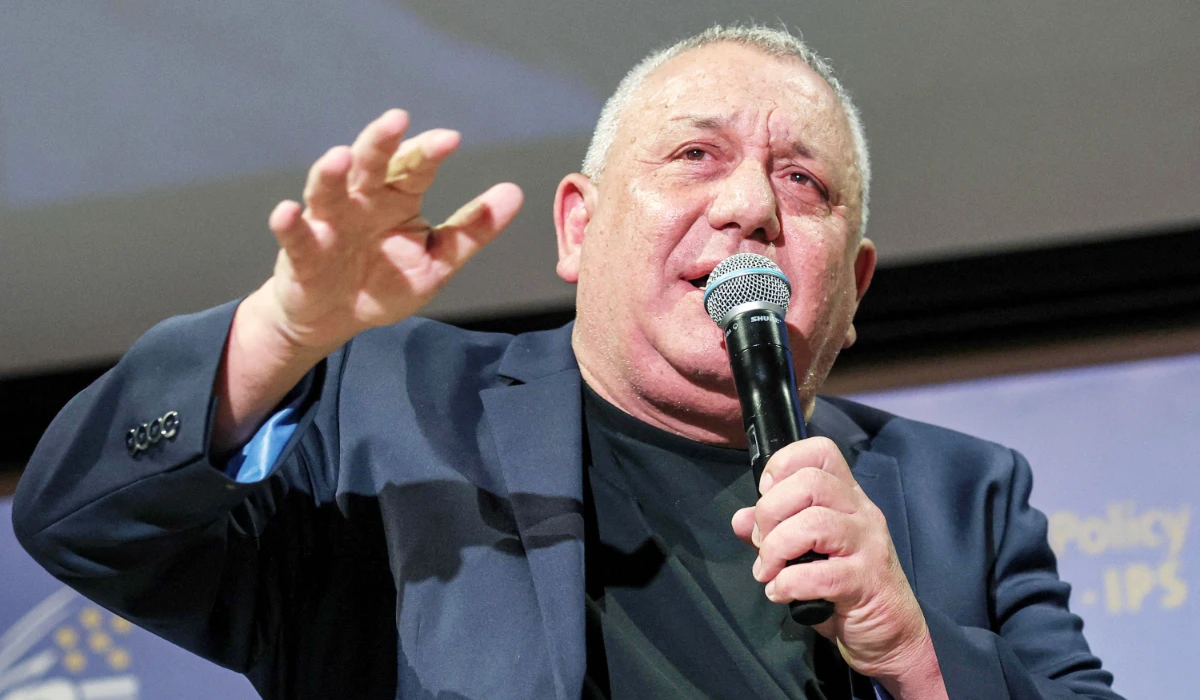
Saudi analyst Hisham Alghannam offers a different perspective. He sees an unequal alliance in which Iran is unquestionably the stronger patron, but the Houthis nevertheless retain interests and calculations of their own.
Houthi decision-making could eventually become independent of Tehran, he believes, if the movement becomes increasingly self-sufficient and develops its military capabilities independent of Iranian support — something for which there is mounting evidence.
On Oct. 15, Wolf-Christian Paes, who served on the UN Panel of Experts on Yemen from 2018 until 2023, told Arab News that the Houthis had become less dependent on Iran for supplies of drones and missiles.
Instead, he said, they have developed the ability to build their own missiles, sourcing most of the components they cannot make themselves from trading companies that import parts from around the world.
“Now they are making longer-range ballistic missiles with very little Iranian content,” he said.
This was an important development, "because it means that even if there was regime change in Iran tomorrow, or we had some sort of agreement with Tehran to stop supplying the Houthis, the Houthis would still be able to continue to make these missiles.”
However entrenched the partnership may now appear, it remains contingent on changing circumstances. It is ultimately a pragmatic alliance — and one that either side could reconsider if its interests change.