DETROIT: Toyota is killing its Scion brand after years of slumping sales.
Beginning in August, 2017 model-year Scion vehicles will be rebadged as Toyotas. The FR-S sports car, iA sedan and iM 5-door hatchback, as well as the C-HR, which recently debuted at the L.A. Auto Show, will be a part of the Toyota line-up. The tC will have a final release series edition and end production in August, according to Toyota Motor Corp.
Scion was formed in 2003 to attract younger buyers. It was known for its funky designs, like the boxy xB, and was the brand Toyota used when it wanted to experiment with new kinds of marketing or no-haggle pricing.
But there were multiple problems. The Millennials that the Scion was aiming for held back on big acquisitions during the recession, and when they did buy, they were just as happy to buy Toyotas. Scion’s small, oddball lineup never connected with buyers and they were a bit more expensive. Scion’s best-seller, the tC coupe, starts at $21,330, or $2,600 more than a Honda Civic.
At the brand’s height, in 2006, sales of all Scion models combined reached just over 173,000. Sales stood at 56,167 in 2015.
Toyota says it achieved what it had hoped with the Scion, including attracting younger buyers. Half of the 1 million Scions sold were bought by people under 35, the company said.
“Scion has allowed us to fast track ideas that would have been challenging to test through the Toyota network,” said Jim Lentz, founding vice president of Scion and now CEO of Toyota Motor North America.
The decision will have minimal impact on dealers and owners. Scion, which is only sold in the US, Canada and Puerto Rico, has no standalone dealerships. The brand is sold through 1,004 Toyota dealerships, which will continue service the cars.
It’s not unusual for automakers to kill a brand or pull it out of a particular market. Ford Motor Co. killed its Mercury brand in 2010, and multiple brands, like Izusu and Renault, have left the US market. But Kelley Blue Book senior analyst Karl Brauer said this is the first time a US-specific brand launched by a Japanese manufacturer has been killed.
Brauer says Scion was a victim of the success of the Toyota brand. The Toyota Camry sedan has been the best-selling car in the US for 14 years, and the brand has a full lineup that appeals to Millennials and Baby Boomers alike.
The end of Scion also arrives with Millennials starting their own families and they now want SUVs.
“Even Toyota can’t compete with Toyota,” Brauer said.


Toyota discontinues Scion after years of slumping sales
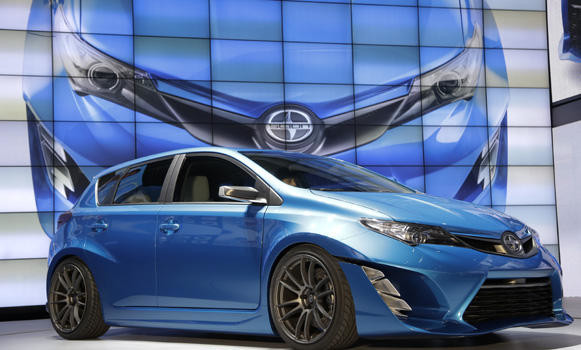
Toyota discontinues Scion after years of slumping sales

Indonesia and Thailand join Saudi-led Global Halal Mark alliance
RIYADH: Four countries have joined the Global Halal Mark alliance, a new initiative launched by the Saudi Halal Center, following the signing of two agreements with Indonesia and Thailand.
Speaking to Al-Eqtisadiah on the sidelines of the Makkah Halal Forum, Abdulaziz Al-Rushodi, CEO of the Saudi Halal Center, said the number of countries participating in the alliance is expected to reach 10 by the end of this year.
He said the initiative aims to unify “Halal” marks around the world and achieve the highest standards of reliability in the sector.
A second initiative announced at the forum is the Halal Academy, established in cooperation with the Islamic University of Madinah, to serve as a global scientific reference contributing to the development of competencies and the halal ecosystem in a comprehensive manner.
Al-Rushodi also stated that the center is planning to launch the Global Halal Hub initiative, an integrated digital system aimed at unifying halal certifications and facilitating cross-border trade procedures among various countries.
As part of efforts to support the local industry, the center — according to Al-Rushodi — signed a memorandum of understanding with the Food Manufacturers Association, which includes thousands of national factories, with the aim of empowering Saudi products and qualifying them for export to countries in the Islamic world by granting them the halal mark.
He said the partnership seeks to encourage local manufacturers to adopt the mark as a core standard for their products, opening broad prospects for global marketing and strengthening the presence of Saudi products in international markets.
The Saudi Halal Center was established in 2018 and operates under the Saudi Food and Drug Authority. The center grants halal certificates after verifying compliance with Shariah and technical standards and requirements to ensure the reliability of products bearing the “Halal” mark in local and international markets, in addition to issuing the Saudi halal mark.
The center grants the right to use its trademark, a logo placed on products to indicate that they are subject to oversight and auditing and are compliant with Islamic law.
The size of the global halal market in 2025 was estimated at approximately $7 trillion, with Saudi Arabia topping the list of the largest investing countries in the sector at a value of SR5.5 billion ($1.4 billion), Yousef Khalawi, Secretary-General of the Islamic Chamber of Commerce and Development, told Al-Eqtisadiah.
According to Khalawi, the size of the halal market is expected to reach $10 trillion by 2030, amid accelerating growth in global consumer demand and expanding investments in value chains linked to halal industries.
Saudi Arabia ranks first globally among the most invested countries in the halal sector, having injected investments valued at SR5.5 billion. Malaysia comes second with investments reaching SR4.7 billion, benefiting from its advanced ecosystem of global halal standards, followed by Kuwait in third place with investments amounting to SR4.1 billion.
The UAE ranked fourth, investing approximately SR3.7 billion in value chains related to food, tourism, and consumer products, while Indonesia placed fifth with investments estimated at SR1.5 billion.


