RIYADH: Local and international businessmen have been urged to invest in the Kingdom’s health care projects, which have an allocation of SR41 billion for the next five years.
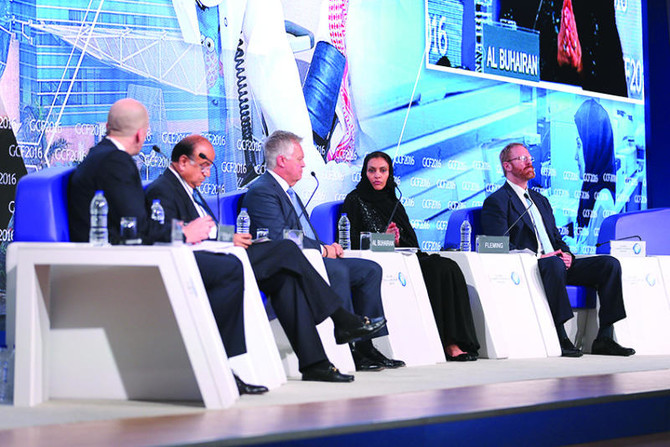
This was stressed during a panel discussion on "Health care: What technologies will transform health care for developing countries"
Dr. Basma Saleh Al-Buhairan, managing director of health care and life sciences sector at the Saudi Arabian General Investment Authority (SAGIA), said the Kingdom's interest to look after the health of its citizens has made the authorities to chalk out a national health plan.
The others who participated in the discussion included Suresh Kumar, executive vice president for external affairs at Sanofi; Steven J. Thomson, senior vice president and chief business development officer at Brigham and Women's Health care; and Jonathan A. Fleming, president and treasurer of NEHI Health Policy Research Organization.
Al-Buhairan said the country has a local population of 6.9 million people. It has over 800,000 people over the age of 55 years and diabetes is a disease, which has affected a section of the people, she said, adding that these are challenges that have to be overcome with proper health planning.
“The high rate of diabetes, obesity and heart diseases coupled with the increasing population growth will turn these challenges into attractive opportunities for investment in the health care sector,” she said. “The reduction of government spending for the coming years will open more opportunities for the private sector to invest in health care.”
Kumar explained that by 2020 the number of diabetics in the world will go up. Around 1.6 million die around the globe due to diabetes and the Kingdom is also concerned with the rising number of diabetics, which has prompted new areas of health care projects in Saudi Arabia.
Thompson said modern technology can be harnessed during this generation when people are making the best use of smart phones.
The forum, which was inaugurated by Abdullatif Al-Othman, governor and chairman of the board of (SAGIA, was attended by more than 2,500 delegates from the Kingdom and other parts of the world.
The forum, which brought together global business leaders, international political leaders, intellectuals and journalists, featured over 80 international speakers to network and discuss the positive impact of organizational and national competitiveness that can have on local, regional, global economic and social development.
Speakers included Vicente Fox, former president of Mexico (2000-2006), Al-Othman, Health Minister Khalid A. Al-Falih, Commerce and Industry Minister Tawfiq Al-Rabiah, Education Minister Ahmed Al-Issa and Housing Minister Majed Al-Hugail.
The forum shed light on the ingredients that are essential in driving the competitiveness of sectors, the strategies that governments should follow to accelerate competitiveness and, most importantly, the role of competitive sectors in maintaining a sustainable economic growth.
The priority sectors that have been identified to have a direct impact on economic and human development include health care and life sciences, transport, education, ICT, and the services sector such as tourism, financial services, real estate, professional consulting.
Global and local perspectives on issues such as the importance of innovation and ensuring high levels of productivity toward achieving competitiveness in sectors will take a significant part in panel discussions. In addition, discussion highlighted the achievements of economic diversification and the creation of jobs for a growing youthful population.
“We at SAGIA, alongside our partners in the public sector, are committed to leveraging the Kingdom’s unique position as the largest economy in the Middle East toward sustainable economic growth. We will be working together to ensure Saudi Arabia’s business climate fosters and attracts quality investments that attribute to diversified economy, knowledge transfer and job creation, utilizing our talented human capital across all sectors,” a SAGIA official said.
Competitiveness is linked to improving the standard of living of citizens and achieving prosperity and stability, while providing job opportunities is linked to achieving sustainable economic development at high rates. It also helps achieve this goal through improving the performance of various government and private sectors and diversifying the economy's productive base leading to the creation of new job opportunities, increasing the rates of establishing new businesses and consequently increasing the GDP. It is natural that improving the investment environment is the shortest way toward increasing investment rates, which is the main drive for economic growth.
In the context of the comprehensive economic reforms program advocated by the government, improving the investment environment and solving the difficulties faced by Saudi and foreign investors has been a high priority task that is given considerable attention in this program.
SAGIA initiated its tasks to achieve this goal through harmonizing investment regimes with the real requirements of investors and creating an attractive investment environment for domestic and foreign investment in coordination with various ministries and government agencies.
In an effort to improve the investment environment, SAGIA has reviewed and analyzed many reports and studies, and found that the countries with higher standards of living and productivity levels were the most competitive countries.
Thus, SAGIA worked on raising the competitiveness of the Kingdom believing that this would allow for finding radical solutions, including expanding and diversifying the economic base, and would contribute to stimulating the growth of business sector and improve private sector employment rates, as well as improving productivity levels in non-oil sectors.


![]()
Saudi health care sector eyes foreign investments
Saudi health care sector eyes foreign investments
Latest updates




© 2026 SAUDI RESEARCH & PUBLISHING COMPANY, All Rights Reserved And subject to Terms of Use Agreement.