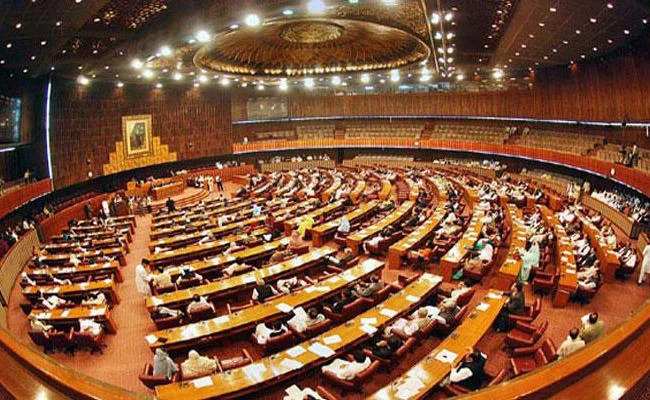
ISLAMABAD: The members of Pakistan’s Senate on Monday elected by a majority vote the opposition-backed Sadiq Sanjrani and Saleem Mandviwala as chairman and deputy chairman, respectively.
Under the Senate election rules, the Upper House of Parliament elects the chairman and deputy chairman by secret ballot.
Balochistan Senator Sanjrani secured 57 votes out of a total of 103 cast for the seat of Chairman Senate, defeating the ruling party Pakistan Muslim League’s (PML-N) Raja Zafar-ul-Haq who received only 46 votes.
For the seat of Deputy Chairman Senate, Pakistan People’s Party (PPP) candidate Saleem Mandviwala got 54 votes out of the total of 98 cast by the members, defeating the ruling party-backed Usman Khan Kakar, who received 44 votes.
Sanjrani thus becomes the first-ever chairman Senate from Balochistan and he was sworn in on Monday evening. He later administered the oath to the deputy chairman Saleem Mandviwala.
The Senate’s usual quietness was interrupted briefly by chants from political workers present in the galleries when the Presiding Officer announced Sanjrani’s victory. The margin of victory of both the candidates, chairman and deputy chairman Senate, was a surprise to many as political observers had predicted a neck-and-neck race.
Shortly after being sworn in, the chairman Senate presided over the proceedings of the House. The runner-up candidate, Raja Zafar-ul-Haq congratulated Sanjrani on his victory and assured him of full cooperation in taking care of the House’s daily business.
“We will cooperate with you to run all affairs of the House smoothly,” Zafar-ul-Haq assured the newly-elected chairman Senate.
Sadiq Sanjrani is a resident of Chaghi in Balochistan and has previously served in many political positions, including coordinator of the complaint cell in the Prime Minister’s secretariat.
He was nominated by Chief Minister Balochistan Abdul Quddus Bijenzo for the top slot and was backed by two major opposition parties, the PPP and Pakistan Tehreek-e-Insaf (PTI).
The newly-elected Deputy Chairman Senate Saleem Mandviwala has served as Finance Minister, in addition to serving as president of the Board of Investment and minister of state for investment in the previous PPP government.
The election of the opposition-backed candidates for the coveted jobs is a major setback to the ruling party. The opposition emerged as the single largest party in the March 3 Senate elections, but failed to get support of the required numbers to win the top posts.
Talking to media persons after the election, Minister of State for Information and Broadcasting Marriyum Aurangzeb said that the election result has vindicated the stance of the deposed Prime Minister Nawaz Sharif.
“This was a competition between democratic and undemocratic forces. We have lost the election but succeeded in exposing them to the nation,” she said.
The minister said that her party would win the upcoming general elections with a thumping majority as the people were supporting the narrative of Nawaz Sharif. “We want all to respect the sanctity of the vote and we will keep fighting for it,” she said.
Earlier in the day, 51 of 52 senators who were elected on March 3 took the oath and signed the member rolls. Sen. Ishaq Dar of the ruling party was unable to take the oath due to his being in London for medical treatment.
Pakistan’s Upper House of Parliament consists of 104 members: 23 from each of the country’s four provinces, 8 from Federally Administered Tribal Areas, and 4 from Islamabad. Elections for half the Senate seats (52) is held every three years, thus allowing each senator to complete a six-year term.
Under the Senate election rules, the Upper House of Parliament elects the chairman and deputy chairman by secret ballot.
Balochistan Senator Sanjrani secured 57 votes out of a total of 103 cast for the seat of Chairman Senate, defeating the ruling party Pakistan Muslim League’s (PML-N) Raja Zafar-ul-Haq who received only 46 votes.
For the seat of Deputy Chairman Senate, Pakistan People’s Party (PPP) candidate Saleem Mandviwala got 54 votes out of the total of 98 cast by the members, defeating the ruling party-backed Usman Khan Kakar, who received 44 votes.
Sanjrani thus becomes the first-ever chairman Senate from Balochistan and he was sworn in on Monday evening. He later administered the oath to the deputy chairman Saleem Mandviwala.
The Senate’s usual quietness was interrupted briefly by chants from political workers present in the galleries when the Presiding Officer announced Sanjrani’s victory. The margin of victory of both the candidates, chairman and deputy chairman Senate, was a surprise to many as political observers had predicted a neck-and-neck race.
Shortly after being sworn in, the chairman Senate presided over the proceedings of the House. The runner-up candidate, Raja Zafar-ul-Haq congratulated Sanjrani on his victory and assured him of full cooperation in taking care of the House’s daily business.
“We will cooperate with you to run all affairs of the House smoothly,” Zafar-ul-Haq assured the newly-elected chairman Senate.
Sadiq Sanjrani is a resident of Chaghi in Balochistan and has previously served in many political positions, including coordinator of the complaint cell in the Prime Minister’s secretariat.
He was nominated by Chief Minister Balochistan Abdul Quddus Bijenzo for the top slot and was backed by two major opposition parties, the PPP and Pakistan Tehreek-e-Insaf (PTI).
The newly-elected Deputy Chairman Senate Saleem Mandviwala has served as Finance Minister, in addition to serving as president of the Board of Investment and minister of state for investment in the previous PPP government.
The election of the opposition-backed candidates for the coveted jobs is a major setback to the ruling party. The opposition emerged as the single largest party in the March 3 Senate elections, but failed to get support of the required numbers to win the top posts.
Talking to media persons after the election, Minister of State for Information and Broadcasting Marriyum Aurangzeb said that the election result has vindicated the stance of the deposed Prime Minister Nawaz Sharif.
“This was a competition between democratic and undemocratic forces. We have lost the election but succeeded in exposing them to the nation,” she said.
The minister said that her party would win the upcoming general elections with a thumping majority as the people were supporting the narrative of Nawaz Sharif. “We want all to respect the sanctity of the vote and we will keep fighting for it,” she said.
Earlier in the day, 51 of 52 senators who were elected on March 3 took the oath and signed the member rolls. Sen. Ishaq Dar of the ruling party was unable to take the oath due to his being in London for medical treatment.
Pakistan’s Upper House of Parliament consists of 104 members: 23 from each of the country’s four provinces, 8 from Federally Administered Tribal Areas, and 4 from Islamabad. Elections for half the Senate seats (52) is held every three years, thus allowing each senator to complete a six-year term.