- Cooperation to focus on maritime awareness and naval coordination
- US ready to start works next year, as Singapore takes over ASEAN chairship
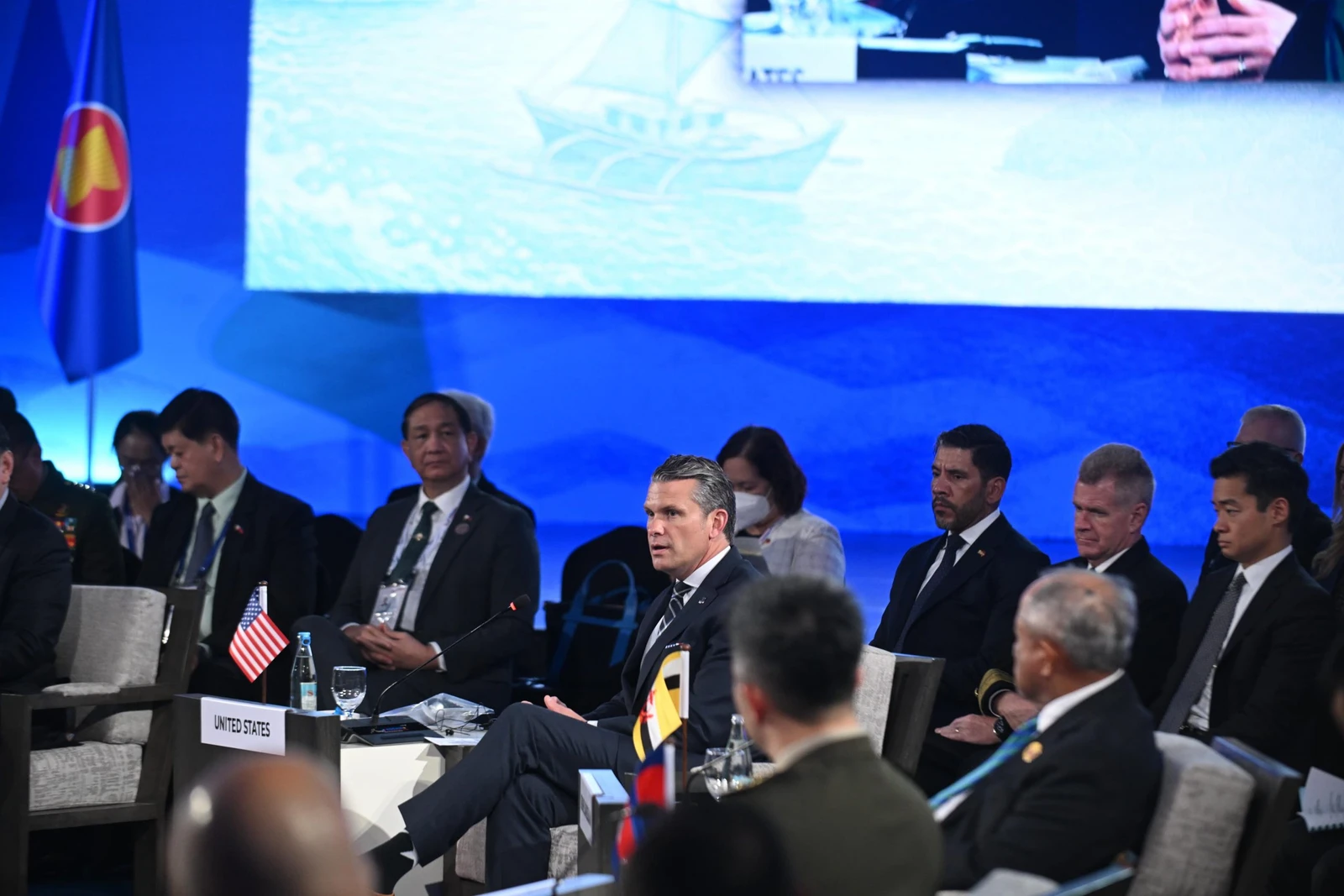
MANILA: The US proposed on Wednesday developing a new security framework for cooperation with ASEAN, as Southeast Asia’s defense chiefs and the region’s key partners met in the Philippines.
The annual Association of Southeast Asian Nations Defense Ministers’ Meeting is taking place in Lapu-Lapu City, Cebu, on Oct. 28-29.
A platform for regional cooperation, the ADMM meeting takes place in the Philippines, which holds the 2026 ASEAN chairship. It brings together defense ministers from the bloc’s 11 member states and, under ADMM-Plus, also eight dialogue partners: Australia, China, India, Japan, New Zealand, Russia, South Korea and the US.
The US, which has various forms of military partnerships with almost all ASEAN members — including a mutual defense treaty with the Philippines — is pitching a comprehensive security plan with the whole bloc.
“We propose that we work together to develop a US-ASEAN framework for defense cooperation, a practical framework that guides our cooperation over the next several years,” US Defense Secretary Pete Hegseth said during the meeting.
“I will note: a critically important next several years.”
Work on the framework is expected to start next year, when the bloc’s chairship comes under Singapore.
“We are ready to begin that work with Minister Chan (Chun Sing) and his team,” Hegseth said, referring to Singapore’s defense minister.
He envisioned the US-ASEAN partnership as focusing on “maritime domain awareness, improving interoperability, and advancing cooperation among our navies.”
Philippine Defense Secretary Gilberto Teodoro Jr., who chaired the meeting, said that American presence was necessary for stability in the region.
“We value the United States’ sustained engagement with the defense establishments of ASEAN, as a robust US presence is necessary for peace and stability in Southeast Asia and in the broader Indo-Pacific region,” he said.
The Philippines, which was under US colonial rule until 1946, has a formal military alliance with Washington that commits both countries to help meet common dangers if either is attacked. It also has a visiting forces agreement, allowing US forces rotational access to nine agreed Philippine military locations — also with strategic access to the South China Sea.
The South China Sea has lately seen heightened tensions between China and the Philippines, with recent encounters between their coast guard vessels raising concerns over escalation in their longstanding territorial dispute.