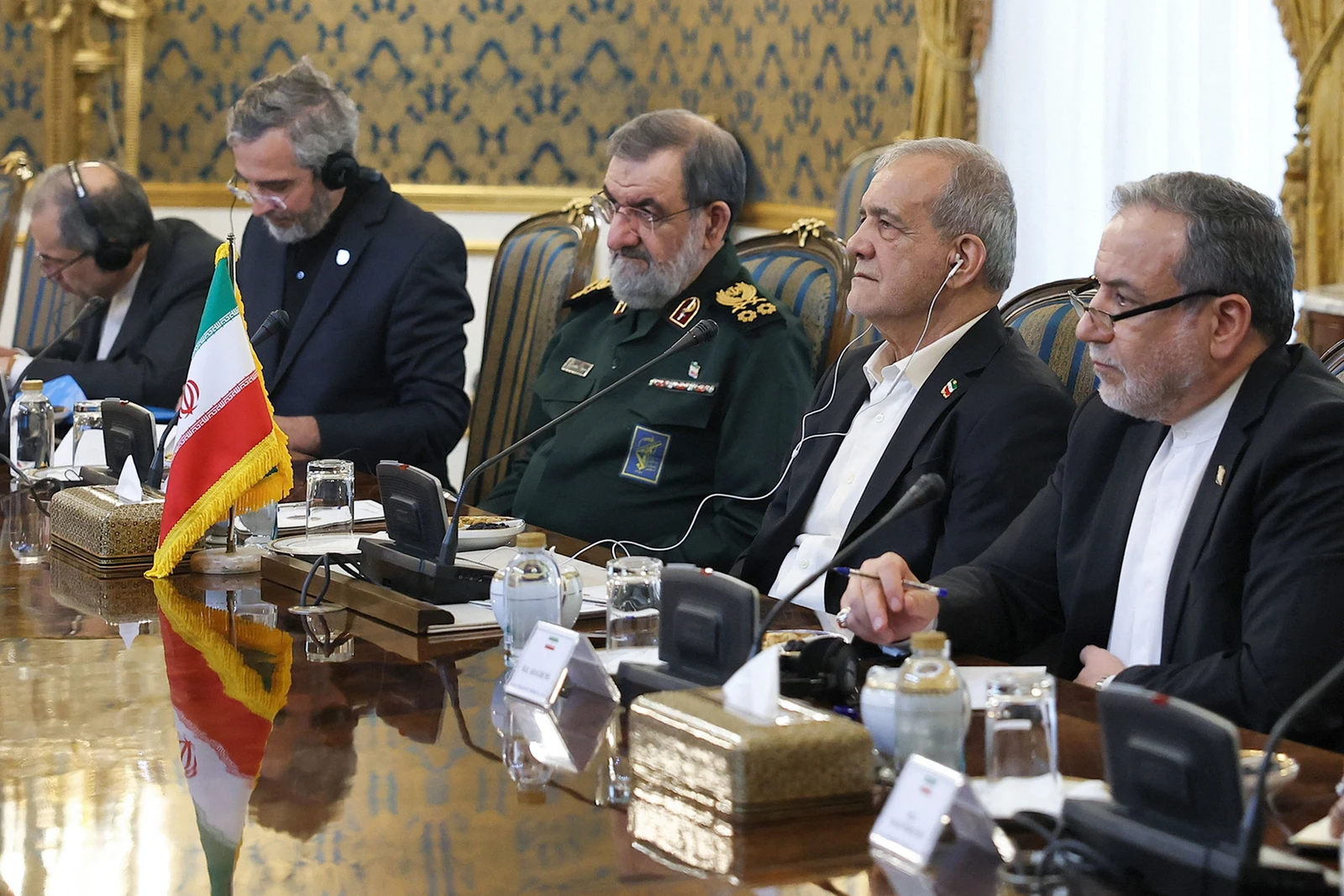
- Defense officials from Pakistan, Saudi Arabia, Türkiye and Iran met in Tehran on Monday for peace talks
- Iran says confronting Israel’s aggression is a “fundamental necessity,” says Tehran’s neighbors are its priority
ISLAMABAD: Iran’s Foreign Minister Seyed Abbas Araghchi on Wednesday urged regional state to ensure sustainable security without the “interference of extra-regional powers,” after holding talks with senior officials from Pakistan, Saudi Arabia and Türkiye this week in Tehran.
Senior defense officials from Pakistan, Saudi Arabia and Türkiye met Iranian officials in Tehran on Monday as regional tensions escalate amid the US-Iran conflict and increasing attacks by Yemen-based Houthi officials against Saudi Arabia. Saudi Defense Minister Prince Khalid bin Salman, Pakistani Chief of Defense Forces Field Marshal Asim Munir, Turkish intelligence chief Ibrahim Kalin and Mohsen Rezaei, secretary of Iran’s Supreme National Security Council, participated in the meeting.
The US and Israel attacked Iran in February this year, spiraling regional tensions as Tehran responded with attacks of its own against neighboring Gulf states. Iran has since then regularly attacked commercial ships in the Strait of Hormuz, disrupting maritime trade to drive up oil prices and trigger inflationary pressures worldwide.
Pakistan, Saudi Arabia and Türkiye signed the landmark Makkah Joint Defense Agreement (MJDA) in August this year, formalizing decades of security cooperation with one another. This was the first meeting between the representatives of MJDA members with Iranian officials.
“From the perspective of the Islamic Republic of Iran, sustainable security must be achieved through the participation of regional nations, without the military presence or interference of extra-regional powers,” Araghchi said in an Instagram post after the meeting.
He said the talks provided a valuable opportunity to advance dialogue on regional peace and security, and to collectively address threats and challenges. The Iranian official said the agreement by all sides to continue such consultations marked a “significant step” forward.
Araghchi said to transform the agreement into sustainable cooperation requires agreement on core principles, which include building trust, mutual respect for national sovereignty and concrete, practical commitments.
He said the approach to foster regional cooperation without outside interference is rooted in the principle that regional states are responsible determining their own destiny.
“Within this same framework, confronting the malevolence and aggression of the Zionist regime is a fundamental necessity— essential for defending the independence and sovereignty of nations and preventing the expansion of war,” Araghchi said. “Our neighbors are our priority.”
Despite the talks in Tehran, attacks from the Iran-backed Houthi rebels against Saudi Arabia have continued this week. The Saudi-led coalition in Yemen said on Wednesday that it had intercepted and destroyed a ballistic missile launched by Houthis toward the western Saudi city of Taif on Tuesday.
The MJDA signed between Islamabad, Riyadh and Ankara stipulates that any attack against one of the three nations will be considered by them an attack against all of them. Pakistan, the only member of the pact that has nuclear weapons, has assured Saudi Arabia of safeguarding its security against aggression and vowed to protect the Two Holy Mosques.