RIYADH: “Today, we are not just a football nation — we are a sporting nation,” Saudi Olympic and Paralympic Committee CEO and Secretary-General Abdulaziz Baeshen told Arab News.
“We see big appeal from kids to try new sports, and the numbers show it.”
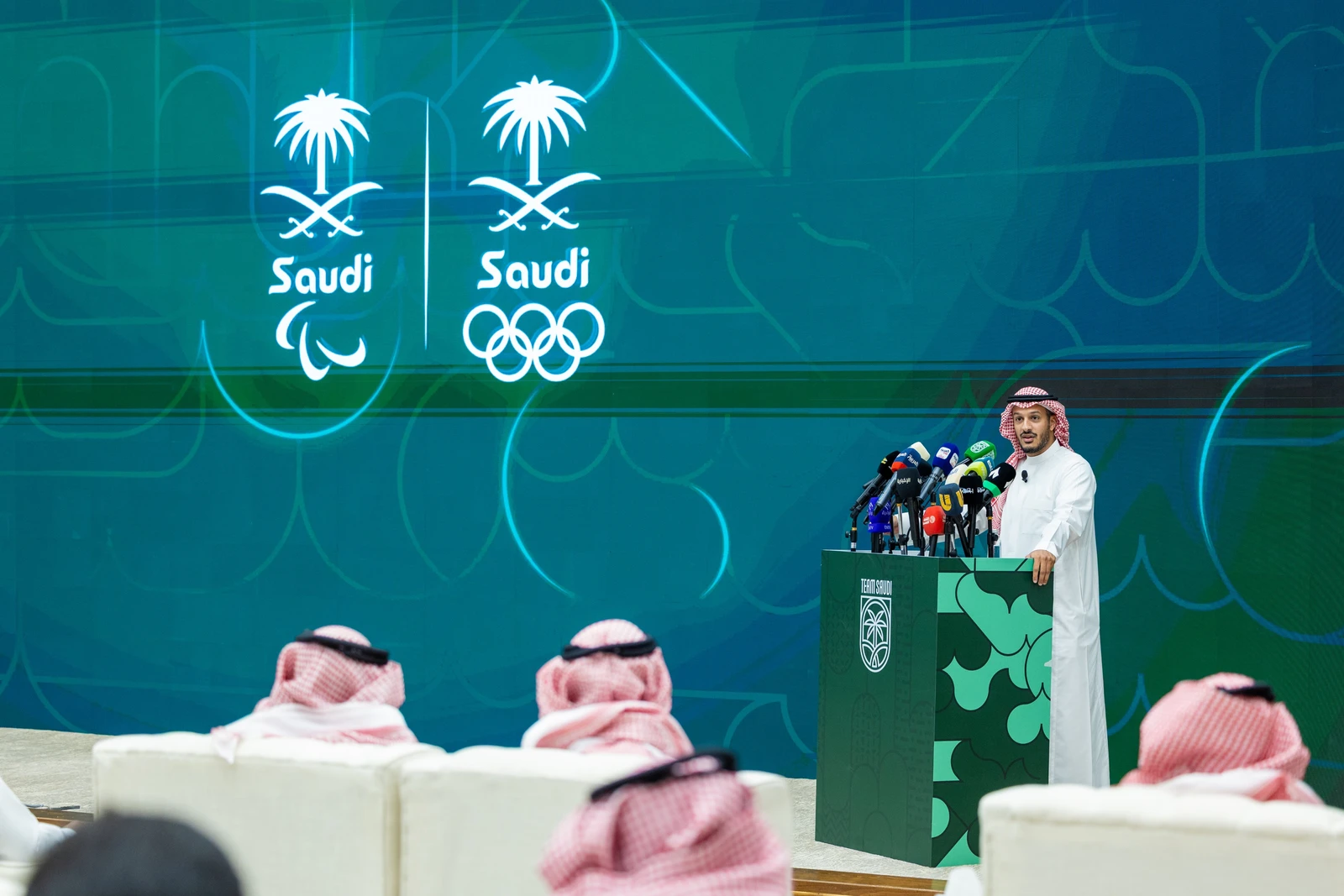
That claim was at the center of the SOPC’s periodic sports sector conference, which took place at the Prince Faisal bin Fahad Olympic Complex on Wednesday, where Baeshen laid out Saudi Arabia’s plan to turn occasional participation and a few medals into consistent podium success.
The plan, according to Baeshen, revolves around 11 sports.
Athletics, judo, taekwondo, karate, jiu-jitsu, swimming, weightlifting, shooting, equestrian, fencing and wrestling have been designated the Kingdom’s “podium sports” across both Olympic and Paralympic programs — the disciplines the SOPC believes offer the clearest route to medals in the years ahead.
The reasoning is well supported, having come after studying how the world’s most successful Olympic nations actually claim their glory. Seventy-five percent of China’s Olympic medals come from just eight sports. The UK’s figure is almost identical: 74 percent from eight sports. The Netherlands draw even further, claiming 80 percent of its medals from only seven sports.
When questioned during the post-presentation Q&A about the rationale for focusing on 11 sports, Baeshen was firm: Medal success is rarely evenly spread across a nation’s sporting landscape. Ahead of the 2034 Asian Games, to be hosted in Riyadh, focusing on 11 sports is imperative to maximize success.
The designation of 11 sports does not mean the remaining disciplines will be neglected. At the conference, Baeshen highlighted how the SOPC aims to elevate the sports ecosystem in Saudi Arabia as a whole — from federations working across every region and city, to school and university programs alongside coach development initiatives.
In addition, a new sport scholarship scheme offering 50 grants per year for promising athletes to study at leading sports universities abroad — including Loughborough University, the University of Southampton and the University of Edinburgh in the UK, the University of Minnesota in the US and Ghent University in Belgium — has launched in partnership with the Ministry of Sports and the Ministry of Education.
Infrastructure in Saudi Arabia is being built to match that ambition. Following the opening of an elite combat sport center in Jeddah in July, a comprehensive elite facility is due to open by the end of the year in Riyadh. A Jeddah equivalent will follow in 2028, alongside another in the Eastern Province at a later stage, in addition to elite athletics centers planned for Bisha and Jazan.
While the strategy is focused on the long term, the first real test of the SOPC comes in mid-September at the Aichi-Nagoya 2026 Asian Games. Saudi Arabia will send 144 athletes across 19 sports, with 48 percent of the group younger than 23. A further 44 athletes will compete across eight sports at the Asian Para Games in October.
Saudi Arabia finished 19th with 10 medals — including four gold — at the Hangzhou 2022 Asian Games, and claimed nine more medals at the 2022 Asian Para Games. Baeshen said that the target for the upcoming Asian Games sits between nine and 12 medals, a goal he described as realistic rather than overly ambitious.
With Riyadh 2034 now just eight years away, the SOPC’s strategy marks the start of a decisive period for Saudi sports. Whether the Kingdom can turn today’s sporting nation into tomorrow’s continental force may well be decided by how these 11 sports perform between now and then.
Saudi Arabia narrows Olympic focus to 11 sports on the road to Riyadh 2034