In the UK, except Scotland, Monday, Aug. 31, was a bank holiday. It is so called because, by law, all banks must close their doors to their employees and the public. There was not a single men’s or women’s professional cricket match scheduled to be played in England and Wales, apart from a Test match. As it was, that match between England and Pakistan at Lord’s was completed on its fourth day, Sunday the 30th, England claiming victory.
During English cricket’s halcyon days, the August bank holiday was a traditional time for high attendances at county cricket matches. By way of example, Surrey and Nottinghamshire on the August bank holiday in 1892 attracted 30,730 spectators to the Oval, while as recently as the 1967 August bank holiday, 25,782 spectators watched Glamorgan play Australia. Annual attendances at county matches declined throughout the 1950s and 1960s, falling from almost 2 million to just over 500,000 by 1965. This led to the introduction of a shorter format, starting with 40-over matches in 1969, played on a Sunday. They were a success and provided the basis for the explosion of short format cricket prevalent today.
If I had wanted to watch any cricket remotely at the end of August on the various streaming channels, it is those formats which I would have encountered. Close at hand, Scotland’s women’s team handsomely beat the Netherlands in the second of a three-match ODI series. Across the North Sea, the inaugural European T20 Premier League was underway, although Aug. 31 was a rest day. Then, I discovered a women’s Continental Cup taking place in Bucharest. The final had been played on Aug. 30, when Turkiye beat the Isle of Man, Austria having beaten Norway, the defending champions, into third place earlier. Other participating teams were the Czech Republic, Romania, Guernsey and Greece.
It is not clear who organizes the tournament or the basis on which the teams are invited. However, it is clear that it serves as a platform for associate members to gain valuable T20I experience and sharpen their skills in cricket’s expanding European stage. This expansion appears to be happening in an uncoordinated way. There is not an equivalent governing body in Europe to, say, the Asia Cricket Council. European cricket outside of the UK, Ireland and the Netherlands is very fragmented. The fact that the Isle of Man and Guernsey, along with Jersey, all dependencies of the UK, are associate ICC members is indicative of this rather haphazard situation. In Santarem, Portugal, five men’s teams played in the T10 Battleborn Cup, held between Aug. 31 and Sept. 4. Another new T10 franchise competition is planned to take place in Italy in November this year, based in Rome, with six teams.
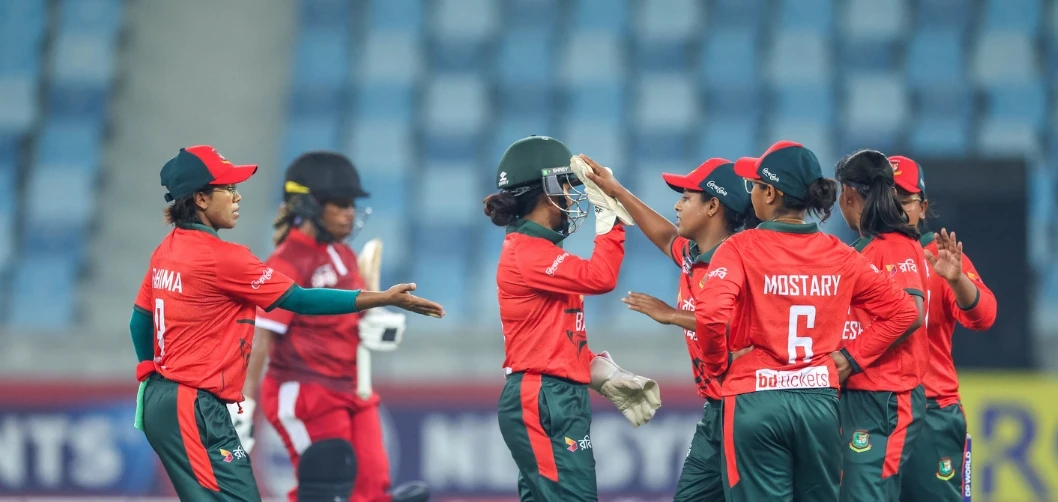
Much more structured cricket was being played further east. In Dubai, the Emirates Cricket Board is hosting the Asia Cricket Council’s Women’s Cup 2026. This opened on Aug. 28 and ends on Sept. 13. There are eight teams contesting the tournament. Bangladesh, India, Pakistan and Sri Lanka are full ICC members, with India the standout favorite to win. Hong Kong, Indonesia, Thailand and the UAE are the associate nations. The associates have a tough task to beat stronger full-member opponents, as illustrated by India’s heavy defeat of Thailand by 94 runs. Two days later, they were well beaten by Pakistan. The Thai captain admitted that their batting lags behind their bowling and fielding capabilities. The same applies to the Indonesian team, which fell to Bangladesh by 71 runs. Against Sri Lanka, the Indonesians were destroyed by Chamari Athapaththu, who claimed seven wickets, including a hat-trick, for just five runs in a 74-run victory.
In Malaysia, the ACC men’s Premier Cup is being played between Aug. 30 and Sept. 12. It is a 50-over tournament contested by the best associate teams in the ACC and serves as the final qualification pathway to the Asia Cup. Ten teams are divided into two groups of five, with the top two teams in each group progressing to a knockout stage.
Previous editions have been won by the UAE in 2024 and Nepal in 2023. Saudi Arabia’s campaign started on the opening day with a narrow loss to Hong Kong by 16 runs, when chasing a target of 273. Faisal Khan, Hisham Shaikh and Manan Ali all posted half-centuries. Their second match against Malaysia on Sept. 1 ended in a disappointing loss by 93 runs in pursuit of a target of 270. Only an unbeaten 64 off 29 deliveries from Usman Najeeb pushed the reply to 177 all out in 34 overs. The remaining matches are against Bahrain on Sept. 4 and Nepal on Sept. 6.
India’s domestic cricket season opened on Aug. 23 with the Duleep Trophy. This is a first-class competition involving six teams, representing six zones, with matches played over four days. East and South Zone have reached the final, scheduled for Sept. 6-10. The women’s domestic season opened with the Delhi Premier League played between Aug. 20 and Sept. 2, involving four franchise teams, each representing a different area of Delhi. The North zone beat the South zone in the final on Sept. 2.
What started as a lament for the lack of cricket and crowds in England and Wales on an August bank holiday turned into a search which uncovered cricket being played at the end of August in a variety of places, by both men and women. It also highlighted the fragmented nature of cricket in Europe in which investors have now seen opportunities. The way in which the ETPL shapes up in its inaugural edition is being closely monitored by all concerned. The same applies to how the proposed Italian T10 tournament will evolve. They may be harbingers of new future for cricket in Europe, so long in thrall to soccer. Cricket now beats to a different drum compared to an age when crowds packed out stands on an August holiday, at least In England and Wales. It has now reached a stage where it is accelerating on a route to become a truly global game.
More evidence of cricket’s widening appeal