Mohammed Fayad
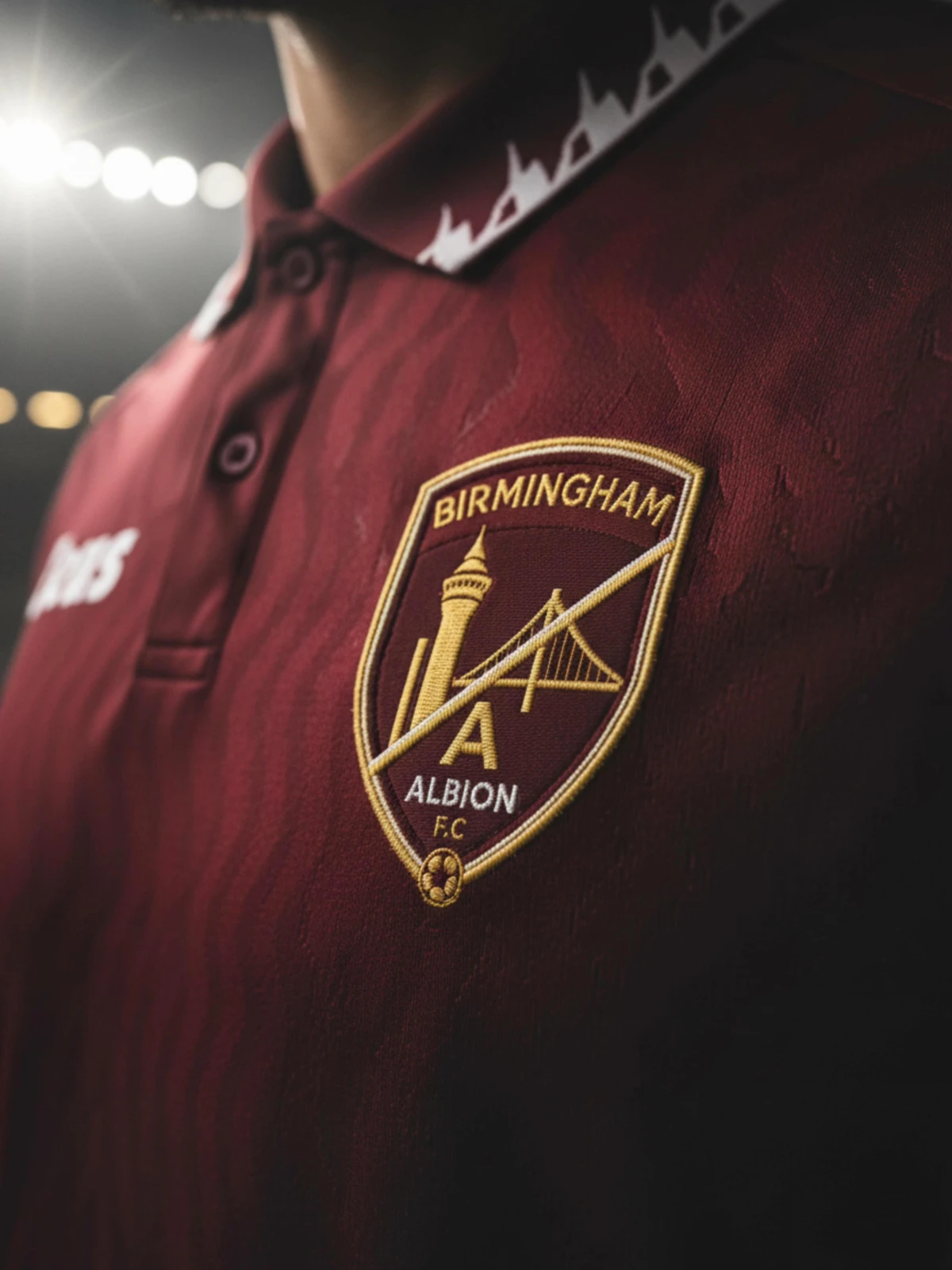
RIYADH: The West Midlands Regional League Division 1 — situated in the 12th tier of the English football pyramid — has just welcomed its latest addition. Birmingham Albion FC, incorporated in 2025, have officially secured their status as one of English football’s newest clubs.
Unusually, this is a side founded by two Kuwaitis with a passion for the game — Faisal Al-Serbel and Fahad Obaid.
The two businessmen have taken an unusual path. While investment from the Middle East into English clubs is no longer a novel concept, the idea of starting a football club from scratch is rare.
“The idea gained a lot of attention from the media because of how unusual it is,” Al-Serbel told Arab News. “You rarely find Arabs founding a club from scratch.
“We are more associated with acquiring, or buying an existing club — which is an idea we considered — but ultimately, we chose the path of starting a new club,” he added.
This is the first time a Kuwaiti has founded a new club in England, but not the first time a club has been owned by a Kuwaiti. Nottingham Forest were owned by the Al-Hasawi family between 2012 and 2017, while Ebbsfleet United were owned by Dr. Abdullah Al-Humaidi’s KEH Sports between 2013 and 2026.
Andover Town — also in the 12th tier of English football, but in the Hampshire Premier League Division 1 — was recently acquired by Mohammed Al-Kanderi. Higher up the pyramid, Salisbury FC (6th tier) is owned by Ali Al-Hamad, Bristol Rovers (4th tier) by Hussain Al-Saeed and MK Dons (3rd tier) by the Al-Ghanim family.
Birmingham Albion FC have hit the ground running in recent months, securing a ground-share agreement with Coton Green Football Club for the use of facilities at the Dave Henderson Memorial Ground for the 2026/27 season, alongside bringing in Approach as the club’s official shirt sponsor, with jerseys available on their official app.
Approach is a multi-service marketplace app based in Kuwait — illustrating how the club intends to bridge its community focus in Birmingham with ties back to Kuwait.
“Starting a club from scratch back in the Middle East is considered an unusual decision,” Al-Serbal said, “but if you acquire a big club, the decision would be applauded.”
Football in the Arab world often struggles to see clubs outside the traditional big sides break into the upper echelons without significant financial support. Notable recent examples include Al-Qadsiah in Saudi Arabia and Al-Hussein in Jordan, both of whom have begun to upset the status quo.
“What is special about clubs in the lower leagues is that everyone in the community cares about them — it truly feels like their club,” Al-Serbel explained.
“As soon as we started the club we had a lot of volunteers willing to join us, but of course, there were some negative voices surrounding our background and why we were not English.
“But, we are focused on bringing something good to the community in Birmingham, whether through programs, academies or cultural events.”
Recent social media reports suggested that Birmingham Albion FC were aiming to sign Kuwaiti players.
"We did suggest to players in the Kuwaiti League that they join us for a sort of live-in period during the international breaks,” Al-Serbel said, “but there are rules here — you cannot play in the division if you are not a full-time resident or citizen. That means we cannot sign players from the Kuwaiti League.
“However, we still want them to come to the club and train in England from time to time and see how football works, even at the lower rungs of the pyramid.”
That lower rung of the pyramid is an interesting challenge for the avid “Football Manager” player, who would salivate at the idea of taking a club from the 12th tier to European glory. But Al-Serbel outlined the team’s five-year targets — and none of them were that ambitious.
“Our five-year goal is to be promoted across two divisions at most, and one division at minimum,” he said. “Aiming for four divisions as a maximum and two divisions as a minimum — that is not realistic in football.
“We also have a plan to have our own stadium by 2027, and God willing, we will achieve it.”
Birmingham Albion FC may not make the same fireworks as other Arab-acquired clubs like Paris Saint-Germain and Newcastle United in the near future. They may never even make it out of non-league football. And yet, this is where the story becomes even more compelling.
For too long, the lack of development at grassroots and community level has represented a missing piece in the growth of football as an industry in the Arab world. Certain individual clubs have found great success, but never the whole ecosystem.
The success of a club like Birmingham Albion FC — not necessarily in terms of results — could be a game-changer for the Arab world.
It could show people back home that football clubs are not just what they have become in the modern era: entities driven purely by financial goals. A success story like this can spark a mindset shift toward the idea that football clubs exist for the community before anything else.
Meet the English club founded by Kuwaitis: Birmingham Albion FC