Madinah Gov. Prince Faisal bin Salman launched a festival here Monday highlighting the rich traditions of the city, including its architecture, food and ancient landmarks. Prince Faisal toured the Traditional Neighborhood Festival at King Fahd Park in the city, and then walked around old parts of the city. He praised the organizers of the event and said that they should continue to expand it.
Madinah Mayor Khaled Taher said the project preserves the urban heritage of the region, as ordered by Custodian of the Two Holy Mosques King Salman, the crown prince and deputy crown prince. He thanked Prince Faisal for supporting the event and other heritage initiatives in the region.
The traditional neighborhood is located over an area of 120,000 square meters and includes Al-Einiyah Commercial Street, the historical alleys, the old-style buildings and theater area. Some of the streets, shops and landmarks are over 300 years old.
The streets, which lead directly to the Prophet’s Mosque, have many large and small merchants. When the muezzin makes the call for prayer, all shop owners, even those selling foreign currency, cover their merchandise with a transparent piece of cloth, head out to pray and return to find all their goods still in place.
The neighborhood also includes a section with craftspeople producing Mashrabiya or Shanasheel, which are oriental windows carved out of wood. The city is also famous for its pottery items, especially those that hold water. The traditional neighborhood includes popular kitchens cooking traditional food items such as Balila, Mento, Yagmoush and Luqaimat, which are sold cheaply.
Also on sale are traditional sweets such as popcorn, Harisa, Mushabak and Alldo. Mushabak sweets are normally made on the night of Rajab 27, the night of Mi’raj (Ascension) and Isra’ (Night Journey). The others are usually produced during the holy month of Ramadan and Eid Al-Fitr.
The Charitable Society for Social Services in Madinah has organized a handicraft event to support and encourage small enterprises. The aim is to produce world class products that can be sold abroad with the label “Made in Madinah.”
There are 58 women entrepreneurs participating in this project. Several workshops were held to train the women to produce top quality items. Such small enterprises have reportedly created jobs for many women in Madinah.
The event also has a design academy. About 100 girls will benefit in the first phase, which will focus on designing jewelry, beads, carpets, pottery and other items. The project is part of the Namaa Al-Munawara Foundation, a massive program to boost small and medium enterprises in the region. The project is for women only and located on an area of 2,200 sq. meters.


![]()
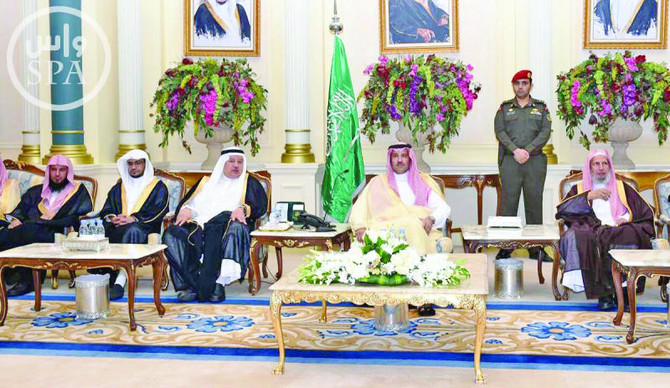
Madinah festival focuses on rich culture, heritage
Madinah festival focuses on rich culture, heritage
Latest updates





© 2026 SAUDI RESEARCH & PUBLISHING COMPANY, All Rights Reserved And subject to Terms of Use Agreement.