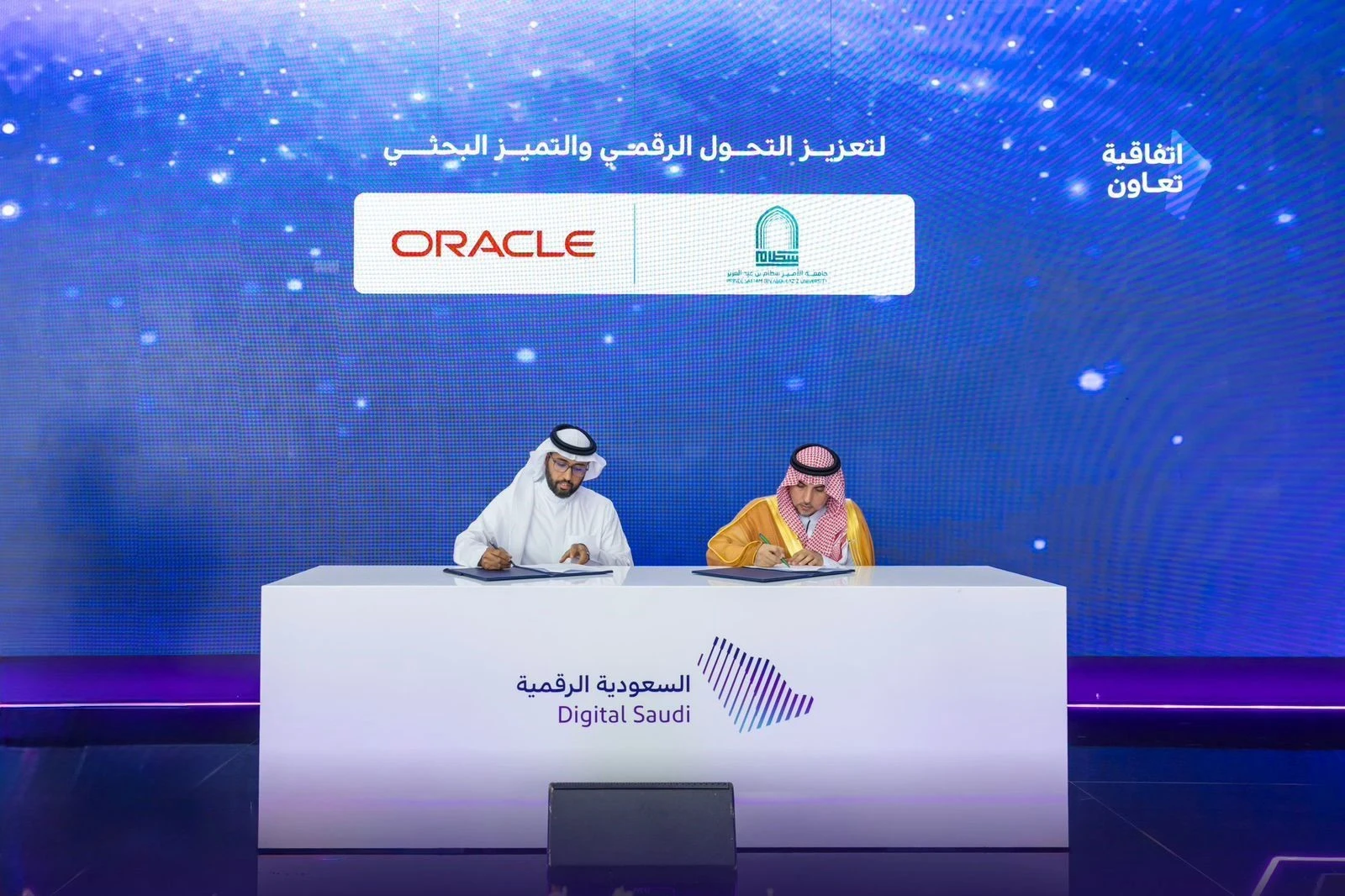
RIYADH: Prince Sattam bin Abdulaziz University (PSAU) has signed two Memoranda of Understanding (MoUs) as the university moves to expand its digital transformation efforts at LEAP 2026 in Riyadh on Wednesday.
The cooperation agreement was with Microsoft Arabia, Oracle Systems Limited and Ejada Systems.
Represented by its General Directorate of Information Technology, PSAU signed the agreements during the fifth edition of LEAP 2026 at the Riyadh Exhibition and Convention Center. Prof. Hamad Al-Turaiki, Vice President of PSAU, signed on behalf of the university, alongside executive representatives from the partner companies and university officials.
The partnerships establish a framework for cooperation in cloud computing, artificial intelligence (AI), data analytics, emerging technologies and knowledge transfer, with the goal of advancing the university’s educational environment and improving the efficiency of its digital services.
The agreements also include initiatives to support PSAU’s Center of Excellence in Artificial Intelligence and Cloud Computing. These include integrating the Microsoft Learn platform to offer tailored, self-paced learning pathways and providing access to specialized training curricula through Oracle Academy. The programs are intended to build the skills of national talent and give students and faculty access to globally recognized professional certifications.
The scope of cooperation extends to cooperative training opportunities, joint research initiatives led by PSAU’s Research Center to leverage advanced cloud capabilities, participation in hackathons and the modernization of digital laboratories.
The university’s technology partnerships are designed to support its academic and research mission while fully preserving the independence of academic decision-making. Its curricula will remain under the university’s supervision and subject to its approved standards, according to Dr. Issa Al-Dosari, the university’s official spokesperson.
Al-Dosari told Arab News that the partnerships focus on knowledge transfer, capacity building, and strengthening critical thinking and innovation.
“The university views artificial intelligence as a supporting tool for enhancing students’ capabilities and improving their educational experience, rather than as a substitute for knowledge and essential skills,” he added.
The university is also working to promote responsible and ethical use of these technologies and to develop assessment methods that measure students’ abilities in understanding, analysis, problem-solving and independent knowledge production, Al-Dosari noted.
“The university is keen to ensure that its technology partnerships deliver a sustainable impact that goes beyond the use of ready-made solutions through the transfer and localization of knowledge, the development of national capabilities, and support for research and applied projects,” he highlighted.
“Enabling students and researchers to develop innovative solutions that respond to local needs and priorities is of particular importance, strengthening the university’s role in research and innovation and supporting national development,” Al-Dosari concluded.
Digital partnerships fuel innovation and reinforce academic independence at PSAU