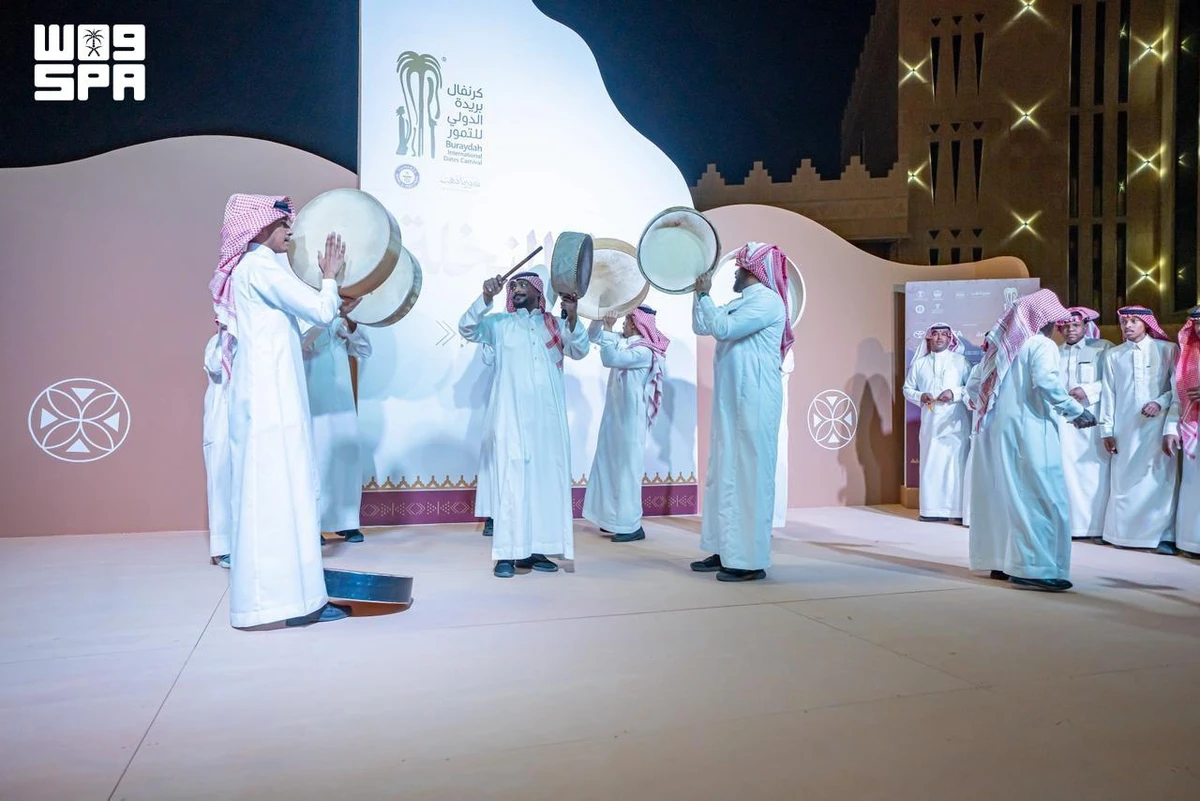
- The event introduced visitors to the palm and date sector while featuring traditional performances
JEDDAH: The Buraidah International Dates Carnival is highlighting the cultural significance of the date palm alongside the sector’s growing economic reach, with heritage events, tourism initiatives and rising exports forming part of this year’s program.
The carnival recently staged Palm Night, a heritage event showcasing the close connection between the date palm and the social and cultural identity of the Qassim region, the Saudi Press Agency reported.
The event introduced visitors to the palm and date sector while featuring traditional performances and Saudi performing arts as part of a wider cultural program for different segments of society.
The carnival’s higher committee said the event complements the commercial and marketing activities surrounding dates while strengthening the festival’s cultural and tourism dimensions.
It added that including national heritage in the program aims to offer visitors a more integrated experience, combining an introduction to the palm and date industry with Saudi traditions and cultural expression.
The carnival has also launched a sightseeing bus tour allowing visitors to explore Buraidah’s historical, cultural, heritage and economic landmarks.
The tour departs from the Palm Center, the carnival’s main venue, and takes visitors to several prominent locations in the city. Specialist guides provide information on Buraidah’s history and social and economic heritage.
Organizers said the service aims to enhance the visitor experience and promote Buraidah as a global capital of dates and a tourist destination for visitors from Saudi Arabia and abroad.
The tourism and cultural initiatives come as Saudi dates continue to gain prominence in international markets. According to figures from the National Center for Palms and Dates, Saudi date exports were valued at about SR1.938 billion ($517 million) in 2025, up 14.3 percent from the previous year.
Saudi dates are now exported to more than 125 countries. Several international markets recorded strong growth in 2025, led by Japan at 67 percent, followed by South Africa at 48 percent, the Netherlands at 47 percent and China at 39 percent. Exports to the UK and Northern Ireland rose by 30 percent, while shipments to India increased by 25 percent.
The carnival’s organizers said the commercial momentum reflects broader efforts to develop the palm and date sector, raise product quality, expand access to global markets and support the Kingdom’s non-oil exports.
The 75-day carnival, which continues until Oct. 14, continues to offer economic, cultural and tourism activities aimed at promoting the sector, preserving national heritage and enriching the visitor experience.
The carnival markets more than 85 percent of the region’s sukkari dates, one of the most popular varieties among local and international customers for its quality, distinctive flavor and ease of storage and transport. Qassim also produces a broad range of other varieties, including barhi, khalas, sagai and nabut saif.
The Qassim region boasts about 11 million palm trees producing more than 580,000 tonnes of dates annually. The sector contributes an estimated SR3.2 billion to Qassim’s economy each year and provides more than 4,000 direct and indirect jobs.