- No pressure from Pakistan for peace talks, Taliban say
- Half of Afghanistan under Taliban control, can open office anywhere, says the group
ISLAMABAD: Afghan Taliban have dispelled the impression that Pakistan’s pressure forced them to start negotiations and said they are holding direct talks with the United States in line with their policy.
Comments by Taliban spokesman Zabihullah Mujahid came amid reports that Pakistan exerted pressure on the Afghan insurgents to come to the negotiation table.
“We do not adopt or change our policies due to pressure from anyone. I have not seen any pressure,” Mujahid told Arab News.
“The on-going talks taking place in (Qatar) are in accordance with our agenda,” the Taliban spokesman said in reference to the negotiations between the Taliban and the US officials to end the conflict in Afghanistan.
Taliban’s outgoing chief negotiator Sher Abbas Stanekzai said last week that the next round of talks will be held in Qatar on Feb. 25 that will focus on ways to discuss the withdrawal of foreign forces and to prevent Afghanistan from being used for terrorism in future.
“The perception about the use of pressure (by Pakistan) is false as there is no space for such a possibility of any pressure,” Mujahid said.
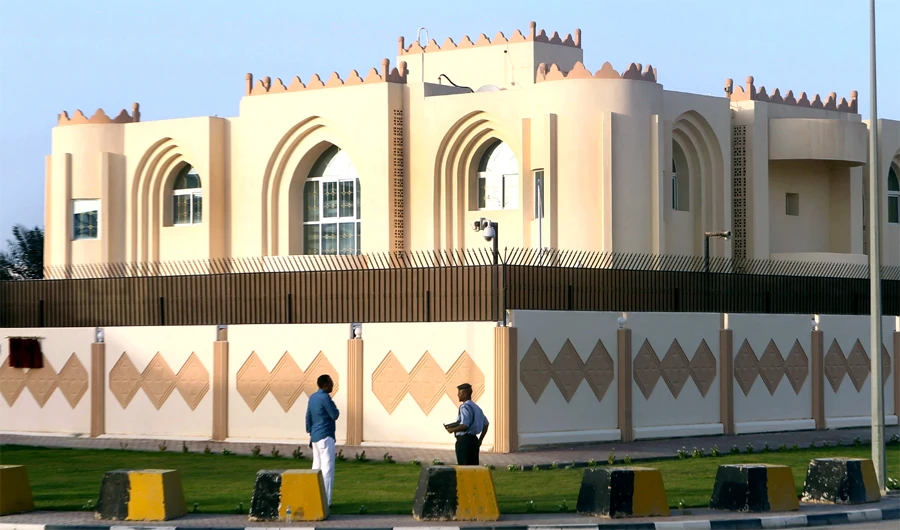
“We had told the Americans to talk to us instead of starting war even before the invasion. Then we opened political office in Doha in 2013 for political talks with the Americans as the war option was not in the US interest. But the US was unwilling to agree to our proposal and instead preferred war. It is the US which has started negotiations with us, so it is a change in the US approach to come to the negotiation table. Ours is old stance that war has been imposed on us,” he said.
About Taliban approach toward Pakistan, he said Taliban will deal with Pakistan as a brotherly neighbor in the future and want strong relations on the basis of mutual respect. We want similar relations with other neighboring countries.”
The Taliban spokesman described as “misplaced” President Ashraf Ghani’s offer to Taliban to give them office in Afghanistan.
“We do not beg anyone to give us office in our own country. We presently control over half of Afghanistan and if we want we can open office and center anywhere.”
The US, Taliban and regional stakeholders, in the recent past, have had multiple round of talks seeking a political solution to the Afghan conflict. US special envoy for Afghanistan reconciliation, Zalmay Khalilzad, is on his latest six-nation tour to the region in a bid to secure a peace deal with the group before the Afghan presidential elections slated for July this year.
The Taliban had until now refused to talk to the Afghan government and appear to be seeking a key role in the new political order of the country.
Foreign affairs experts also do not believe Pakistan could mount pressure on the Taliban and insist that Islamabad can only encourage the Afghan insurgents to join peace process.
“Pakistan may be encouraging the Taliban to sit on negotiation table because the war in Afghanistan has also affected our country,” Pakistan’s former ambassador Asif Durrani told Arab News on Monday.
“Taliban are not naïve to accept pressures but I think they will do whatever is good for Afghanistan,” said Durrani, who has also served in Afghanistan.
“They (Taliban) are Afghans and Afghans are fiercely independent people so the impression of pressure is a move to malign the Taliban,” the former diplomat said.
Defense analyst, Brig. (retired) Said Nazir Mohmand also agrees with the idea of convincing the Taliban instead of pressure as any such policy could “create problems for Pakistan.”
“It was the stated policy of the Taliban that they will only talk to the US as they consider them as occupation force so I do not think there was any pressure on them as the US agreed to start negotiations with them,” Mohmand told Arab News on Monday.
“But there is possibility Pakistan may have used its leverage on the Taliban and convinced them to focus on political solution,” he said.