- Central bank governor cites inflationary pressures, impact from increase in utility prices
- Inflation eased slightly last month to 8.9% but Baqir said he expected pressures to continue.
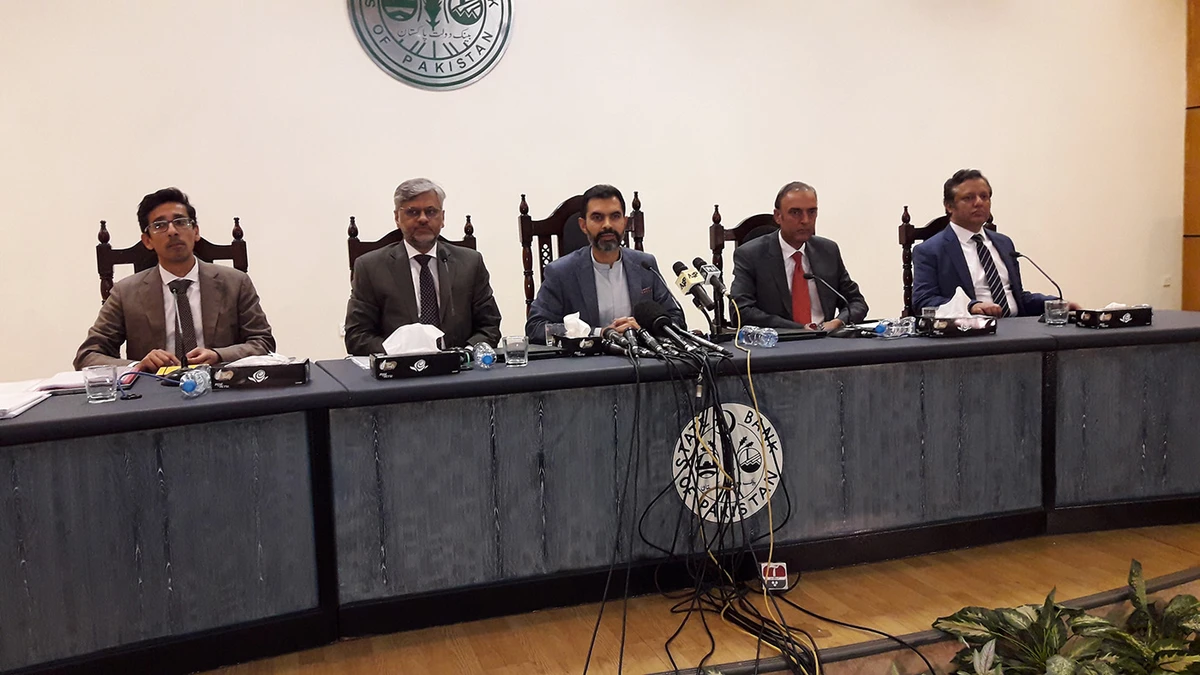
KARACHI: Pakistan on Tuesday raised its key policy rate by 100 basis points to 13.25 percent, an eight-year high, mainly due to inflationary pressures and the impact of recent increases in utility prices, the central bank governor said.
The increase follows the approval this month of a $6 billion bailout from the International Monetary Fund that comes with tough conditionalities aimed at cutting Pakistan’s fiscal and current account deficits and shoring up dwindling currency reserves.
“The decision [to raise the key interest rate] takes into account upside inflationary pressures from exchange rate depreciation since the last monetary policy committee (MPC) meeting on May 20, 2019 and the likely increase in near-term inflation from the one-off impact of recent adjustments in utility prices and other measures in the FY20 budget,” central bank governor Dr Reza Baqir said at a press conference. “The decision also takes into account downside inflation pressures from softening demand indicators.”
The central bank’s inflation projections for the current fiscal year (FY20) remained below those of the central government’s, which had predicted a 11-13 percent inflation rate during the federal budget announced last month.
“The monetary policy committee expects average inflation of 11–12 percent in FY20, higher than previously projected,” Baqir said. “Nevertheless, inflation is expected to fall considerably in FY21 as the one-off effect of some of the causes (price hike of gas and electricity through budgetary measures) of the recent rise in inflation diminishes.”
The central bank has now increased its main policy rate nine times since the beginning of last year, raising it by a total of 750 basis points as it has struggled to control inflation, a widening fiscal deficit and pressure on the rupee currency.
Inflation eased slightly last month to 8.9% but Baqir said he expected pressures to continue.
“Unanticipated increases in inflation that adversely affect the inflation outlook may lead to further modest tightening,” he added. “On the other hand, a greater than expected softening in domestic demand and downward revision in projected inflation would provide grounds for easing monetary conditions.”
The three-year agreement approved by the IMF board, Pakistan’s 13th bailout since the late 1980s, foresees structural economic reforms and a widening of the tax base to boost tax revenues that are currently estimated to account for less than 13% of gross domestic product (GDP) by 4-5 percentage points.
Since the signing of the IMF deal, there has also been a sharp drop in the value of the rupee currency after the central bank agreed to a “flexible, market-determined exchange rate,” a condition of the accord.
“The overvalued currency issue has been resolved and the bank will take action in case of disorderly movement in currency exchange rates,” Baqir said.
“Conditional upon the latest available information, State Bank of Pakistan expects real GDP growth of around 3.5 percent in FY20,” the central bank governor said. The federal government expects GDP to grow by 2.4 percent in FY20.
External conditions show continued steady improvement with a sizeable reduction in the current account deficit which fell by 29.3 percent to $12.7 billion in July to May FY19 as compared to $17.9 billion during the same period last year.
“Oil factor is not in our control but the non-oil current account deficit is now almost zero” Baqir said.