- Islamabad seeks full dialogue partner status to broaden cooperation with ASEAN
- Both sides see scope for closer ties in trade, technology and regional security
ISLAMABAD: The Association of Southeast Asian Nations (ASEAN) is considering Pakistan’s request for full dialogue partner status, its secretary-general said on Thursday, as Islamabad seeks to expand economic and diplomatic cooperation with the 11-member Southeast Asian bloc.
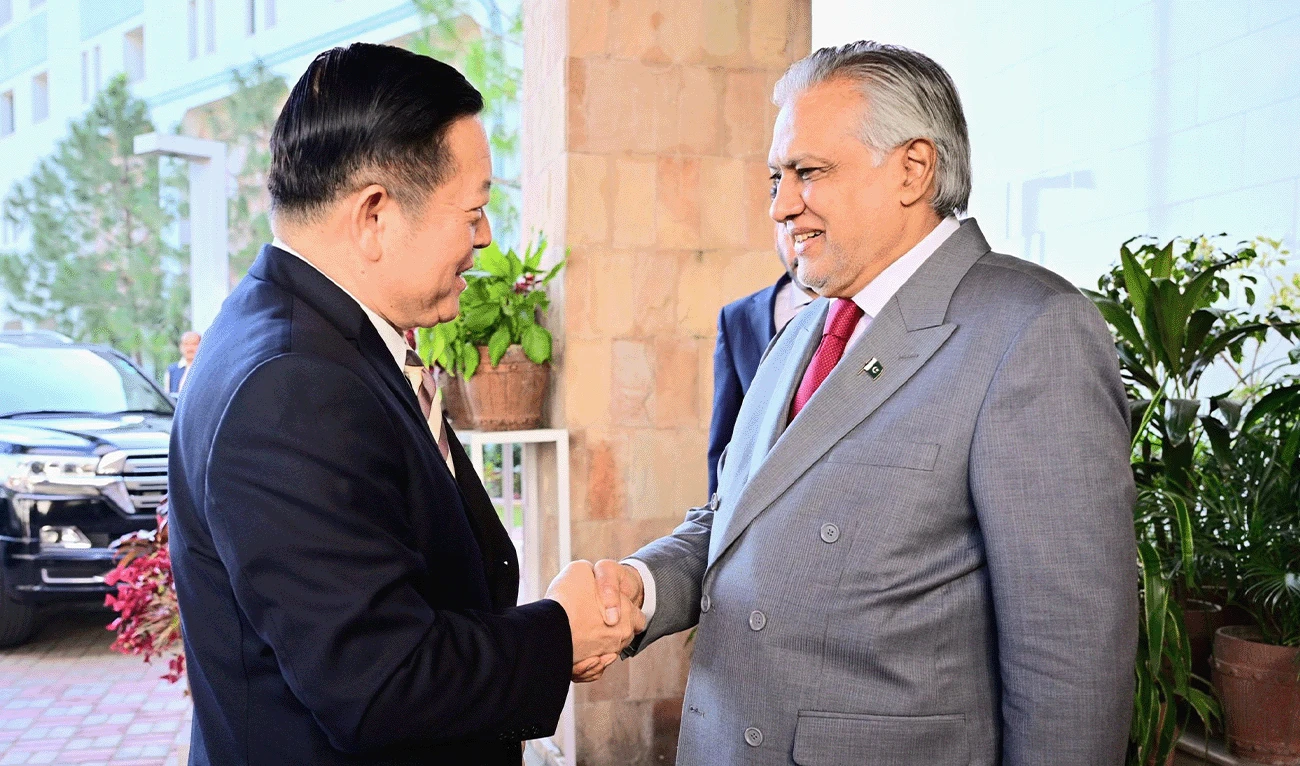
Kao Kim Hourn made the announcement at a joint news conference with Pakistan’s Deputy Prime Minister and Foreign Minister Ishaq Dar in Islamabad. The two officials discussed strengthening cooperation in trade, investment, technology and regional security.
“I ... take note of Pakistan’s request to become a dialogue partner of ASEAN and appreciate its commitment to deepen engagement with ASEAN,” Hourn said in his remarks.
Pakistan has been an ASEAN Sectoral Dialogue Partner since 1993 and a member of the ASEAN Regional Forum since 2004. Full dialogue partner status would allow Islamabad to pursue broader political, economic and security cooperation with the bloc, beyond the more limited areas covered by its existing partnership.
ASEAN’s full dialogue partners include major economies such as China, the United States, Japan, India and the European Union.
Hourn said Pakistan’s request was under consideration in accordance with ASEAN’s established procedures, without indicating when a decision might be made.
However, he encouraged both sides to continue expanding cooperation while Pakistan’s request was processed.
His visit marks the first high-level trip to Pakistan by an official from the ASEAN Secretariat in more than two decades and comes as Islamabad seeks to diversify its economic partnerships and strengthen regional trade and connectivity.
The ASEAN chief welcomed progress under the ASEAN-Pakistan Sectoral Dialogue Partnership Practical Cooperation Areas 2024–2028, a framework covering trade and investment promotion, private sector development, science, technology, innovation and cultural exchanges.
He identified further opportunities for cooperation in digital transformation, smart cities, energy and food security, maritime security, cybersecurity, tourism and the development of small and medium-sized enterprises.
“There remains considerable potential to further strengthen our cooperation in support of our mutual interests,” Hourn said.
Dar said Pakistan wanted to translate its longstanding relationship with ASEAN into more practical cooperation, particularly by connecting businesses, universities and research institutions.
“We wish to give these ties greater practical substance by connecting our businesses, universities and research institutions and expand exchanges among our people,” he said.
Dar praised ASEAN’s experience in regional economic integration and its commitment to dialogue amid growing international tensions.
“For nearly six decades, ASEAN has brought countries with diverse histories and economies into a closer regional community,” he said.
Hourn also commended Pakistan’s diplomatic efforts to reduce tensions between the United States and Iran, highlighting the importance of dialogue in resolving international disputes.
“ASEAN and Pakistan share a strong interest in promoting peace, stability and respect for international law,” he said. “I commend Pakistan’s efforts to facilitate dialogue between the United States and Iran, promote de-escalation and advance diplomatic efforts toward a peaceful resolution.”
Founded in 1967, ASEAN comprises Indonesia, Malaysia, the Philippines, Singapore, Thailand, Brunei, Vietnam, Laos, Myanmar, Cambodia and East Timor.
Pakistan has sought closer ties with the grouping as part of efforts to expand trade, attract investment and strengthen economic links with Southeast Asia.