- Pakistan’s largest and most densely populated city produces 12,000 metric tons of trash every day with only 70% of it properly disposed of
- Karachi’s main political stakeholders say they are not taken on board to deal with the challenge
KARACHI: The provincial administration of Sindh on Friday welcomed an announcement by the federal minister for maritime affairs, Ali Haider Zaidi, who recently expressed his resolve on Twitter to clear all the garbage from this seaside metropolis with the help of its residents in the next two weeks.
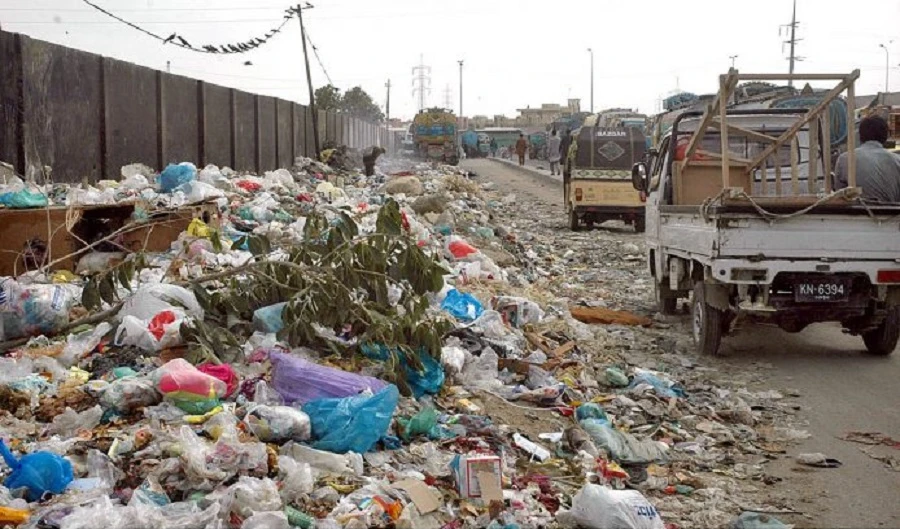
The largest and most densely populated city of Pakistan, Karachi produces 12,000 metric tons of trash on a daily basis. About 70 percent of it is properly disposed of, though the rest of it constitutes a staggering backlog that grows with each passing day.
While responding positively to the federal minister’s ambitious campaign, a representative of the Sindh government noted it was not clear how Zaidi would clear so much junk.
“I welcome the announcement as we all want a clean city,” said Saeed Ghani, Sindh’s minister for local bodies, while talking to Arab News, but added that Zaidi “has not contacted us yet for any logistical support or other help.”
Zaidi also declined to answer questions Arab News shared with him regarding the city’s waste management system and his drive to clean Karachi in two weeks. However, he told a local news channel that it would begin on Monday.
“I have built the momentum for the campaign and multiple organizations will help us with the drive,” he told Geo TV.
Karachi poses a structural challenge that frequently makes it difficult to address some of the most basic governance issues. The city elected 14 out of 21 national assembly and 22 out of 42 provincial assembly members belonging to the Pakistan Tehreek-e-Insaf (PTI) party that rules at the federal level.
The local government of the metropolis belongs to the Muttahida Qaumi Movement-Pakistan (MQM-P) party which holds sway in four out of six district councils. However, it is Sindh’s ruling Pakistan Peoples Party (PPP) that controls most of the district management through its local bodies’ minister.
Given the complex governance structure of the city, all of these stakeholders are required to work together to make headway on any issue, joint director of Urban Resource Center, Zahid Farooq, told Arab News.
He also described the campaign as an attempt to make “political gains,” adding it was difficult to see how it could actually meet its objectives in such a short span of time.
Rehan Hashmi, chairman of the largest central district with 51 union committees, also told Arab News that Zaidi or his team had not approached him to coordinate. Hashmi added his district was unable to pay salaries to its employees since it lacked financial powers in the local government framework introduced by the PPP government.