- The monetary policy was announced as IMF team lands in Islamabad to review progress on $6 bn stabilization program
- Central bank says meeting the program targets essential to sustaining improvement in macroeconomic stability
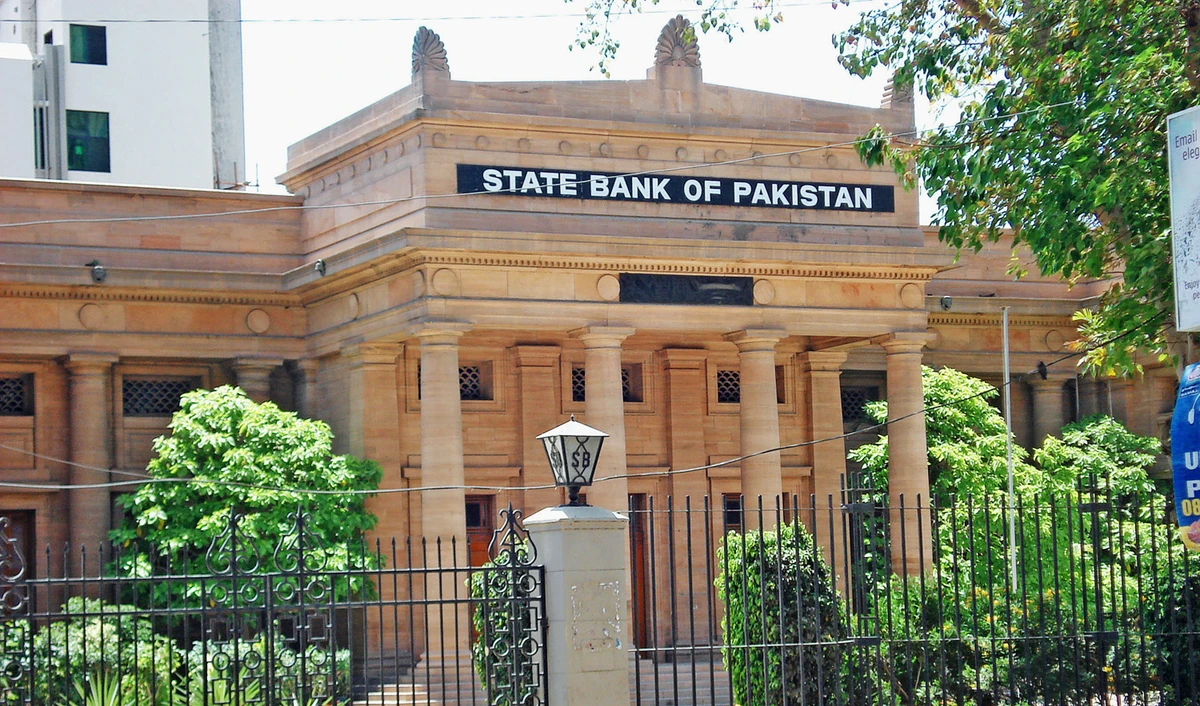
KARACHI: State Bank of Pakistan (SBP) on Monday decided to keep the key policy rate unchanged at 13.25 percent for the next two months as the International Monetary Fund IMF team arrives in Islamabad to review the progress on $6 billion stabilization program country secured from the Fund in July this year.
“The decision reflected the Monetary Policy Committee’s (MPC) view that inflation outcomes have been largely as expected and inflation projections for FY20 have remained unchanged since the last MPC meeting on 16th July, 2019," the central bank said in its monetary policy statement issued on Monday.
The current stance of monetary policy was appropriate to bring inflation down to targeted 5-7 percent over the next two years, the SBP noted, adding that it expected inflation to reach an average 11-12 percent in fiscal year FY20.
The central bank said that initial volatility and associated uncertainty in inter-bank market had subsided following the introduction of market-based exchange rate system. “Improved sentiments and continued adjustment in the current account, the rupee had strengthened modestly against the US dollar since the last MPC, unlike its previous trend," the statement added.
On the external front, the US Fed, as anticipated, reduced its policy rate by 25 basis points (bps), followed by policy rate cuts by other major central banks around the world. This would help in lowering pressures on emerging markets’ currencies and potentially increase financial inflows, the SBP viewed.
The central bank says the recent developments in the fiscal sector had been mixed. “On the one hand, revised figures showed that fiscal policy had been considerably more expansionary in FY19 than earlier expected with a primary deficit of 3.5 percent of GDP and an overall fiscal deficit of 8.9 percent of GDP. On the other hand, tax revenues (net of refunds) had grown considerably in July and August of FY20 which suggested that the economic slowdown may not be as pronounced as may have been feared”, SBP added.
The central bank observed that the fiscal prudence and meeting the program targets is essential to sustaining the improvement in macroeconomic stability.
The monetary policy announcement is coincided with the arrival of IMF team headed by Jihad Azour, Director of the Middle East and Central Asia. The team is expected to meet with Prime Minister Imran Khan, Dr Abdul Hafeez Shaikh, advisor to the PM on finance, and other officials of the Pakistani government during its four-day visit.
IMF sees low revenue mobilization, high fiscal deficit and indebtedness, low spending on education, health, and social programs, and a weak external position as the key long-standing economic challenges Pakistan is facing that stemmed from uneven and pro-cyclical economic policies.