- The country’s foreign minister calls it a ‘historic day’ that will help ensure transparent elections in Pakistan
- The opposition protests the passage of the law, vows to challenge it in the country’s top court
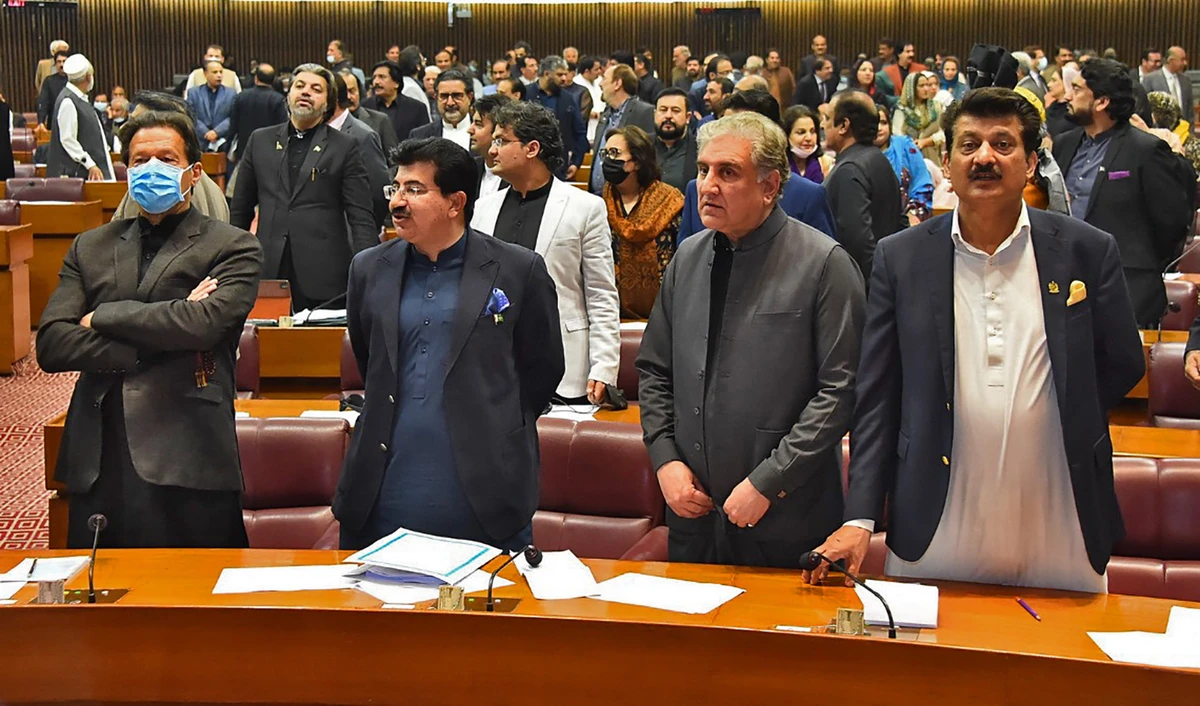
ISLAMABAD: The Pakistani government called it a “historic day” after a joint session of parliament on Wednesday allowed the use of electronic voting machines (EVMs) in the next general elections in 2023 and granted the right to vote to overseas nationals amid uproar and protest by opposition parties.
The government convened a joint sitting of the Senate and National Assembly to get about 29 draft bills passed through majority vote. However, the opposition members ripped the copies of the agenda along with the proposed legislations before walking out of the session in protest.
The ruling Pakistan Tehreek-e-Insaf party has advocated the use of EVMs in the forthcoming general elections as part of its electoral reforms despite reservations by opposition factions and the country’s election regulatory authority.
While the Election Commission of Pakistan and the opposition believe a hasty use of these devices can undermine free and fair elections, the government maintains they can put an end to repeated rigging allegations in Pakistan.
Prime Minister Imran Khan along with other treasury members welcomed the passage of the bill on Wednesday by thumping desks and chanting slogans in the house. The opposition members tried to move amendments which were rejected by the government through majority vote.
“Today is a historic day,” said foreign minister Shah Mahmood Qureshi while delivering a speech on the floor of the house. “The EVMs are being introduced to bury evil and vicious designs.”
The opposition factions, however, vowed to challenge “the controversial and black law” at every forum including the Supreme Court of Pakistan.
“Today is the black day for parliament,” Shehbaz Sharif, leader of the opposition in the National Assembly, said. “A rigged government is imposed on us, and now they want to impose the EVMs on us.”
The opposition leader termed the electronic voting machines as “evil and vicious” while accusing the government of trying to steal the next elections by deploying them at polling stations across the country.
He also urged the speaker to defer the joint session to build consensus of all parliamentary parties on electoral reforms by holding “comprehensive and meaningful” consultations with the opposition.
Pakistan Peoples Party chairman Bilawal Bhutto Zardari also asked the government to develop a consensus before passing the law related to changes in the electoral system to ensure that the next electoral contest did not become controversial.
He said the opposition would not accept the next election results if the government passed the law by bulldozing the regular proceedings of the house.
“I don’t accept these election reforms,” he said. “We will challenge this law at every forum including the Supreme Court.”
Foreign minister Qureshi, however, dismissed the opposition’s claims while addressing the joint parliamentary session.
“We don’t want to bulldoze the legislation process,” he said. “We had reached out to the opposition [for consultation on electoral reforms], but they didn’t pay any heed.”
He maintained the electronic voting machines would help make the next elections “more transparent” in a country where people often doubt election results.
He also added the overseas Pakistanis were an asset to the country and the government wanted to involve them in the “policy and decision-making processes” by granting them the right to vote.
The joint parliamentary session also granted the right to appeal to Indian spy Kulbhushan Jadhav and passed the Banking Services Corporation (Amendment) Bill, 2021.
The opposition claimed the latter piece of legislation was passed on the direction of the International Monetary Fund.