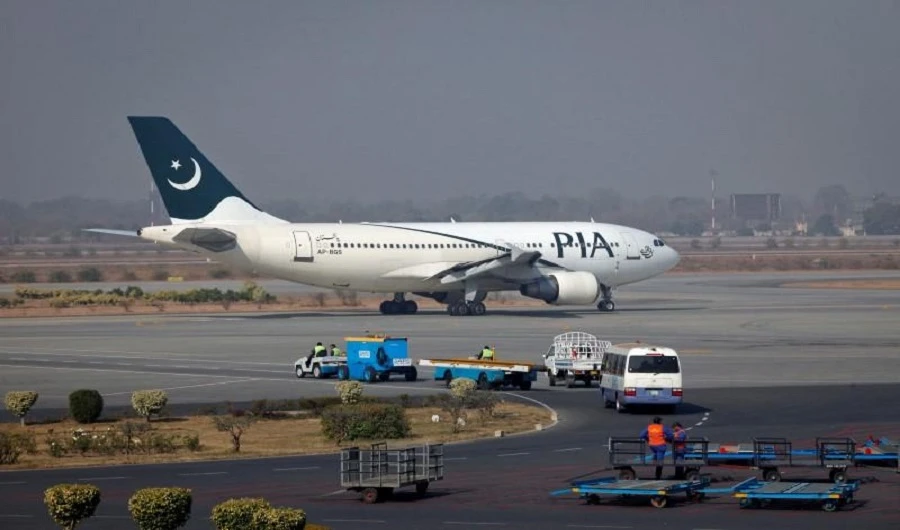
- PIA has operational losses of around Rs2 billion each month, partly due to overstaffing
- The airline has a staggering employee to aircraft ratio of more than 450
ISLAMABAD: Troubled national carrier Pakistan International Airlines (PIA) has laid off nearly 1,000 ‘redundant’ staffers to save costs, the finance ministry said on Friday, a long overdue action by a company that has suffered severe management turmoil in recent years and haemorrhages hundreds of millions of rupees a year.
PIA has operational losses of around Rs2 billion each month and has had trouble paying employees for years. The losses have been aggravated by a fuel price hike and a depreciation of more than 20 percent in the rupee currency within a year.
One cause of the airlines financial woes is also overstaffing. PIA has 13,500 regular employees and some 3,500 on daily wages. The employee to aircraft ratio is more than 450.
According to a press release from the ministry of finance, PIA President & CEO Air Marshal Arshad Malik on Friday briefed the Prime Minister’s adviser on finance, Dr. Abdul Hafeez Shaikh, about various initiatives undertaken in recent months to help the national carrier overcome its difficulties, including an effective and optimal utilization of PIA assets and a significant reduction in the operational cost of the airline.
“He [Malik] said the PIA management had been able to lay off nearly 1000 redundant staff to save costs,” the statement said.
Shaikh told PIA management that the government wanted the national flag career “to effectively utilize its assets, improve revenue streams and ensure efficiency and financial discipline.”
“Shaikh stressed the importance of a viable and independently made corporate plan to help the PIA overcome its difficulties and achieve sustainability in its business processes and flight operations,” the finance ministry said. “He said the government was fully behind the PIA management and expected it to work diligently to turn the national flag career into an economically stable, viable and dependable airline for the local and international travelers.”
The previous government’s attempt to privatise the national carrier stalled in 2016 after staff protests disrupted operations and parliament passed a law that effectively made privatization impossible.
The privatization of 68 state-owned companies, which include loss-making enterprises like PIA and Pakistan Steel Mills, was a major element in a $6.7 billion IMF package that helped Pakistan stave off a default in 2013. The previous government of Prime Minister Nawaz Sharif was unable to meet most of its privatization targets.