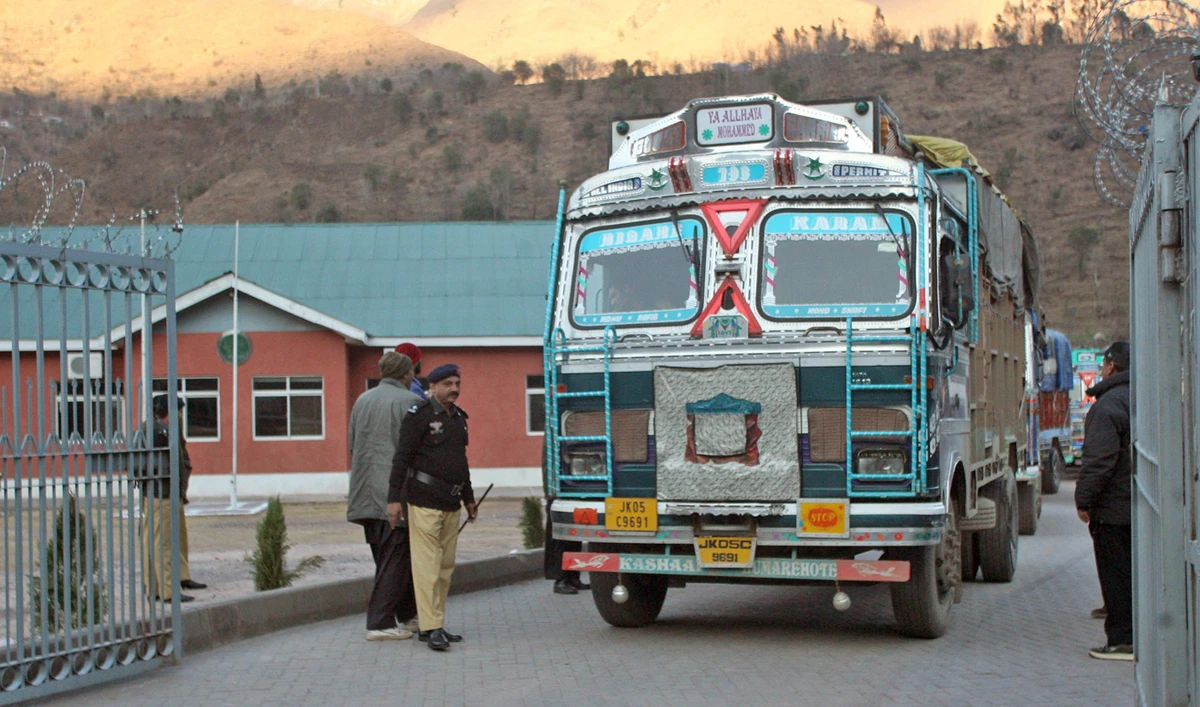
- Pakistan needs better management of exports to reduce current account deficit, say experts
- The government is actively engaging at multiple fronts to increase exports and reduce balance of payment deficit, said Finance Minister Asad Umar
KARACHI: The Federation of Pakistan Chambers of Commerce and Industry (FPCCI) questioned the wisdom behind the recent finance bill presented by the Pakistan Tehreek-e-Insaf (PTI) government, pointing out on Monday that increasing the cost of input would not yield the desired export targets for the country.
“The FPCCI has lamented the recent increase in gas prices and urged the government to bring the utility rates on par with our regional competitors, such as Bangladesh and India, since that will enable Pakistan to perform well in the international market and bridge the yawning trade deficit as well,” FPCCI’s Vice President Waheed Ahmed told Arab News.
The PTI government is facing a huge balance of payment deficit, but its economic managers have tried to reduce it by launching an austerity drive and introducing new budgetary measures.
Economic experts believe, however, that the ruling administration must focus on increasing the country’s exports to deal with the problem.
“It is buffalos versus balance of payment. Pakistan desperately requires big steps to fill the external payment gap rather than relying on short-term measures, such as selling a few cars or animals,” Dr. Bilal Ahmed, a senior economist, commented, adding: “The country needs better management of export package and work on import substitute that can increase our exports to $30 billion.”
“The balance of payment pressure persists due to our dwindling foreign exchange reserves, trade deficit, and current account deficit that was reduced to some extent in July and significantly went down in August. However, this was not due to any policy intervention by the government, but rather to the rise in exports vis-a-vis our imports,” Dr. Ikram-ul-Haq, an economic expert said.
Pakistan’s balance of payment deficit for the fiscal year 2017-18 was $18.1 billion, easing while it eased off in the first two months of the current fiscal year. Federal Minister for Finance, Revenue, and Economic Affairs, Asad Umar, has warned that the deficit may reach $21 billion if corrective measures are not taken.
The government has announced measures to reduce imports through the imposition of regulatory duty, subsidizing the export industry, and curbing government spending under austerity measures.
“Our export industry, which has to compete in the international market, has been given break of Rs44 billion. Similarly, we are focusing on foreign direct investment. Talks with Saudi Arabia about greater investment was also part of it — and enhanced exports to markets in the Middle East. We also took up the issues of Pakistani laborers since they constitute a major source of remittances to the country,” Umar told Arab News.
Responding to criticism of the price hikes, Asad Umar told the National Assembly on Monday: “The increase in fertilizer prices is due to enhanced rates on exporters of Punjab in the previous government, PTI government has even reduced the price of gas by 44 billion rupees for the exporters.”
However, exporters said that they are not clear about the measures announced by the government through the new finance bill. “They have announced duty exemption on raw material for the export sector and separated five zero-rated export industries, but we have not received written orders yet,” Jawad Bilwani, Central Chairman of Pakistan Hosiery Manufacturers and Exporters Association, said.
“Our major issue is trade deficit. What we need to do is enhance our exports, although it is not a simple task and will take time. We have to increase our exports and simultaneously bring down imports,” said Abdullah Yousuf, a member of the government’s task force on austerity and former chairman of Federal Board Revenue.
He added: “The cost of doing business in Pakistan is high as compared to our competitor nations. The government has to play a role in reducing production costs. Overheads, such as electricity, are high in comparison to competitors in India and Bangladesh.”