- Financial support to state enterprises rises 31 percent to record $2.88 billion
- Government targets three power distributors, expects $323 million more from PIA sale
KARACHI: Pakistan’s loss-making state-owned enterprises recorded Rs342.8 billion ($1.23 billion) in losses during the first half of the current fiscal year, the prime minister’s privatization adviser said on Thursday, defending plans to transfer government businesses to private investors.
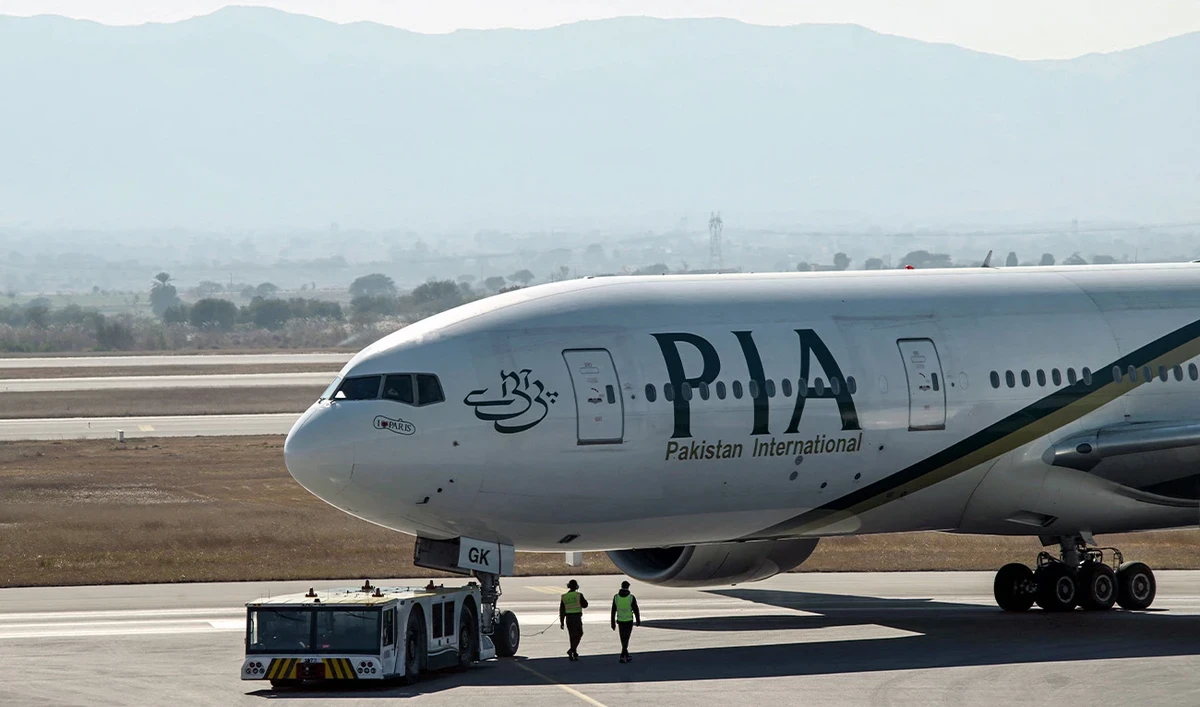
Pakistan is pursuing a privatization program under its $7 billion International Monetary Fund (IMF) bailout, seeking to reduce the financial burden of state enterprises, improve services and attract investment. The government has already transferred management control of Pakistan International Airlines (PIA) and is preparing to sell three electricity distribution companies.
Speaking at the sixth Pakistan Prosperity Forum, Muhammad Ali said government financial support to state enterprises had risen 31 percent to a record Rs804 billion ($2.88 billion), highlighting the strain poorly performing businesses placed on public resources.
“The government’s primary responsibility is not to run commercial enterprises but to ensure effective policymaking and regulation,” Ali said, according to remarks circulated by his office.
He argued that public resources should be directed toward education, health care and public welfare rather than repeatedly covering losses at government-owned businesses.
Official finance ministry figures show that while loss-making state enterprises recorded Rs342.8 billion in losses, profitable enterprises generated Rs423.3 billion ($1.52 billion) in earnings over the same period.
The government also received Rs839.8 billion ($3.01 billion) from state enterprises against Rs804 billion ($2.88 billion) in financial support, resulting in a positive net fiscal flow of Rs35.8 billion ($128.5 million), according to the finance ministry.
Ali said the privatization of PIA had brought Rs80 billion ($287 million) in fresh equity into the airline and generated Rs10 billion ($35.9 million) for the government. He expected another Rs90 billion ($323 million) from the next phase of the transaction in June 2027.
The government transferred management control of PIA to a consortium led by Arif Habib Corporation in June this year, marking a major step in its efforts to restructure loss-making public businesses.
Ali said the privatization of First Women Bank had also attracted an international investor to Pakistan’s financial sector, demonstrating the potential for foreign participation in the country’s reform program.
He said the planned privatization of Islamabad Electric Supply Company, Gujranwala Electric Power Company and Faisalabad Electric Supply Company had entered an important due diligence phase.
The three distributors are among the government’s priority transactions as it seeks private investment and management expertise to address longstanding inefficiencies in the power sector.
In an interview with Arab News earlier this month, Ali said Pakistan was targeting at least six privatization transactions and expected to raise Rs150 billion ($538 million) to Rs200 billion ($718 million) by June 2027. The planned deals include electricity distributors, financial institutions and airport operations.