- Islamabad says Kabul’s denial of presence of militant groups in Afghanistan keeps it from resolving the issue
- The development comes amid a surge in militant attacks in Pakistan and Islamabad’s airstrikes in Afghanistan
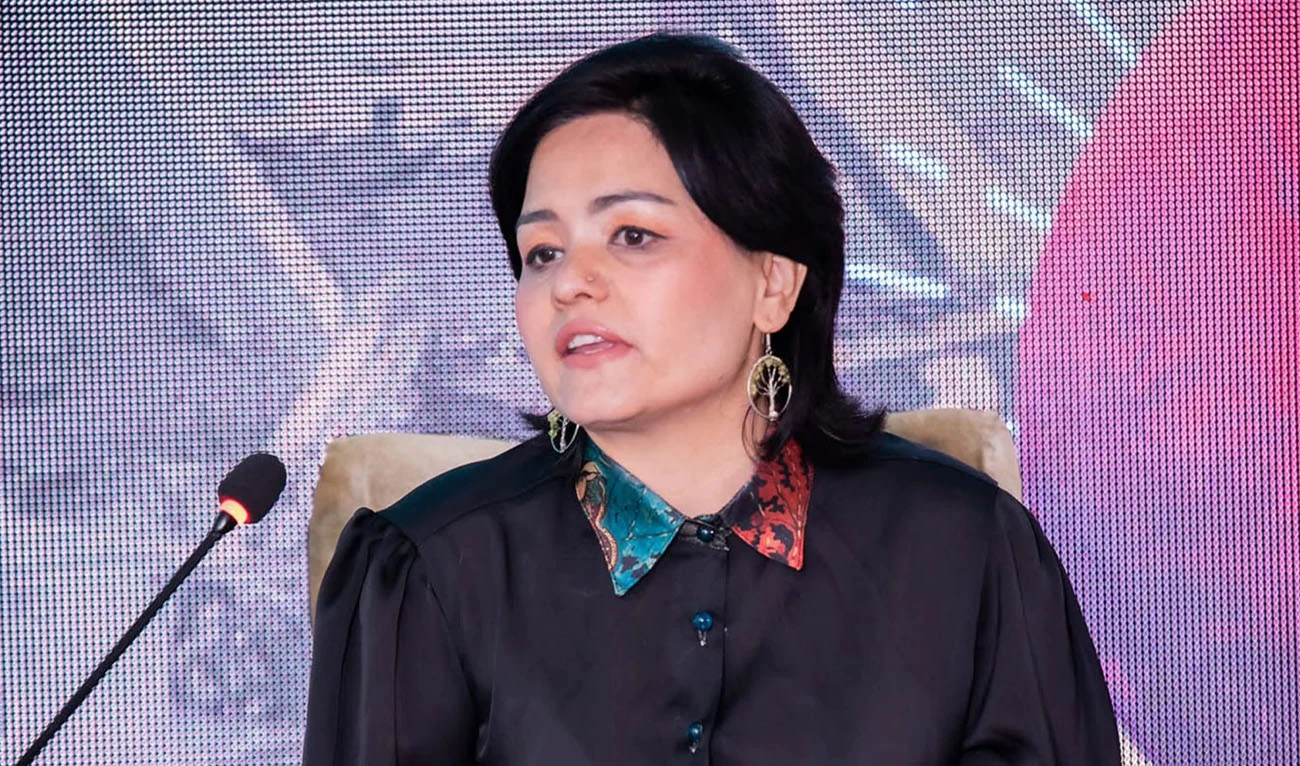
ISLAMABAD: Pakistan’s special envoy for Afghanistan Mohammad Sadiq on Wednesday called for a collective response to Afghanistan’s security challenges, saying the country’s lack of an inclusive governing framework and the continued presence of militant groups required coordinated action by the United Nations, the Organization of Islamic Cooperation (OIC) and the Shanghai Cooperation Organization (SCO).
Afghanistan has remained a key security concern for Pakistan since the Taliban returned to power in Kabul in 2021. Islamabad says militant groups, particularly the Tehreek-e-Taliban Pakistan (TTP), operate from Afghan territory and have intensified cross-border attacks, a charge the Taliban administration denies.
Islamabad, which has conducted multiple airstrikes against what it called militant hideouts in Afghanistan this month, has repeatedly urged the international community to engage collectively with Afghanistan to address security threats while promoting inclusive governance and regional stability.
“In our assessment, the core challenge in Afghanistan today is twofold... The first fold is the absence of an inclusive governing framework... The second fold, even more critical, is the continued presence of militant organizations on Afghan soil,” Sadiq said at a seminar in Islamabad, titled ‘Afghan Conundrum: Conference on Afghan Predicament, Trajectory to Peace.’
“When governance is exclusive and armed groups have space, the vacuum is exploited. For Pakistan this has meant a tangible increase in cross-border security challenges. For our Central Asian partners it has raised legitimate concerns about border stability,” he said.
“Afghanistan cannot be treated as a bilateral issue. It is a collective responsibility under the mandate of the United Nations, OIC and SCO.”
Sadiq’s comments followed deadly attacks and Pakistani security forces’ encounters with militants, particularly in the country’s northwestern Khyber Pakhtunkhwa (KP) province that borders Afghanistan, that killed dozens of civilians, soldiers and law enforcement personnel this month.
Islamabad accuses Afghanistan of turning a blind eye to militant groups, particularly the Tehreek-e-Taliban Pakistan (TTP), that operate on its soil and carry out attacks inside Pakistan. Kabul denies the allegation and says Pakistan’s security is an internal matter of Islamabad.
United Nations monitoring reports have documented the presence of militant groups in Afghanistan. A UN report released this year said no member state supported the Taliban authorities’ assertion that there were no militant groups in the country and said the TTP was among the largest groups operating there, with greater liberty and support from the de facto authorities.
Unfortunately, Sadiq said, the current administration in Kabul was in a “state of denial” on the issue of alleged presence of militant groups in Afghanistan.
“It does not acknowledge the scale of this presence nor does it address it in a verifiable manner. This denial keeps Afghanistan away from the cure,” he said.
“What if these militant organizations operating from Afghan soil get out of control? What if the threat today that targets Pakistan and Central Asia becomes unmanageable even for Kabul itself? This is not a hypothetical scenario. History warns us. The only way to help such a state is a state to help itself by realizing and admitting the problem, by agreeing on the cure and by committing to rehabilitation and mainstreaming of the Afghan people.”