- ‘Good progress’ made in negotiations, says the finance ministry
- Pakistan is seeking a $6-8 billion rescue plan to revive its cash-strapped economy
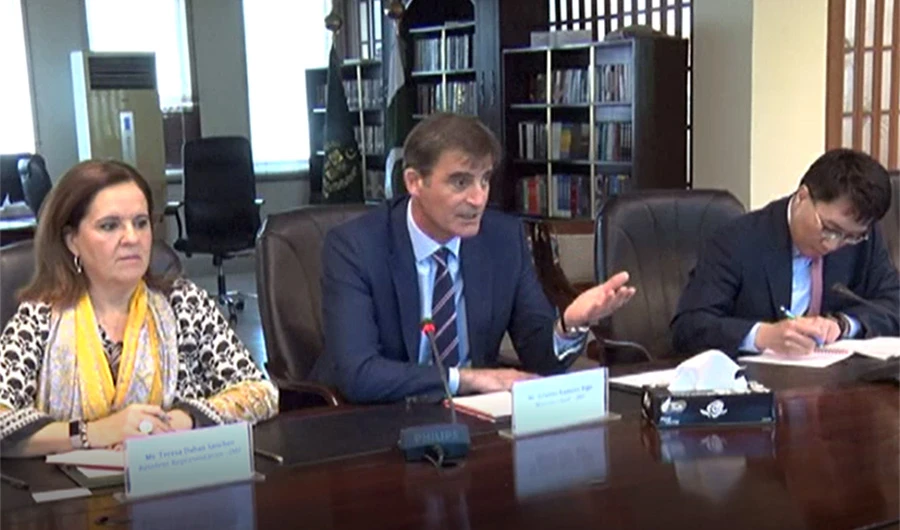
ISLAMABAD: Pakistan and the International Monetary Fund (IMF) have made “good progress” in their discussions, said an official handout circulated by the finance ministry on Friday that also informed that “consultations [between the two sides] will continue over the weekend.”
Earlier, local media reports indicated that Pakistan and the IMF were likely to conclude 10-day talks on Friday, as the administration in Islamabad was striving to finalize bailout negotiations with the Fund to avert an economic crisis.
Media reported that a staff-level agreement was expected to be announced during the day to mark that a formal understanding had been reached between the two sides. The Fund’s team arrived in Pakistan on April 29 and talks began on April 30 to discuss a rescue package worth about $6-8 billion, according to local media reports.
Quoting finance ministry sources, mainstream news organizations also claimed that Pakistan had prepared a formal application for the loan program, which new central bank chief Reza Baqir, a former IMF official, would share with the Fund. It was also claimed that the government had accepted most of the Fund’s demands, which it had earlier termed as harsh.
On Thursday, Pakistan’s Minister of State for Revenue Hammad Azhar told Senate that talks had entered the final stage, raising hopes over a long-delayed rescue deal at a time of worsening economic outlook for the South Asian nation of 208 million people.
Speaking before Senate, Azhar also said details of progress in talks would “soon be shared with parliament.”
Last week, Adviser to the Prime Minister on Finance, Revenue and Economic Affairs, Dr. Hafeez Sheikh, said IMF negotiations were moving ahead in a positive way and Pakistan wanted a program that provided a platform for macroeconomic development.
The IMF is pushing Islamabad to enact structural reforms needed to rebalance the economy, and rein in spending that has boosted growth but blown out the government budget. The Fund is also pushing Pakistan to embrace a flexible rupee policy. Pakistani officials fear this will further hurt economic growth, cause a spike in the key interest rate and push the Pakistani rupee further down.
In March, Pakistan’s central bank lowered growth forecasts and raised interest rates at a time when inflation is at a five-year high. The rupee currency has also lost about 35 percent since December 2017.