- Sept. inflation forecast at 10–11 percent as energy costs pressure food, transport
- Government seeks to cushion households through targeted fuel subsidies
KARACHI: Pakistan’s finance ministry has warned in its September economic outlook, released Wednesday, that inflation would remain elevated amid the Middle East oil shock, with higher energy costs threatening recovery and squeezing household purchasing power.
The ministry projected inflation at 10–11 percent for September and said its subsequent path would depend largely on international oil prices. Annual inflation reached 11.1 percent in August, up from 9.2 percent in July and 3.1 percent a year earlier.
The US-Iran war has disrupted Gulf energy supplies and shipping through the Strait of Hormuz, a critical route connecting oil-producing countries to global markets. For Pakistan, higher fuel costs have complicated efforts to sustain economic recovery while implementing reforms under an International Monetary Fund program.
“Elevated global oil prices remain the principal risk to this outlook, through their effect on purchasing power, input costs and the import bill,” the ministry said.
The report said higher global oil prices were feeding into domestic energy, transport and food costs. Food, housing and utilities, and transport together contributed 8.2 percentage points, about three-quarters, of August’s annual inflation, with food alone contributing 4.9 percentage points.
Prices rose 1.2 percent from July, the same monthly increase recorded a month earlier. The ministry said the sharper annual inflation reading also reflected comparison with August 2025, when prices had fallen from the preceding month.
The ministry also pointed to signs of economic recovery, including growth in manufacturing, stronger domestic cement sales and increased vehicle production. Large-scale manufacturing output rose 3.03 percent in July compared with a year earlier.
Higher import costs remained a vulnerability. Goods imports increased 11.4 percent in July–August, outpacing export growth of four percent, reflecting both higher oil prices and recovering domestic demand.
Remittances from Pakistanis working abroad rose 14.7 percent to $7.29 billion, while services exports increased 28.8 percent to $1.81 billion. Those inflows helped narrow the current account deficit to $543 million from $853 million a year earlier.
The ministry said stronger foreign exchange reserves and renewed access to international borrowing markets provided a better buffer against higher oil costs and upcoming external debt repayments.
TARGETED RELIEF
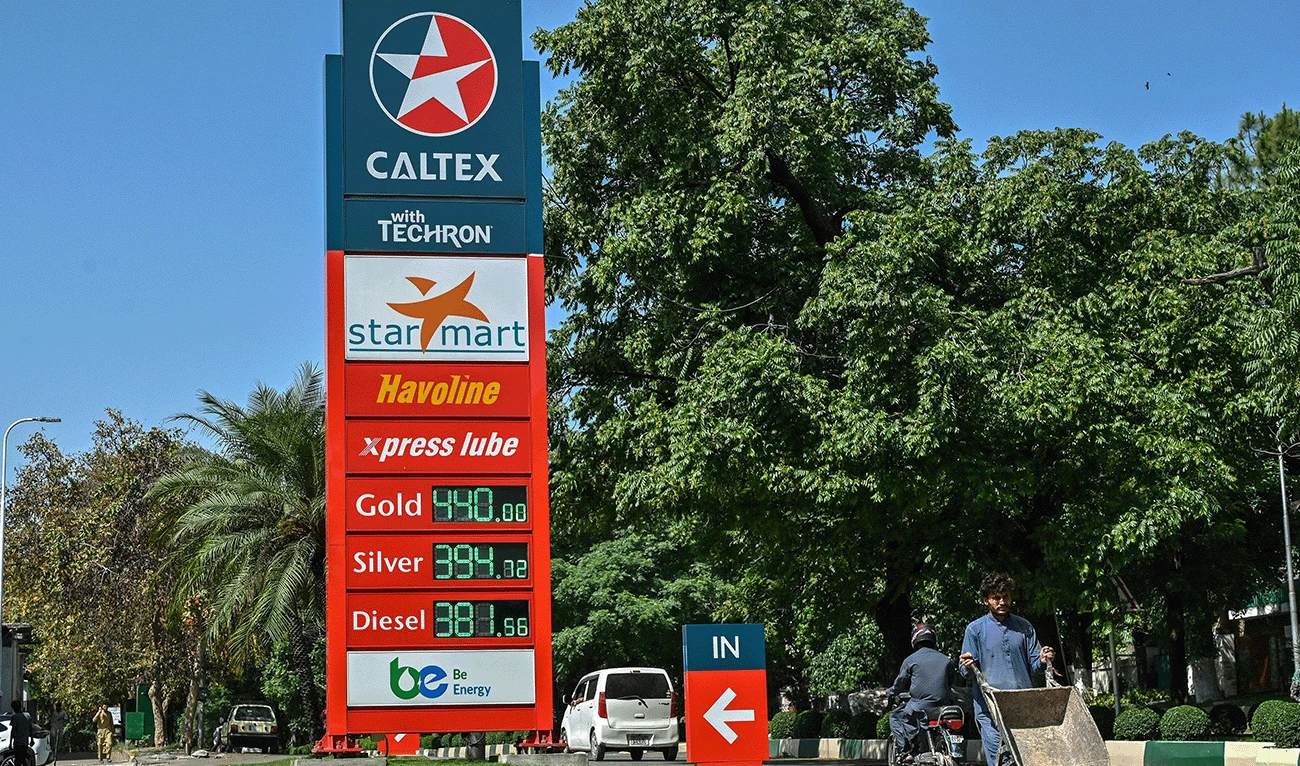
The government has introduced a fuel subsidy for eligible motorcycle, rickshaw and small-car users to soften the impact of higher petrol prices. It has also announced restrictions on fuel use for official vehicles and other austerity measures.
The ministry said the relief scheme operates without reducing the petroleum levy, a charge on fuel that contributes to government revenue. That approach seeks to support selected consumers while preserving public finances.
“Going forward, the priorities are to accelerate revenue mobilization, keep relief measures temporary and targeted, and sustain progress on energy and tax reforms,” the report said.
Pakistan’s $7 billion IMF program calls for broader tax collection and stronger public finances, alongside reforms intended to support sustainable growth. That leaves the government balancing assistance for households against its revenue and spending commitments.
The central bank held its policy interest rate at 11.5 percent on Sept. 14. The ministry said elevated global crude prices remained the main risk to the inflation outlook, including the possibility that higher energy costs would spread more widely through the economy.