- Aurangzeb says situation in the Gulf has hit growth, inflation but impact remains manageable
- He says government expects current-account deficit at 0-1% of GDP amid strong remittances
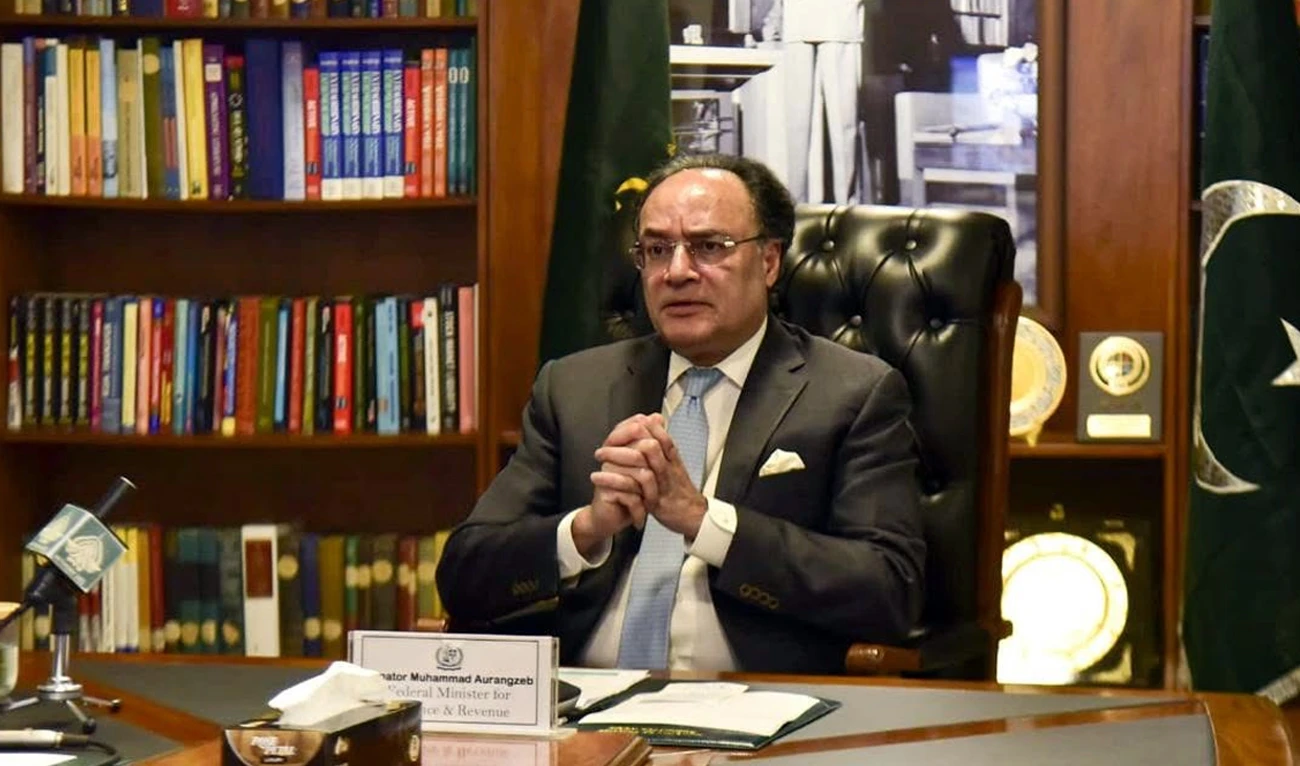
ISLAMABAD: Pakistan expects economic growth of more than 4% this fiscal year despite a hit from the continuing hostilities in the Middle East, Finance Minister Muhammad Aurangzeb said on Wednesday, describing the conflict’s impact on growth and inflation so far as “manageable.”
Aurangzeb said he and State Bank of Pakistan Governor Jameel Ahmad had reviewed first-quarter economic data on Tuesday and remained confident about the full-year outlook, including keeping the current account deficit between zero and 1% of gross domestic product on the back of strong remittance flows.
“Hope is not a strategy,” Aurangzeb said while virtually addressing the 10th Annual Microfinance Conference organized by the Pakistan Microfinance Network in Karachi, referring to efforts to de-escalate the Middle East conflict.
He said Pakistan had managed the “first-order impact” of the crisis well, including through procurement measures, while the government and central bank continued to closely monitor its economic fallout.
“There has been an impact on inflation and growth, but from our perspective, it is still manageable,” he said.
Pakistan, which relies heavily on imported energy, has faced pressure from disruptions to oil and liquefied natural gas supplies caused by the Iran conflict and restrictions on shipping through the Strait of Hormuz.
Asian LNG prices surged to nearly $30 per million British thermal units last month as the crisis disrupted Middle Eastern supplies, while Pakistan has introduced fuel subsidies to cushion consumers from soaring petrol and diesel prices.
Aurangzeb had warned last month that a prolonged conflict could threaten Pakistan’s 4% annual growth target. On Wednesday, however, he maintained the government’s expectation of growth above that level.
“If you look at three years ago, our economy actually contracted,” he said. “We were negative 0.3%. Last fiscal year, we were at 3.7%. This year, we are expecting north of 4%.”
The finance minister said, however, that Pakistan would pursue what he called “responsible growth,” warning against stimulating consumption through an injection of liquidity that could again create external financing pressures.
“Can we do it? Yes, we can do it,” he said. “But then we get into a balance of payment problem and we go running back to the lender of the last resort. And we don’t want to do that.”
Pakistan has repeatedly turned to the International Monetary Fund (IMF) during balance-of-payments crises and is currently operating under a $7 billion IMF bailout program.
Aurangzeb said the government would continue structural reforms in taxation, energy, state-owned enterprises, privatization and public finance as it sought to make recent macroeconomic stability permanent.
He said Pakistan’s foreign exchange reserves had recently reached $21.4 billion, equivalent to roughly three months of import cover, while citing three sovereign rating upgrades since April 2025 and Pakistan’s return to international capital markets after a nearly four-year absence as evidence of improving investor confidence.
Pakistan raised $3 billion through a Eurobond sale that attracted demand roughly twice the size of the issuance, Aurangzeb said, with investors participating from Asia, the Middle East, Europe and the United States.