- Dealers expect greater competition and consumer choice as Islamabad dismantles import barriers
- Local manufacturers warn tariff cuts could hurt production, jobs as government advances new auto policy
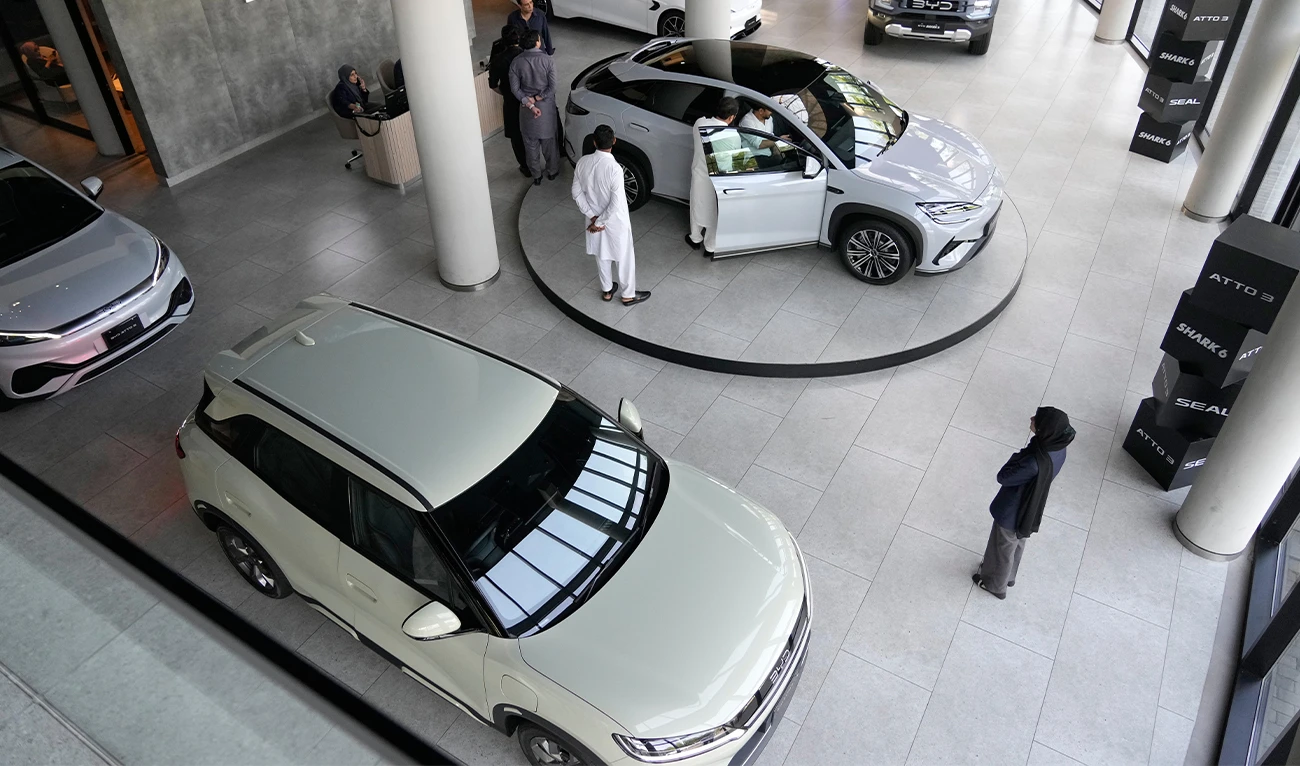
KARACHI: Pakistan’s move to open its long-protected automobile market to greater foreign competition could lower car prices and expand consumer choice but risks hurting domestic manufacturing, auto dealers and industry representatives told Arab News this week.
Pakistan has progressively liberalized commercial imports of used vehicles since last year while beginning to dismantle tariff protections across the wider auto industry, part of broader trade reforms under its National Tariff Policy and $7 billion International Monetary Fund program.
The changes mark a significant shift for an industry that has for decades been protected by high import duties and other barriers, with the government seeking to increase competition and export competitiveness while local manufacturers warn rapid liberalization could undermine investment, jobs and the domestic supplier network.
Commercial imports of used vehicles were legalized last year, initially for vehicles up to five years old, as Pakistan committed under its IMF program to liberalize the auto sector and progressively reduce tariff and non-tariff barriers. The five-year age restriction was removed from July 1 this year, while an additional regulatory duty on commercial used-car imports was reduced from 40 percent to 30 percent and is due to be progressively phased out.
The Engineering Development Board (EDB), which regulates the sector under the Ministry of Industries and Production, further eased the rules on Sept. 30 by removing a minimum-capital requirement and allowing any tax-registered individual or firm to commercially import vehicles without requiring registration with the Securities and Exchange Commission of Pakistan.
Dealers say the changes should increase competition and put pressure on local manufacturers to compete on price and quality.
“The commercial import that the government has allowed is very good for the public,” Shahid Ali, senior vice-president of the All-Pakistan Car Dealers Association (APCDA), told Arab News, adding that greater competition would force local assemblers to improve quality and reduce prices.
“If the commercial imports continue, the customers will get a better price as well as choice to buy a car.”
Ali estimated prices of smaller 600cc cars could be Rs300,000-Rs400,000 ($1,100-$1,400) lower because of increased competition, while the difference for larger vehicles costing around Rs20 million ($72,000) could reach Rs1.5 million ($5,400).
He said the impact of the reforms could become visible over the next six months as importers completed regulatory requirements and placed orders.
CHEAPER CARS, GREATER COMPETITION
Used-car imports have already been rising. Pakistan imported 2,276 used vehicles in September, up from 1,445 in August and 843 in June, according to Commerce Ministry figures, although almost all September imports entered under the gift scheme rather than the newly liberalized commercial channel.
The domestic auto market has also been recovering after a severe downturn during Pakistan’s recent economic crisis. Government data showed car production rose more than 51 percent year-on-year during the first nine months of the fiscal year that ended in June, while production of light commercial vehicles, jeeps, SUVs and pickups increased 24 percent.
Local assemblers and parts manufacturers, however, argue that exposing the industry too quickly to imported vehicles risks undermining domestic investment, jobs and the supplier network built around local production.
Aamir Allawala, former chairman of the Pakistan Association of Automotive Parts and Accessories Manufacturers (PAAPAM), said increased vehicle imports would raise demand for foreign currency while weakening domestic manufacturing.
“Nobody is benefiting. This is a complete loss-loss situation. The biggest beneficiary in this is the importer,” Allawala told Arab News on Monday.
Pakistan has suffered repeated balance-of-payments crises in recent years, with foreign exchange shortages forcing authorities to restrict imports as the country struggled to pay for fuel, machinery and other overseas purchases.
Allawala estimated domestic automobile production saved Pakistan $1.8 billion-$2 billion annually in foreign exchange and said greater reliance on imported vehicles and components could increase pressure on the external account.
He also argued that lower tariffs could reduce government tax revenues generated by locally manufactured vehicles.
The Commerce Ministry did not respond to Arab News requests for comment.
DISMANTLING PROTECTION
The changes to vehicle imports are part of a much wider attempt to reduce Pakistan’s reliance on high tariffs to protect domestic industries.
Under the IMF-backed tariff reform program, Islamabad is moving toward four main customs duty slabs of zero, 5, 10 and 15 percent while progressively eliminating additional customs and regulatory duties. For the auto sector specifically, the government has committed to substantially lowering tariffs by the end of the decade.
The IMF has described liberalization of auto imports as a specific component of Pakistan’s economic reform program, alongside reducing tariff protection and introducing new safety and environmental standards for both locally manufactured and imported vehicles.
Allawala said applying tariff reductions broadly across the economy failed to account for differences in production structures between industries.
“The automobile industry is made up of three interdependent industries,” he said, referring to raw materials, auto parts and final vehicle assembly.
He warned that if domestic parts manufacturing declined, the economic rationale for maintaining local vehicle assembly could also come under pressure.
The liberalization is unfolding as the government advances a new five-year policy for the automobile industry to replace the Auto Industry Development and Export Policy 2021-26, which expired in June.
Prime Minister Shehbaz Sharif gave in-principle approval to the new framework in September, according to local media reports, with the policy linking incentives to localization and exports while proposing further tariff reductions through 2030-31. It still requires further government approval and review before taking final effect.
The Pakistan Automotive Manufacturers Association (PAMA), whose members include the Pakistani assemblers of Toyota, Honda and Suzuki vehicles, has sought greater consultation over the policy and asked the Ministry of Industries and Production to share its provisions with manufacturers.
“The industry is currently quite perturbed by reports and rumours that a draft of the new Auto Policy has already been prepared and is likely to be presented to the Prime Minister shortly,” PAMA Director General Razi ur Rahman told Arab News.
“The proposed policy may prescribe punitive measures against manufacturers, including incremental tariffs and even cancellation of manufacturing licences, in the event that certain very ambitious export targets are not achieved,” he said, without citing figures for the reported targets.
Rahman said manufacturers supported increasing exports but believed the government should rely on incentives rather than penalties.
“The new Auto Policy should provide a stable, transparent and consultative framework, with clearly defined and achievable objectives, while creating appropriate incentives for manufacturers and the vendor industry to invest in exports and international competitiveness,” he said.
One auto-industry stakeholder, speaking on condition of anonymity, warned that at least one million workers associated with vehicle manufacturing and allied industries such as auto parts and steel could face employment risks if the government continued to pursue what he described as an import-driven policy.
That estimate could not be independently verified.
“Yamaha has already shut its plant and left Pakistan,” he said, referring to Yamaha Motor Co.’s decision to end motorcycle manufacturing in Pakistan in September 2025.
The company’s departure, however, preceded the latest round of tariff reductions and easing of used-car import rules and was not attributed by Yamaha to the current reforms.