- Petrol costs have risen by more than 50 percent since US-Iran war erupted in February this year
- Government says fuel subsidy now reaches nine million people as inflation strains household budgets
ISLAMABAD: Sadaqat Aziz, 41, kickstarts his motorcycle in Islamabad’s New Mal Colony at around 7 every morning and heads onto the Pakistani capital’s roads, hoping to earn enough carrying passengers to support his wife and three sons.
A year after losing his job at a clothing company and turning to ride-hailing platform Bykea to make ends meet, Aziz says the working day that once ended around 5 p.m. now frequently stretches past midnight.
The fares have barely changed, he says. The cost of reaching his passengers has.
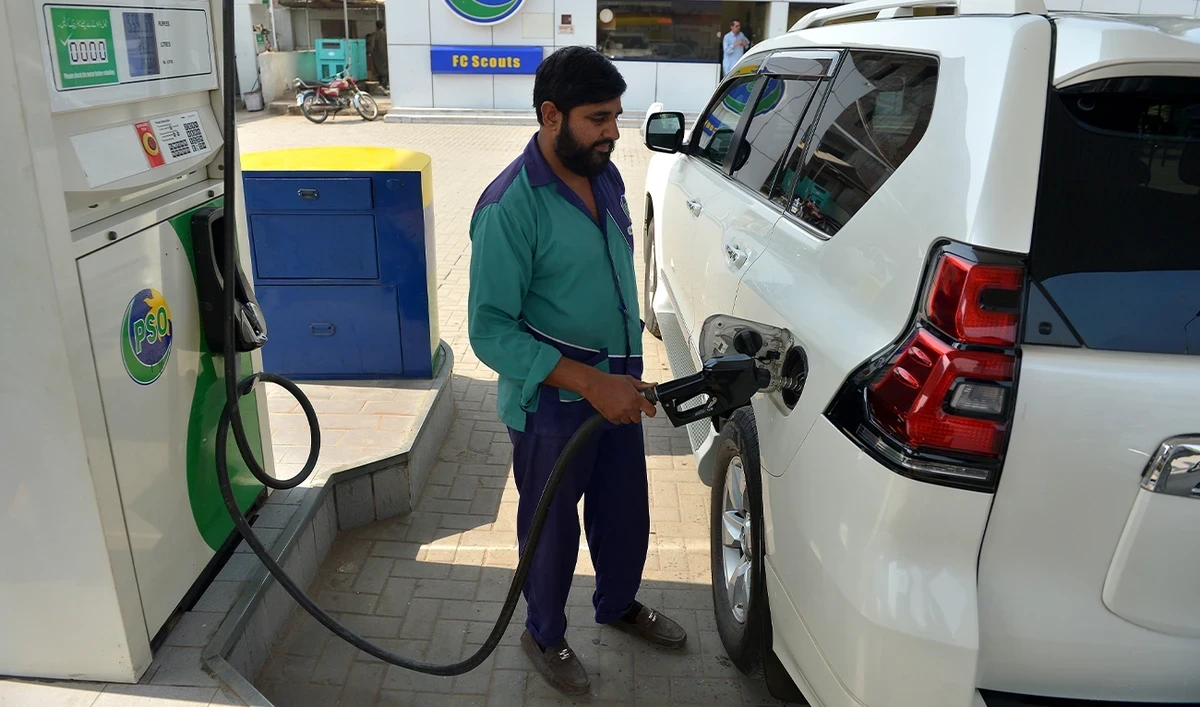
Pakistan’s petrol price stood at Rs393.64 ($1.40) per liter on Tuesday, up from around Rs258 ($0.92) in mid-February before the US-Iran war sent global energy markets into turmoil. Petrol briefly climbed as high as Rs458.41 ($1.63) in April before retreating, while continuing volatility prompted Islamabad to switch to daily fuel pricing in July.
The impact has been particularly acute in Pakistan, a country heavily dependent on imported energy and already struggling with a renewed bout of inflation. Consumer prices rose 10.3 percent year-on-year in September, according to the Pakistan Bureau of Statistics, while motor fuel prices were almost 40 percent higher than a year earlier.
For Aziz and other motorcycle-based gig workers, whose earnings depend directly on how much fuel they burn between bookings, the shock is immediate.
“There is a war going on over there [in the Middle East] but petrol is becoming more expensive in our country,” Aziz told Arab News, waiting for his next ride on Islamabad’s Park Road.
“They are still paying the same rates they were paying a year ago, or six months ago. But in our country, the price keeps increasing day by day. We go to sleep at night, and when we wake up in the morning, the petrol price is gone up.”
Pakistan has around 25 million registered motorcycles, according to government figures, making two-wheelers one of the country’s most important forms of affordable transport. They have also become a source of livelihood for thousands working through ride-hailing and delivery platforms.
SHRINKING MARGINS
For Aziz, the economics of a single ride have become increasingly difficult to manage.
He says Bykea takes 20 percent of the fare, while riders must also pay for the fuel used to reach customers before the paid journey even begins.
“For example, if we take a Rs200 ($0.71) ride, the company gets its 20 percent share. We give the company Rs40 ($0.14). That leaves us with Rs160 ($0.57). Out of that Rs160, around Rs100 ($0.36) goes on petrol. Then we have the [maintenance] expenses of the motorcycle, and we also have to cover our own expenses,” he explained.
That leaves little to take home.
There are days when Aziz waits hours without getting a worthwhile booking. Longer working days, he says, have therefore not translated into higher earnings.
“Earlier, we could earn Rs2,000 ($7.14) or Rs2,500 ($8.93) by 5pm. Now, even if we work until midnight, we are still making around the same amount,” he said.
Aziz’s family owns its home, sparing him rent, but he must still pay electricity bills and school fees for his three sons. Each child’s monthly school fee is at least Rs2,000 ($7.14).
“We daily earn and daily spend,” he said. “Taking milk for children and other stuff, fulfilling home expenses in that [meagre earning] daily.”
The pressures facing Aziz extend beyond the petrol pump.
Pakistan’s September inflation rate eased from 11.1 percent in August but remained in double digits, with some basic foods recording sharp annual increases. Wheat flour was around 34 percent more expensive in rural areas than a year earlier and fresh milk nearly 8 percent higher, according to official data.
RELIEF, BUT NOT ENOUGH
As the energy shock deepened, Prime Minister Shehbaz Sharif’s government launched a targeted fuel-relief program in September aimed primarily at motorcycle, rickshaw and small-car users.
The original Rs75 billion ($268 million) scheme provided a Rs100 ($0.36) per-liter subsidy on limited quantities of petrol. After complaints about access and the difficulty poorer motorcyclists faced buying five liters at once, the government revised the mechanism.
Motorcycle and rickshaw users can now receive one Rs500 ($1.79) fuel token each week, regardless of how much petrol they buy in a single transaction, giving them up to Rs2,000 ($7.14) in monthly relief. Small cars of up to 800cc remain eligible for a Rs1,000 ($3.57) token every 10 days. The government also expanded eligibility to motorcycles and three-wheelers up to 20 years old and removed an ownership requirement for people using rented motorcycles and rickshaws.
By Sept. 25, 5.8 million people had registered and 4.7 million had obtained subsidized fuel.
Petroleum Minister Ali Pervaiz Malik said last Sunday that more than nine million people were now benefiting from the program, although the government has not published a detailed breakdown of how many are motorcycle-based commercial workers such as Aziz.
The government says it has absorbed part of the increase in international petroleum costs rather than passing the entire burden on to consumers. Malik said on Sunday the subsidy was intended to protect vulnerable households from the impact of the war-driven price surge.
But for workers whose ability to earn depends on buying fuel every day, even the revised subsidy covers only a fraction of their costs.
At Tuesday’s price, the maximum Rs2,000 monthly benefit available to a motorcycle user would buy just over five liters of petrol, an amount a full-time ride-hailing driver can consume quickly.
Aziz has yet to register for the program. Even if he does, he says, the subsidy will not change the underlying economics of a job in which fuel costs have risen much faster than the fares he receives.
At night, as traffic thins on Islamabad’s roads, the 41-year-old continues searching for bookings that will justify another trip. Sometimes they come. Sometimes they do not.
“Inflation is increasing day by day, and we are unable to meet our expenses. We are forced to keep extending our working hours,” he said.
“We don’t know whether we should fill the motorcycle’s tank or feed ourselves?”