- EU condemns recent militant attacks in Pakistan, acknowledges Islamabad’s counterterrorism efforts
- The two sides discuss online extremism, emerging militant threats and agree to meet next in Brussels
ISLAMABAD: Pakistan and the European Union expressed concern on Thursday over security threats emanating from the situation in Afghanistan and agreed to strengthen counterterrorism cooperation, as Islamabad grapples with a surge in militant violence and renewed tensions along its western border.
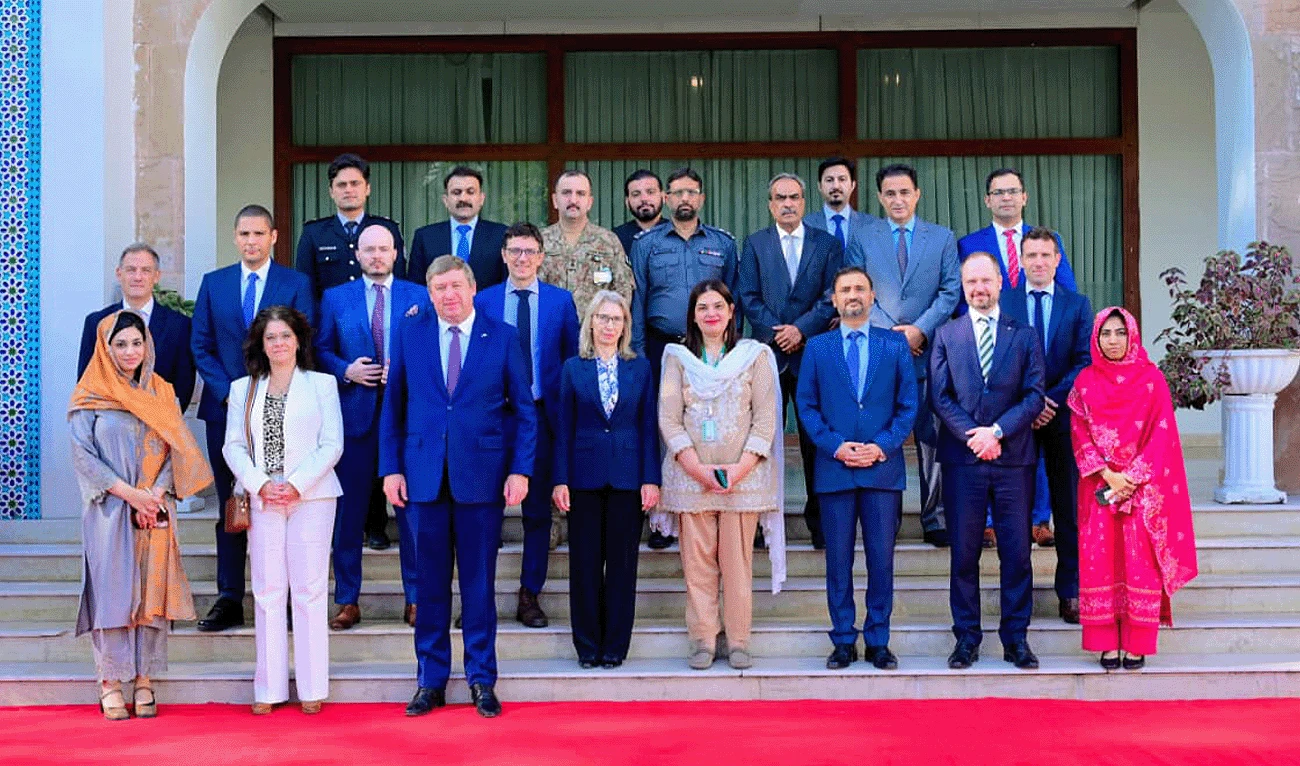
The discussions took place during the 10th round of the Pakistan-EU Bilateral Counterterrorism Dialogue in Islamabad, days after Pakistani security sources reported border clashes with Afghan forces who, they said, opened fire to facilitate militant infiltration. Islamabad accuses militants based in Afghanistan of carrying out attacks on its territory, allegations denied by Kabul.
“Pakistan and the EU expressed concern at the security implications of the situation in Afghanistan,” Pakistan’s foreign ministry said in a statement, adding that both sides acknowledged each other’s role in global counterterrorism efforts.
The talks come amid escalating tensions between Pakistan and Afghanistan, which have led to Pakistani airstrikes on what Islamabad describes as militant hideouts. The Taliban government has condemned the strikes and accused Pakistan of targeting civilians.
The EU has previously called for de-escalation between the neighbors, urging the Afghan authorities to prevent militant groups from using their territory to threaten other countries.
During Thursday’s dialogue, the EU delegation condemned recent terrorist attacks in Pakistan, expressed solidarity with affected civilians and recognized Islamabad’s counterterrorism efforts, according to the foreign ministry.
The two sides also discussed evolving security threats, particularly the exploitation of cyberspace, information and energy resources to advance militant objectives.
They exchanged best practices on preventing violent extremism, countering terrorist financing and addressing radicalization, with particular attention to the use of online platforms by extremist groups.
Pakistan and the EU agreed to strengthen coordination at international forums, including the United Nations, to develop a more coherent global counterterrorism strategy.
“Effective multilateralism remains essential to building lasting international consensus on terrorism,” the foreign ministry said, outlining the position expressed during the dialogue.
Both sides identified priority areas for future cooperation and reaffirmed their commitment to regular, institutionalized counterterrorism engagement.
“Pakistan and the EU exchanged views on recent regional and global developments impacting the terrorism threat landscape and issued an unequivocal condemnation of terrorism in all its forms, reaffirming commitment to combating this threat,” the foreign ministry said.
The dialogue is part of an established bilateral mechanism through which Pakistan and the EU exchange assessments and coordinate responses to shared security challenges.
The next round of talks will take place in Brussels in 2027 on a mutually agreed date.