- Protection Against Harassment of Women at the Workplace (Amendment) Act, 2022, was passed by parliament earlier this month
- Amended act provides protection from harassment to those employed in the informal sector as well
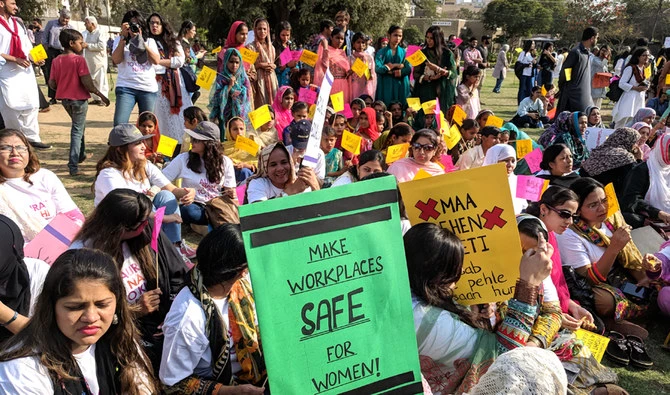
ISLAMABAD: Pakistan's amended Protection Against Harassment of Women at the Workplace Act has officially become law, the Ministry of Human Rights announced on Friday.
Pakistan reports hundreds of cases of harassment and crimes against women every year.
The Protection Against Harassment of Women at the Workplace (Amendment) Act, 202 was drafted by the human rights ministry to help facilitate increased participation of women in the country's workforce.
Earlier this month, it was passed by the National Assembly after Senate approved amendments to the legislation. The amendments increased the scope of the law to include certain professions that were left out by the previous legislation, and provided protection from harassment to those employed in the informal sector as well.
“Our Protection against Harassment of Women at the Workplace (Amendment) Act, 2022 was notified today & has officially become law,” the ministry said on its official Twitter handle.
“It marks an important step in strengthening & increasing the ambit of the law.”
Critics of the previous law had raised concerns that the earlier version of the act had not properly defined terms such as "complainant," "employee" and "employer" due to which many victims of harassment were denied relief under the law.
One of the act's significant amendments is the definition of "complainant" as "any person," which means that transgender people can also seek relief.
Another amendment makes it possible for employees who left a workplace due to a hostile environment and harassment, to seek action against the persons responsible for it. The definition of an employee has been expanded to include former employees who were “removed or dismissed from service or had resigned.”
The act also clearly defines who fits into the description of an employee. These are now people who are “regular, contractual, piece-rate, gig, temporary, part-time, freelance employees including students, performers, artists, sportspersons, interns, trainees, domestic workers, home-based workers or apprentices.”