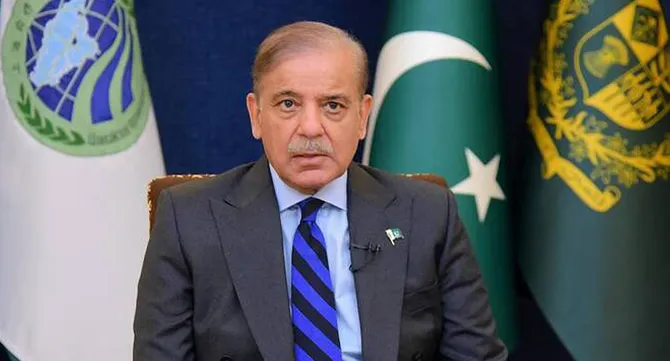
- Saudi Ambassador Nawaf bin Saeed Al-Malki meets PM Shehbaz Sharif as part of his farewell visit
- Sharif says Pakistan has “walked the tight rope” amid Gulf conflict and tried to build unity among Muslim states
ISLAMABAD: Prime Minister Shehbaz Sharif on Thursday praised Saudi Arabia for playing a “pivotal role” in promoting regional peace and stability, his office said, as Islamabad intensifies diplomatic efforts to broker a permanent peace between the United States (US) and Iran in the Middle East.
Pakistan and Saudi Arabia have been closely involved in efforts to broker peace between the US and Iran. The war between the two countries since February has led to closure of global maritime trade routes, triggering higher oil prices and steeper inflation. Pakistan has thanked Saudi Arabia numerous times for backing its efforts to bring the US and Iran to the negotiating table.
Saudi Ambassador Nawaf bin Saaed Al-Malki met Sharif at the PM House in Islamabad for a farewell visit. The Saudi envoy, posted for nine years as Saudi Arabia’s ambassador to Pakistan, will be succeeded by Dr. Rajeh bin Tami Al-Baqami.
“He [Sharif] reaffirmed Pakistan’s deep appreciation for the Kingdom’s steadfast support and generous assistance to Pakistan, and its pivotal role in promoting peace and stability in the region,” the PM Office quoted Sharif as saying.
The Pakistani premier conveyed his best wishes for the health and well-being of the Saudi Arabia’s King Salman bin Abdulaziz Al Saud, Crown Prince Mohammed bin Salman. Sharif congratulated Al-Malki on the successful completion of his tenure, lauding his efforts to further strengthen Pakistan’s deep-rooted fraternal and strategic ties.
“Ambassador Al-Malki expressed his profound gratitude to the Prime Minister and the Government of Pakistan for the warmth, cooperation, and hospitality extended to him throughout his assignment,” the PM Office said.
‘WALKED THE TIGHT ROPE’
Separately, Sharif said on Wednesday that Pakistan has walked a “tight rope” during the recent Gulf conflict as it sought to prevent the war from spreading while simultaneously trying to build unity among Muslim countries.
“During the Gulf conflict, Pakistan walked the tight rope as on one hand, [we] tried to avert the consequences of widening of war flames in the region, while on the other, tried to unite the entire Ummah,” Sharif said while addressing an international conference in Islamabad marking the birth anniversary of Prophet Muhammad (PBUH).
Sharif credited Pakistan’s Chief of Defense Forces Field Marshal Syed Asim Munir with playing a significant role during the crisis, saying he “remained engaged with both sides to secure peace and stability in the region.”
The comments come as Pakistan remains involved in renewed diplomacy aimed at reviving the stalled US-Iran negotiating process and restoring navigation through the Strait of Hormuz.
Munir visited Tehran this week alongside Interior Minister Mohsin Naqvi, meeting Iranian President Masoud Pezeshkian, Foreign Minister Abbas Araghchi and other senior officials. Naqvi subsequently said the discussions had made “significant progress” toward de-escalation and restoring the interim US-Iran agreement.
Pakistan’s military said the Tehran talks covered preventing further escalation, reopening the Strait of Hormuz and bringing the conflict to an “expedited” end.
The diplomatic push has coincided with Pakistan deepening defense ties with Saudi Arabia and Türkiye, with the three countries signing the Makkah Joint Defense Agreement earlier this month. The collective-defense pact stipulates that an attack against one of the three countries will be considered an attack against all of them.
The trilateral defense pact, signed earlier this month in Makkah, stipulates that an attack against one of the three nations will be considered an attack against all of them.